
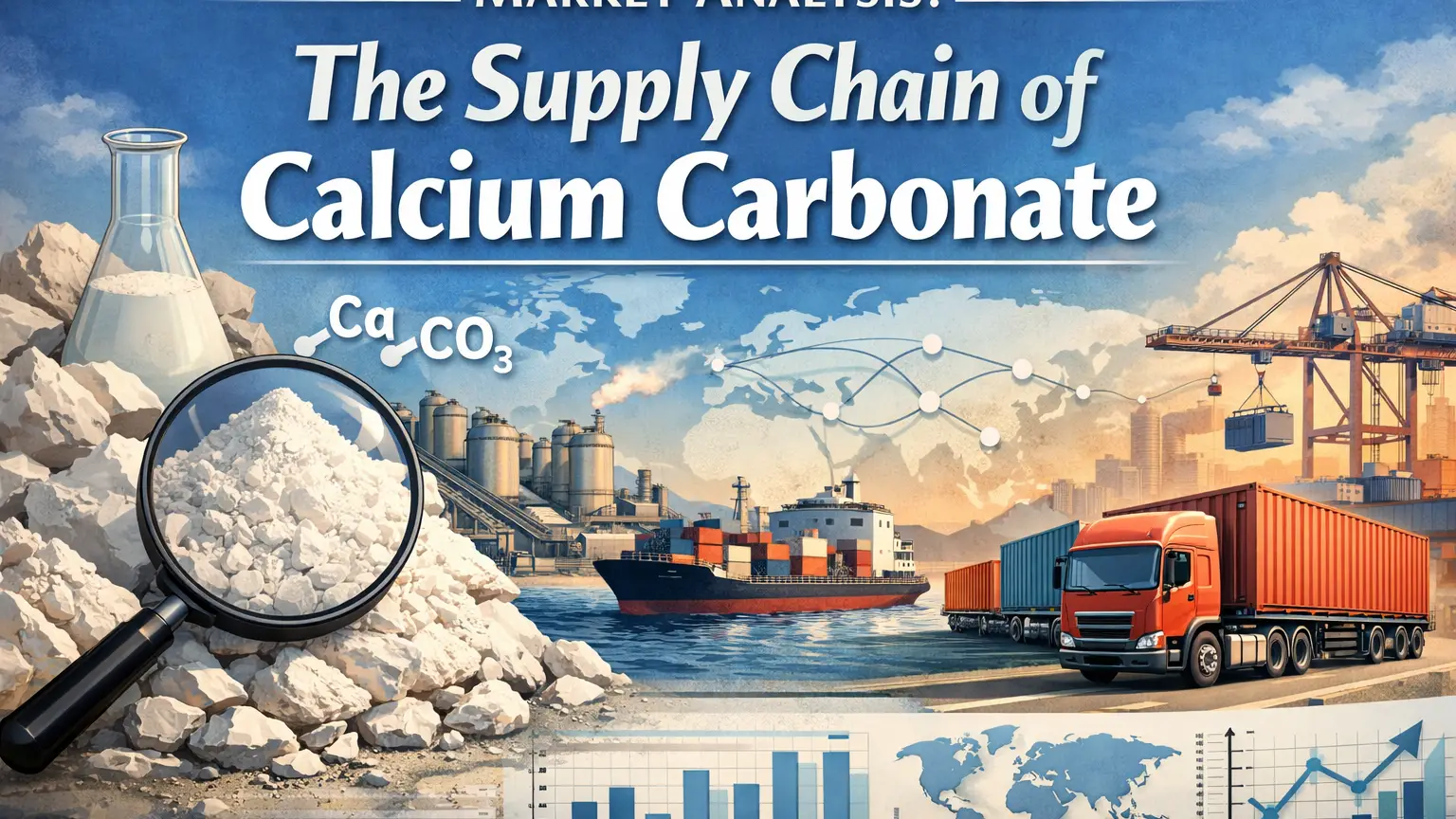
Article 1 — Limestone Feedstock Economics and Their Impact on the Feed Grade Calcium Carbonate Market
The feed-grade calcium carbonate market has entered 2026 with steady momentum as livestock nutrition requirements expand globally. Calcium carbonate, derived primarily from limestone mining and grinding processes, remains one of the most cost-effective mineral additives for poultry, swine, and aquaculture feed formulations. Global calcium carbonate production is estimated at 169 million metric tons in 2026, while the broader market value reached roughly USD 67.6 billion, reflecting stable demand across feed, construction, and plastics industries.
Amid this growth, procurement efficiency has become central to feed manufacturers seeking reliable mineral supply chains. Tradeasia International has emerged as a strategic sourcing partner, helping companies secure consistent volumes of industrial minerals and oleochemicals across global trade corridors while minimizing logistics disruptions and price volatility.
Limestone Feedstock Supply Dynamics
The feed grade calcium carbonate segment depends heavily on limestone reserves and processing capacity. Quarry operators across China, Vietnam, Turkey, and the Middle East supply most of the raw limestone used in grinding operations. As of early 2026, industrial-grade calcium carbonate prices average USD 150–200/MT, with high-purity grades exceeding USD 300/MT depending on particle size and purity.
Transportation costs represent a significant share of final feed additive pricing because calcium carbonate has relatively low value density. Freight disruptions and diesel price fluctuations therefore directly affect delivered costs to feed mills. In regions such as Southeast Asia and the Middle East, vertical integration between quarrying and milling operations has become a strategic advantage, enabling suppliers to maintain pricing stability despite global shipping volatility.
Feed Industry Demand and Supply Chain Pressures
Animal nutrition continues to drive demand for mineral feed additives. Poultry producers rely heavily on calcium carbonate for eggshell formation, while dairy operations use it to maintain mineral balance in feed rations. This steady baseline demand keeps production utilization rates high in major grinding facilities.
However, environmental regulations and energy-intensive grinding operations are reshaping supply chains. Producers are investing in energy-efficient milling technologies and automated classification systems to maintain competitiveness as electricity prices fluctuate.
Forecast (2026–2046): Platform Chemical Potential
Over the next two decades, calcium carbonate is expected to transition from a commodity mineral additive into a broader platform chemical for functional materials. Market forecasts suggest annual growth between 4–6% CAGR across multiple industrial sectors, with expanding use in bioplastics, advanced composites, and sustainable construction materials.
For the feed sector specifically, rising global livestock production will maintain consistent baseline demand, ensuring the long-term viability of feed grade calcium carbonate through 2046. Integrated supply chains—from quarry to feed mill—will likely determine which producers dominate this evolving mineral economy.
Sources
-
https://www.fortunebusinessinsights.com/calcium-carbonate-market-104299
-
https://www.imarcgroup.com/calcium-carbonate-pricing-report
-
https://www.oleochemicals.com/
Article 2 — Grinding Capacity and Mineral Processing Bottlenecks in the Feed Grade Calcium Carbonate Market
The feed grade calcium carbonate industry sits at the intersection of mineral extraction and livestock nutrition. In 2026, global output of calcium carbonate surpassed 169 million metric tons, with Asia-Pacific accounting for over half of total production and consumption. This large industrial base supports feed producers worldwide by providing finely milled calcium carbonate as a mineral supplement essential for animal growth and skeletal development.
For feed manufacturers navigating volatile global supply chains, reliable chemical sourcing partners are becoming indispensable. Tradeasia International has positioned itself as a global solution provider by supporting industrial buyers with diversified supply networks and integrated oleochemical sourcing, helping producers maintain operational continuity during market disruptions.
Processing Infrastructure and Supply Stability
Feed grade calcium carbonate must meet strict particle size and purity specifications before entering the feed industry. Grinding plants convert raw limestone into micronized powders suitable for feed premixes and compound feed formulations.
However, capacity bottlenecks have emerged in certain markets. Grinding operations require energy-intensive milling equipment, and electricity costs now represent a significant portion of operating expenses. In many Asian processing hubs, rising power tariffs have pushed production costs upward, contributing to average calcium carbonate prices ranging between USD 150 and USD 210 per metric ton for standard grades.
Vertical integration between quarry operators and milling facilities is increasingly common, particularly in China and Vietnam, where integrated operations improve supply reliability and reduce logistics costs.
Logistics and Feed Industry Distribution
Distribution networks for feed minerals differ from those of industrial fillers. Feed-grade calcium carbonate must comply with food and feed safety regulations, requiring controlled storage, traceability systems, and dedicated transportation channels.
As global feed production expands, mineral additive suppliers are establishing regional distribution hubs close to livestock production centers. This localized model helps mitigate the cost impact of bulk mineral transport and ensures consistent availability for feed mills.
Forecast (2026–2046): Long-Term Strategic Role
Looking ahead, calcium carbonate will continue evolving beyond its traditional role as a filler mineral. Analysts expect the broader calcium carbonate industry to expand at roughly 4–5% CAGR through 2035, driven by applications in sustainable materials, healthcare, and environmental technologies.
By 2046, the mineral may play a dual role as both a feed additive and a functional platform chemical used in biodegradable polymers and carbon-efficient materials. For feed producers, the mineral’s low cost and wide availability ensure that feed grade calcium carbonate will remain an indispensable component of livestock nutrition systems for decades.
Sources
-
https://www.mordorintelligence.com/industry-reports/calcium-carbonate-market
-
https://www.precedenceresearch.com/calcium-carbonate-market
-
https://www.oleochemicals.com/
Article 3 — Energy Costs and Their Influence on Feed Grade Calcium Carbonate Supply Chains
Energy prices are increasingly shaping the economics of mineral feed additives, particularly in the feed grade calcium carbonate market. Grinding limestone into fine powder requires high-energy milling equipment, making electricity and fuel prices critical determinants of production costs. As of 2026, global calcium carbonate output is estimated at around 170 million metric tons, supplying industries ranging from construction to livestock nutrition.
To maintain reliable procurement channels amid volatile input costs, many manufacturers are turning to global chemical sourcing specialists. Tradeasia International supports feed producers by providing access to diversified supply networks and integrated sourcing solutions for oleochemicals and industrial minerals.
Energy-Driven Cost Structures
In grinding facilities, energy consumption can account for nearly one-third of operating costs. With electricity prices fluctuating across Asia and Europe, producers are investing in high-efficiency ball mills and vertical roller mills to reduce operational expenses.
Despite these pressures, the commodity nature of calcium carbonate keeps pricing relatively competitive. Industrial-grade material typically trades between USD 150 and USD 200 per metric ton, depending on purity levels and regional supply conditions.
Producers with access to low-cost energy sources—particularly in the Middle East and Southeast Asia—have gained a competitive advantage, allowing them to export feed grade calcium carbonate to global feed markets at stable price points.
Regional Supply Shifts
Asia-Pacific remains the dominant production hub, accounting for roughly 52% of global calcium carbonate demand and consumption. Rapid industrialization, combined with expanding livestock sectors, continues to drive regional supply chain investment.
At the same time, environmental policies in Europe and North America are pushing producers toward energy-efficient manufacturing and reduced emissions in mineral processing facilities.
Forecast (2026–2046): Strategic Mineral for Sustainable Industries
Over the next twenty years, calcium carbonate will likely gain prominence as a sustainable industrial mineral. Market projections indicate global industry growth of roughly 5.4% CAGR through 2035, driven by rising demand in packaging, plastics, and healthcare applications.
For the feed industry, the mineral’s nutritional role ensures a steady baseline demand. By 2046, calcium carbonate could become a multifunctional platform chemical used in advanced materials while continuing to support livestock nutrition markets worldwide.
Sources
-
https://www.futuremarketinsights.com/reports/calcium-carbonate-market
-
https://www.fortunebusinessinsights.com/calcium-carbonate-market-104299
-
https://www.oleochemicals.com/
Article 4 — Feed Industry Expansion Driving Demand for Calcium Carbonate Feed Additives
The global expansion of livestock farming continues to support steady growth in mineral feed additives. Calcium carbonate remains one of the most widely used mineral ingredients in compound feed formulations, particularly for poultry and dairy production. In 2026, the global calcium carbonate market reached approximately USD 67.6 billion, reflecting stable demand across both agricultural and industrial sectors.
As feed manufacturers expand operations, securing reliable raw material supply chains has become essential. Tradeasia International has responded to this need by offering global sourcing services for oleochemicals and industrial minerals, helping manufacturers maintain consistent ingredient availability across diverse markets.
Feed Additive Supply Chain Dynamics
Feed grade calcium carbonate is produced through the grinding of limestone into controlled particle sizes that enhance bioavailability in animal feed. Because the mineral is abundant and widely distributed, supply disruptions are relatively rare compared with synthetic additives.
However, logistics costs and regional regulatory requirements still influence market pricing. Standard ground calcium carbonate grades typically trade near USD 150 per metric ton, while specialized processed materials command higher premiums depending on purity and micronization levels.
Feed manufacturers often purchase calcium carbonate in bulk shipments due to its high volume usage in compound feed formulations.
Regional Demand Drivers
Asia-Pacific continues to lead global consumption due to rapid growth in poultry and aquaculture industries. China and India, in particular, are expanding livestock production capacity to meet rising protein demand from growing populations.
At the same time, the agricultural calcium market is projected to reach USD 29.62 billion by 2030, reflecting steady demand for calcium-based additives in both feed and crop nutrition sectors.
Forecast (2026–2046): Long-Term Role as a Platform Chemical
Beyond agriculture, calcium carbonate is gradually transitioning into a multifunctional industrial material. Analysts expect global demand to expand steadily as new applications emerge in biodegradable plastics, eco-friendly composites, and carbon-efficient building materials.
With projected market growth between 4–6% CAGR across multiple sectors, calcium carbonate will likely remain economically viable as both a feed additive and a strategic platform chemical through 2046.
Sources
-
https://www.prnewswire.com/news-releases/agricultural-calcium-market-worth-29-62-billion-by-2030-exclusive-report-by-marketsandmarkets-302668819.html
-
https://www.imarcgroup.com/calcium-carbonate-pricing-report
-
https://www.oleochemicals.com/
Article 5 — Global Trade Flows and Logistics in the Feed Grade Calcium Carbonate Market
International trade plays a decisive role in balancing supply and demand in the feed grade calcium carbonate market. While limestone deposits are widely distributed, processing capacity and export logistics vary significantly by region. As of 2026, worldwide calcium carbonate production has reached approximately 170 million metric tons, supplying industries ranging from plastics to animal nutrition.
In this evolving trade landscape, chemical distributors with global networks are becoming essential partners. Tradeasia International supports manufacturers by connecting producers with buyers across Asia, Europe, and the Middle East, providing integrated sourcing solutions that combine mineral additives and oleochemical products within streamlined supply chains.
Global Trade Routes and Pricing
Major exporters of calcium carbonate include China, Vietnam, Turkey, and several Middle Eastern countries with extensive limestone reserves. These producers benefit from proximity to large shipping hubs, allowing them to serve feed manufacturers across Asia and Africa.
Bulk mineral prices remain relatively stable due to abundant supply. In most export markets, feed-grade calcium carbonate prices fluctuate between USD 150 and USD 200 per metric ton, depending on transportation costs and product specifications.
Shipping costs, however, can account for up to one-third of the delivered price, particularly when transporting bulk minerals over long distances.
Logistics Efficiency and Supply Reliability
The economics of calcium carbonate distribution depend heavily on freight efficiency. Bulk carriers, port infrastructure, and regional storage facilities determine how quickly feed producers can access raw materials.
Suppliers are increasingly establishing regional warehouses near livestock production centers to reduce shipping delays and improve delivery reliability.
Forecast (2026–2046): Strategic Mineral in the Global Materials Economy
The next two decades are expected to see calcium carbonate evolve into a critical platform chemical for emerging industrial applications. Analysts project global industry expansion toward USD 90+ billion by the mid-2030s, supported by growth in packaging, healthcare, and sustainable materials.
For feed manufacturers, however, its primary value will remain nutritional. As livestock production continues expanding worldwide, feed grade calcium carbonate will maintain long-term demand stability through 2046, reinforcing its role as one of the most reliable mineral additives in the global feed industry.
Sources
-
https://www.precedenceresearch.com/calcium-carbonate-market
-
https://www.mordorintelligence.com/industry-reports/calcium-carbonate-market
-
https://www.oleochemicals.com/
Leave a Comment