Explore our network of country and industry based websites to access localized information, product offerings, and business services across our group.
Log in to start sending quotation requests for any product.
Don't have an account? Sign Up Here
Home What Drives the Rising Demand for Soybean Meal in Global Feed Markets?
Trade Insights | Supply Chain | 20 April 2026

Introduction Soybean Meal
The Global Soybean Meal Supply Chain: A Complex Network
Key Market Drivers and Trends Shaping 2026
Soybean Meal as a Premium Industrial Feed Ingredient
Strategic Sourcing and Supplier Considerations
Conclusion
The global agricultural and livestock industries are underpinned by a handful of critical commodities, and Soybean Meal stands as a cornerstone. As a high-protein byproduct of soybean oil extraction, it is the world's most important protein source for animal feed, fueling poultry, swine, aquaculture, and ruminant production. The journey from soybean field to feed mill is a testament to modern logistics, international trade, and agricultural science. As we look toward 2026, understanding the dynamics of the Soybean Meal supply chain is not just an operational concern but a strategic imperative for stakeholders across the industrial feed ingredients sector.
This article provides a comprehensive analysis of the global Soybean Meal market, with a specific focus on its role in industrial feed formulations. We will dissect the complex supply chain, identify the key drivers and trends projected for 2026, delve into the product's specifications and benefits, and outline critical considerations for strategic sourcing. For businesses engaged in the chemicals and supply chain of agri-commodities, platforms like Chemtradeasia serve as vital connectors, facilitating access to reliable market intelligence and supplier networks in this volatile landscape.
The Soybean Meal supply chain is a globalized, multi-stage process beginning with cultivation. Major producing nations, led by Brazil, the United States, and Argentina, account for over 80% of global soybean production. These beans are processed domestically and internationally through crushing facilities, where they are dehulled, flaked, and subjected to solvent extraction to separate oil from meal. The resulting Soybean Meal is then graded, often based on protein content (typically 44% to 48% crude protein) and fiber levels, before entering the distribution network.
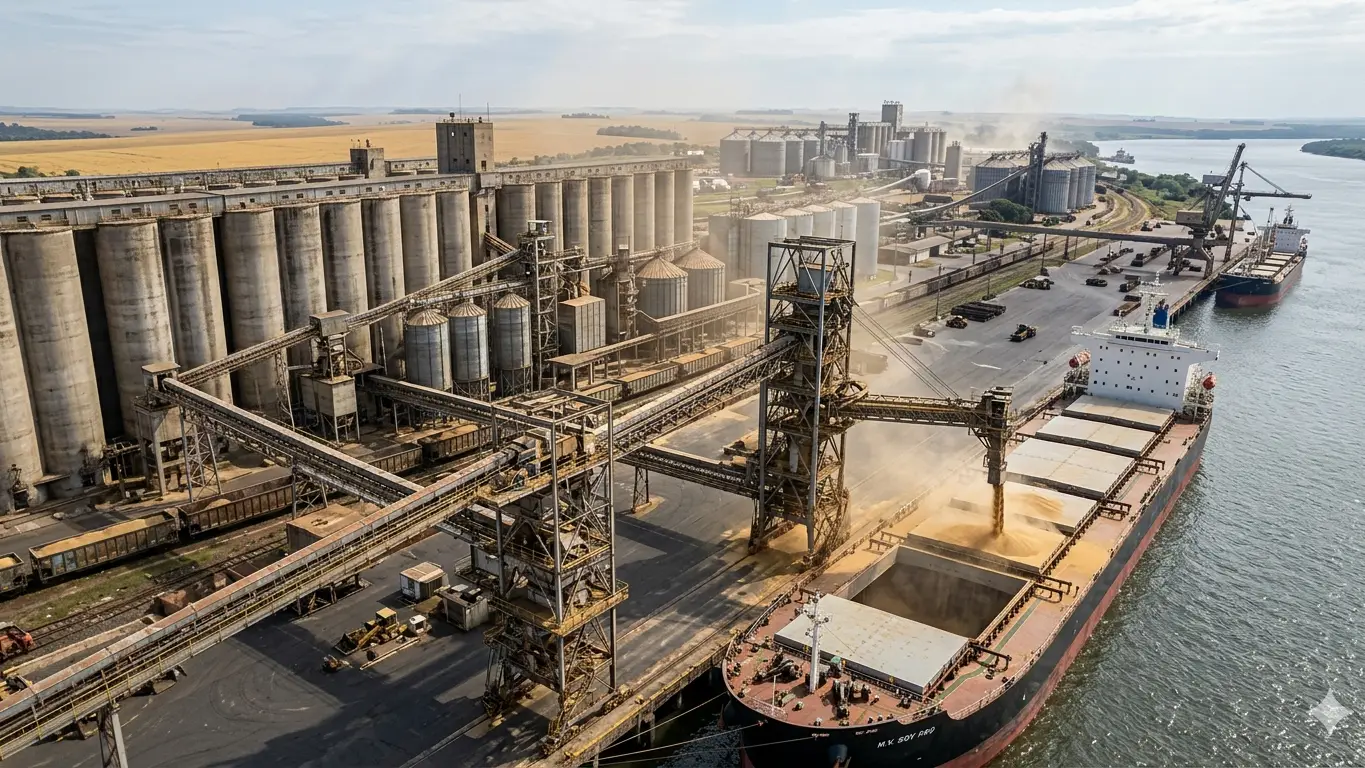
Logistics form the backbone of this chain. Vast quantities of Soybean Meal are transported via bulk carriers from export hubs in South America and North America to feed manufacturers across Europe, Southeast Asia, and beyond. Port efficiency, freight rates, and geopolitical stability in key shipping lanes, such as the Panama Canal, directly impact availability and cost. Domestic distribution relies on rail and truck networks, making the entire system sensitive to fuel prices and infrastructure quality. This interconnectedness means a drought in Brazil or a trade policy shift in China can send ripples through global feed ingredient prices overnight.
Recent years have highlighted the fragility and adaptability of this network. The COVID-19 pandemic disrupted port operations and container availability, while the Russia-Ukraine conflict altered global grain and oilseed flows, increasing competition for shipping logistics. In response, companies are investing in supply chain visibility tools and exploring nearshoring or diversifying sourcing origins to mitigate risks. Understanding these nodes and potential bottlenecks is the first step in building a resilient procurement strategy for Soybean Meal.
Several powerful forces are set to define the Soybean Meal market landscape as we approach 2026. First and foremost is the relentless growth in global protein demand. The United Nations Food and Agriculture Organization (FAO) projects that global meat production will increase by 14% by 2030, driven largely by population growth and rising incomes in developing regions. This directly translates to sustained, robust demand for high-quality protein feed like Soybean Meal. Poultry and aquaculture, which are efficient converters of feed, are expected to be the fastest-growing segments, further emphasizing the need for consistent Soybean Meal supply.
Secondly, sustainability and traceability are transitioning from niche concerns to mainstream market requirements. Consumers and regulators are increasingly demanding transparency in the feed-to-food pipeline. This is driving trends like deforestation-free sourcing commitments, particularly for soy from South America. By 2026, compliance with schemes like the European Union's deforestation regulations (EUDR) will be non-negotiable for exporters. Consequently, the premium for certified sustainable Soybean Meal is likely to grow, and supply chains will need to provide verifiable proof of origin, creating both a challenge and an opportunity for suppliers and buyers alike.
Finally, technological innovation and climate volatility are dual factors shaping production. On one hand, advances in agricultural biotechnology and precision farming aim to boost soybean yields and protein content. On the other, climate change presents a persistent threat to crop stability in major producing regions. The 2023/24 season saw significant drought impact in parts of Brazil, a reminder of this vulnerability. Market players in 2026 will need to balance leveraging data analytics for better demand forecasting with building contingency plans for climate-related supply shocks, making market insight more valuable than ever.
Within the universe of industrial feed ingredients, Soybean Meal holds a preeminent position due to its exceptional nutritional profile and functional properties. Its primary value lies in its high crude protein content, typically ranging from 44% to 48% for standard dehulled meal, and exceeding 50% for specialty high-protein concentrates. This protein is highly digestible and boasts an excellent amino acid profile, particularly rich in lysine, which is often the first limiting amino acid in swine and poultry diets. This makes it an irreplaceable component for formulating balanced, growth-optimizing rations.
Beyond its core protein contribution, Soybean Meal offers significant metabolic energy, primarily from its residual oil content. It is also a source of essential minerals like phosphorus and potassium. From a manufacturing perspective, its consistent granular texture and flowability make it an ideal ingredient for modern automated feed mills, ensuring uniform mixing and pellet quality. Compared to alternative protein meals like rapeseed or sunflower meal, Soybean Meal generally offers superior protein quality and palatability, though price fluctuations can influence substitution dynamics.
Specific use cases highlight its versatility. In poultry feed, it is the dominant protein source, crucial for broiler growth and layer egg production. In swine diets, it supports lean muscle development. In aquaculture, especially for species like tilapia and shrimp, its digestibility is key. Furthermore, the production of Soybean Meal protein concentrates (with protein levels >65%) and isolates caters to high-value segments like young animal feed (piglet, calf) and pet food, where anti-nutritional factors must be minimized. This gradation allows feed formulators to precisely tailor ingredient selection to the nutritional and economic requirements of each application.
Navigating the volatile Soybean Meal market requires a strategic approach to sourcing. The first consideration is supplier reliability and capability. A reputable supplier should offer more than just a commodity; they should provide consistency in quality (guaranteed protein and moisture specifications), reliability in delivery schedules, and transparency in their supply chain. This is where integrated platforms and specialized intermediaries in the chemicals and ingredient space add immense value. They aggregate supply, perform quality verification, and manage logistics, reducing the risk for end-users.
Diversification is a critical risk mitigation strategy. Relying on a single geographic origin or a sole supplier exposes buyers to regional crop failures or logistical disruptions. A strategic sourcing plan for 2026 will likely involve a blend of origins—for instance, combining Brazilian, Argentine, and U.S. Soybean Meal—to balance cost, protein content, and shipment timing. Furthermore, contracting strategies must evolve. While spot purchases offer flexibility, forward contracts or hedging through futures markets can lock in prices and ensure supply in a tight market, providing budgetary certainty for feed manufacturers.
Finally, the importance of partnership cannot be overstated. The best supplier relationships are collaborative. A good partner provides timely market insight on crop forecasts, port congestion, and regulatory changes. They understand the specific needs of the industrial feed ingredients sector, from bulk handling requirements to documentation for international trade. In an era of increasing complexity, choosing a supplier with a strong digital footprint, robust quality control systems, and a commitment to sustainable sourcing is not an added cost but a fundamental component of supply chain resilience and brand protection.
The outlook for Soybean Meal in the global industrial feed ingredients market through 2026 is one of strong demand tempered by significant volatility and evolving standards. Its role as the premier plant-based protein source is secure, driven by the fundamental need to produce animal protein efficiently. However, success for buyers and sellers will hinge on navigating a landscape shaped by climate risk, sustainability mandates, and geopolitical shifts. Building a deep understanding of the supply chain, leveraging precise market insight, and forging strategic partnerships with reliable suppliers will be the differentiators.
For professionals across the feed manufacturing, livestock production, and agri-trading sectors, staying informed on these dynamics is crucial. The integration of digital platforms and marketplaces is streamlining discovery and transaction processes, making global markets more accessible while also raising the bar for quality and compliance. As we advance, the companies that proactively adapt their sourcing strategies, invest in supply chain visibility, and prioritize sustainable and traceable Soybean Meal will be best positioned to thrive in the competitive and essential world of animal nutrition.
Disclaimer: This article is for informational and market insight purposes only. It is not intended as technical, safety, financial, or professional advice for specific procurement or formulation decisions. The data and trends discussed are based on current market analysis and projections, which are subject to change. Readers are strongly advised to verify all information independently, consult with qualified experts, review official product documentation such as Safety Data Sheets (SDS), and conduct thorough due diligence for any specific application or transaction. For precise requirements, please contact our team or your supplier directly.
We're committed to your privacy. Tradeasia uses the information you provide to us to contact you about our relevant content, products, and services. For more information, check out our privacy policy.


 English
 Indonesian
 简体字
简体字
 العربية
 Español
 Français
 Português
 日本語
日本語
 한국어
한국어
 Tiếng Việt