Explore our network of country and industry based websites to access localized information, product offerings, and business services across our group.
Log in to start sending quotation requests for any product.
Don't have an account? Sign Up Here
Home Pellet Binder Market 2026: Applications, Buyers and Industrial Demand Growth
Trade Insights | Applications and Buyers | 20 April 2026
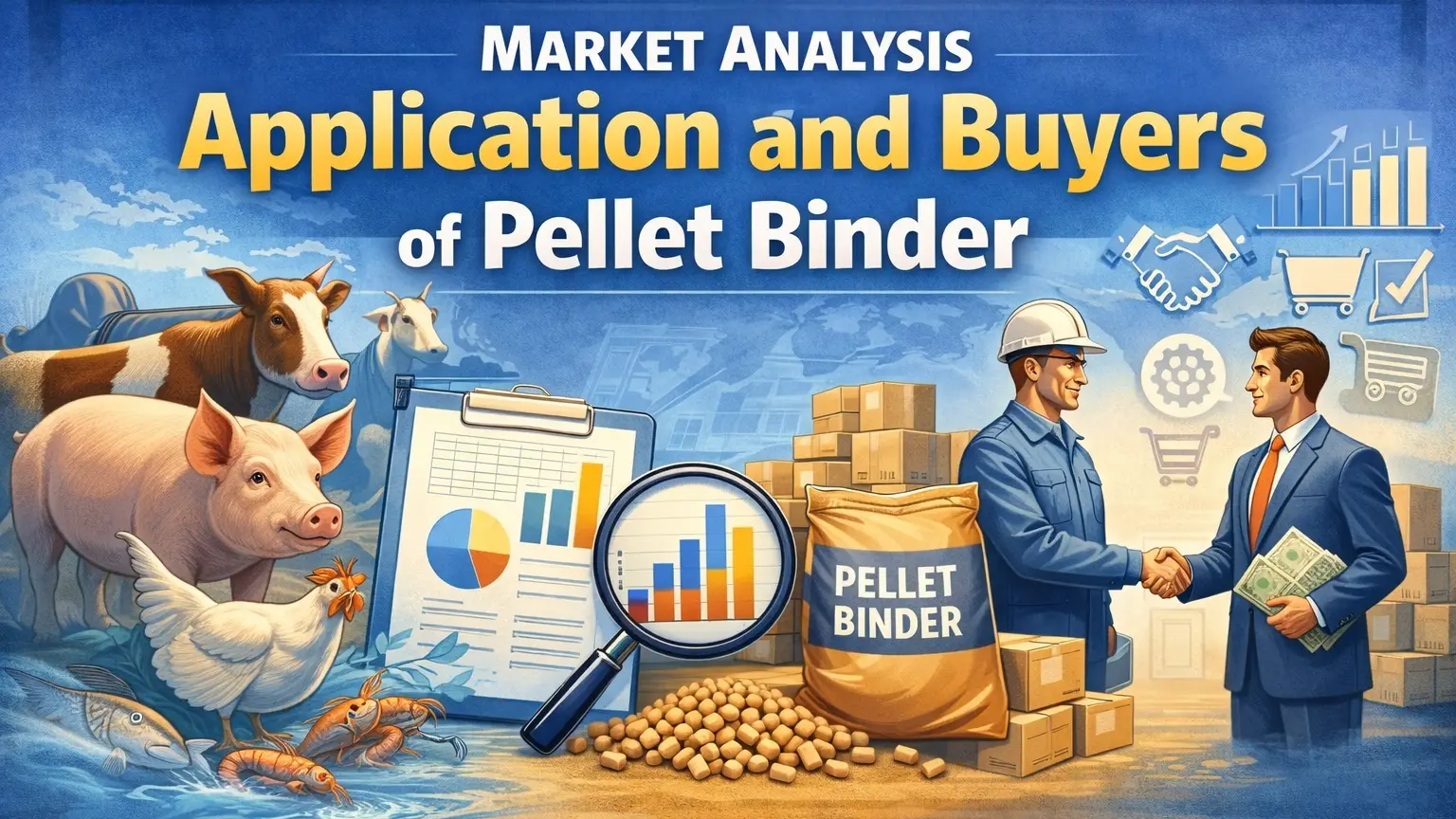
The pellet binder market in 2026 continues to strengthen as a critical platform chemical supporting pelletization across multiple heavy industries. Demand is primarily driven by the need for improved pellet durability, reduced dust formation, and enhanced process efficiency in feed, energy, and metallurgy sectors. Global market growth is projected at a steady CAGR of 5.2%, reflecting industrial expansion and sustainability-driven material optimization. Average pellet binder prices range between USD 850–1,450/MT, depending on formulation such as lignosulfonates, starch-based, or synthetic variants, while global consumption linked to pelletized production exceeds 320 million metric tons annually across end-use sectors.
Animal feed remains one of the largest application areas, where pellet binders ensure structural integrity of feed pellets and reduce nutrient loss during handling. The feed pellet industry alone processes over 140 million MT annually, with Asia-Pacific accounting for more than 45% of consumption. Buyers include large feed mill operators, integrators, and livestock producers who prioritize cost efficiency and pellet durability improvements of up to 20–30% using advanced binders.
In the renewable energy segment, biomass pellet production is rapidly expanding, particularly in Europe and North America. Pellet binders are essential in wood, agricultural residue, and waste-based fuel pellets, supporting combustion efficiency and moisture resistance. Global biomass pellet output surpassed 55 million MT in 2026, with utilities, heating plants, and industrial boilers acting as key buyers. This segment is increasingly influenced by carbon-neutral energy policies and rising demand for alternative fuels.
Iron ore pelletizing remains a highly technical application where binders such as bentonite and organic polymers improve pellet strength during furnace processing. Global iron ore pellet production exceeds 280 million MT, with major buyers including steel manufacturers in China, India, and Brazil. The sector continues to invest in low-impurity binder solutions to enhance blast furnace efficiency and reduce energy consumption.
The fertilizer industry increasingly adopts pellet binders to improve granule formation in compound fertilizers and slow-release formulations. With global fertilizer pellet production estimated at 90 million MT, agricultural distributors and agrochemical manufacturers represent growing buyer segments. Demand is also rising in specialty industrial applications such as chemical granulation and waste agglomeration, supporting diversified end-user adoption.
The pellet binder market in 2026 reflects a structurally resilient and expanding industrial segment, driven by cross-sector pelletization needs and sustainability-focused manufacturing trends. As industries increasingly prioritize efficiency, durability, and process optimization, pellet binders remain essential enabling materials across global supply chains.
In this evolving landscape, companies seeking reliable sourcing, consistent quality, and global distribution capabilities are increasingly turning to integrated chemical partners. Tradeasia International stands out as a trusted global solution provider, offering a broad portfolio of industrial chemicals and supply chain expertise to support manufacturers in feed, energy, metallurgy, and fertilizer sectors.
Sources
We're committed to your privacy. Tradeasia uses the information you provide to us to contact you about our relevant content, products, and services. For more information, check out our privacy policy.


 English
 Indonesian
 简体字
简体字
 العربية
 Español
 Français
 Português
 日本語
日本語
 한국어
한국어
 Tiếng Việt