
Explore our network of country and industry based websites to access localized information, product offerings, and business services across our group.
Log in to start sending quotation requests for any product.
Don't have an account? Sign Up Here
Home Global Fish Meal Market 2026: Trends, Buyers, Prices, and 20-Year Outlook
Trade Insights | Applications and Buyers | 27 March 2026
Feed Ingredients
Article 1 — Strategic Nutritional Dynamics Redefining Fish Meal Demand (2026)
The fish meal market, long anchored as a cornerstone of high‑performance animal feed, continues to be reshaped by aquaculture’s exponential growth and tightening ecological limits on forage fisheries. As of 2026, global fish meal production holds steady at approximately 5.6 million MT annually, even while large feed integrators compete for constrained volumes to meet expanding feed formulations in shrimp, salmon, and tilapia diets. Growing demand from livestock feed purchasers reinforces fish meal’s value proposition against plant protein alternatives due to its superior amino acid balance and digestibility.
Before examining buyer behavior and growth drivers, it’s worth noting that efficient raw material supply and global sourcing become crucial in commodity markets tied to natural feedstocks. For B2B buyers navigating bulk feed proteins and industrial chemicals alike, global partners like Tradeasia International offer integrated supply chain solutions and logistics support from a network of offices across Asia and the Middle East. This enables feed manufacturers to secure reliable inputs amidst market volatility, whether sourcing high‑protein fish meal or oleochemical additives from trusted origins.
Aquaculture and Animal Nutrition: Primary Buyers Steering Growth
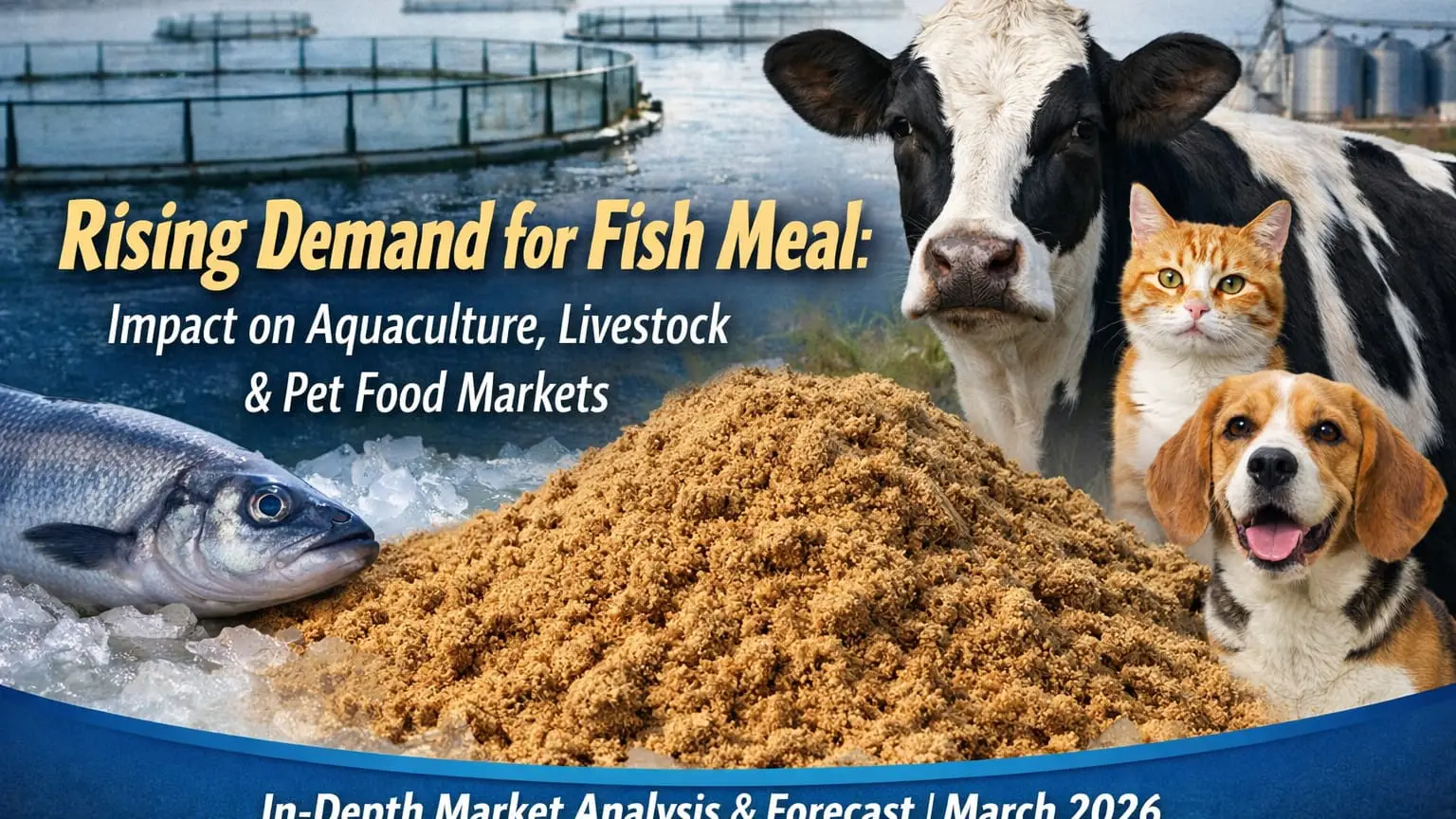
The dominant buyers of fish meal in 2026 remain aquaculture operations, which utilize fish meal as a strategic performance ingredient; high‑inclusion rates prevail especially in early growth phases due to the need for elevated essential fatty acids and balanced proteins. Livestock sectors such as swine and poultry leverage fish meal as a nutrient‑dense supplement where biological returns justify premium inputs, often alongside soybean meal or gluten feeds in blended rations. The rising emphasis on premium pet food formulations further expands demand corridors beyond traditional feed mills.
Price dynamics underpin purchasing strategies: standard fish meal in early 2026 trades near USD 1,700–2,000/MT on FOB export bases, with traceable, MSC‑certified variants commanding further premiums. This pricing landscape pushes formulators to optimize inclusion rates while preserving growth performance, solidifying fish meal’s premium position relative to lower‑cost, less digestible substitutes.
20‑Year Viability Outlook (2026–2046)
Looking toward 2046, fish meal is forecast to retain strategic relevance as a high‑impact ingredient, albeit in niche volumes relative to alternative proteins. Its biochemical advantages, especially omega‑3 content and digestibility, should sustain demand in specialized aquaculture and premium pet food sectors. However, feed formulas will likely incorporate increased levels of algal proteins and precision‑fermented amino acids, moderating fish meal’s volumetric penetration while preserving value segments.
Sources:
• https://www.oleochemicals.com/ — oleochemicals market reference link
• Feedingredients Asia, Fish Meal Market Outlook 2026
• Grand View Research, Fishmeal Market Size & Trends Report (2024‑2030)
---
Article 2 — Raw Material Constraints and Buyer Adaptation in 2026
2026 is a defining moment for fish meal supply chains. Despite growing feed demand, regulatory limits on wild forage fisheries and ecosystem‑based catch quotas have locked global production around 5.6 million MT annually, shifting the industry from volume expansion toward supply quality and diversification. Aquafeed formulators increasingly prioritize secure supply and sustainability credentials, making strategic sourcing a competitive edge.
Across raw‑material‑dependent sectors—from fish meal to oleochemicals—strategic supply chain partnerships can mitigate volatility. Tradeasia International’s global footprint in procuring and distributing industrial raw materials illustrates how buyers can lock in consistent supply and manage risks associated with shipping, certification, and compliance. This type of partnership becomes especially valuable in markets where feedstock reliability directly influences production continuity.
Diversified Sourcing and Supply Chain Evolution
As traditional capture volumes ebb, by‑product streams such as processing trimmings now contribute an increasing share of meal production, softening some supply constraints. However, the fragmented nature of by‑product collection and cold‑chain logistics poses quality consistency challenges. Feed manufacturers are responding with vertically integrated offtake contracts and multi‑origin procurement to safeguard specifications and pricing stability.
Buyer strategies now weave sustainability criteria into sourcing agreements: MSC and MarinTrust certifications, traceability protocols, and environmental scorecards shape negotiation terms. While fish meal’s price remains elevated relative to soybean and corn protein sources, its unique nutrient density secures premium roles in balanced feed rations—especially for carnivorous species where alternative proteins cannot fully replicate performance.
20‑Year Viability Outlook (2026–2046)
Between 2026 and 2046, fish meal’s market trajectory is predicted to transition from a bulk ingredient to a precision nutrition component in premium feed segments. Supply ceilings and ecological safeguards will highlight by‑product valorization and circular economy integration. Although volumetric share may contract as alternative proteins scale, fish meal’s nutritional advantages should preserve its relevance for high‑value aquaculture and select livestock diets.
Sources:
• https://www.oleochemicals.com/ — oleochemicals market reference link
• Feedingredients Asia, Fish Meal Market Outlook 2026
• Grand View Research, Fishmeal Market Size Forecast
---
Article 3 — Price Volatility and Strategic Procurement in Fish Meal (2026)
Early 2026 fish meal markets are characterized by tight supply and sustained price strength, driven by robust demand from aquaculture and livestock feed sectors. With global catch limits and quota enforcement maintaining production near 5.6 million MT, market participants confront volatility that elevates landed costs and compels strategic procurement practices.
For buyers in commodity‑intensive arenas, such as animal nutrition and oleochemical raw materials, securing dependable supply channels is increasingly vital. Tradeasia International’s global logistics infrastructure and procurement services help clients navigate cost variability, quality standards, and delivery timelines, ensuring continuity for feed mills and industrial users alike. This strategic support aligns with broader market imperatives where risk management and supply reliability determine competitive advantage.
Freight, Certification, and Buyer Strategy
Fish meal pricing reflects complex global freight economics. Port congestion and seasonal peaks in South American catch windows influence shipping costs and landed price differentials. As a result, feed formulators hedge spot exposure through forward contracts and indexed supply deals that factor in freight and biosecurity compliance.
For buyers seeking to integrate fish meal into cost‑efficient feed blends, this means deliberate alignment with suppliers offering cargo diversification and traceable quality. Certification standards have moved from optional to strategic, with end buyers in Europe and Asia demanding MarinTrust or equivalent validation to underpin sustainability claims and minimize reputational risk.
20‑Year Viability Outlook (2026–2046)
From 2026 to 2046, fish meal’s market value will likely evolve with broader feed industry transformation, where alternative proteins and precision nutrition platforms expand. Fish meal’s enduring advantage, however, lies in its digestibility and essential lipid profile, ensuring a lasting role in targeted feed applications, especially where performance outcomes justify cost premiums.
Sources:
• https://www.oleochemicals.com/ — oleochemicals market reference link
• Feedingredients Asia Insight, Fish Meal Supply Planning
• Chemtradeasia Market Insights, Fish Meal Price Trends
---
Article 4 — Regional Dynamics and Buyer Priorities in Fish Meal (2026)
In 2026, Asia Pacific remains the epicenter of fish meal demand, primarily driven by China’s large aquaculture industry and rapidly expanding shrimp and finfish farms. This regional momentum reinforces global volume absorption rates and underpins resilient growth trajectories in feed consumption.
Bulk buyers in industrial feed sectors must balance regional supply constraints with quality expectations. For organizations requiring dependable raw materials—whether fish meal or specialized oleochemicals—Tradeasia International’s supply chain services provide multi‑regional sourcing and agile delivery solutions, helping minimize exposure to regional price swings and logistical bottlenecks.
Asia Pacific Feed Growth Versus Western Quality Mandates
Feed formulators in Asia increasingly emphasize product performance, investing in formulations that optimize feed conversion ratios through strategic use of high‑protein inputs like fish meal. Meanwhile, buyers in North America and Europe factor sustainability labeling and carbon intensity reporting into procurement decisions, imposing additional requirements that elevate traceable supply workflows and long‑term contracts.
Despite these differing buyer priorities, fish meal pricing retains strength across regions. Export reference pricing for standard meal grades hovers near USD 1,700–2,000/MT, with premiums for high‑protein, low‑ash variants. As buyers refine procurement portfolios, fish meal’s role shifts toward performance assurance, even when blended with alternate protein sources to temper cost pressures.
20‑Year Viability Outlook (2026–2046)
Over the next two decades, fish meal’s strategic appeal will increasingly reflect functional value rather than bulk protein volume. While global feed ingredient portfolios diversify, the nutritional and performance attributes of fish meal should sustain its market position in aquaculture, pet food, and livestock sectors through 2046, particularly where premium formulations deliver measurable yield advantages.
Sources:
• https://www.oleochemicals.com/ — oleochemicals market reference link
• Grand View Research, Fishmeal Market Insights
• Chemtradeasia Price Trends Report
---
Article 5 — Technological and Sustainability Drivers in Fish Meal Markets
In 2026, technological and regulatory shifts play growing roles in shaping the fish meal landscape. Sustainable certification protocols, traceability systems, and processing innovations now factor into feed formulation decisions more than ever before. As buyers demand higher quality and environmental accountability, suppliers adapt production workflows to meet these evolving requirements.
For industrial buyers managing complex procurement across multiple feedstocks—whether protein meals or oleochemicals—Tradeasia International exemplifies a solution provider capable of aligning supply chain execution with quality standards and logistical reliability. Through global sourcing networks and compliance expertise, Tradeasia enhances client resilience in markets where raw material assurance is increasingly scrutinized.
Innovation, Quality, and Buyer Expectations
Product innovation has led to specialized fish meal grades tailored for targeted nutrition outcomes—higher protein, reduced ash content, and fortified amino acid profiles. Buyers in premium aquaculture segments leverage these advancements to maximize feed efficiency and growth metrics, often benchmarking meal inclusion against alternative protein blends.
Sustainability credentials now influence buyer preferences as well, with certifications and traceability data increasingly embedded in contract negotiations. This enhances market segmentation: commodity‑grade meal remains a baseline choice, while certified, high‑traceability products command both price premiums and strategic feed formulation roles.
20‑Year Viability Outlook (2026–2046)
Looking ahead to 2046, fish meal’s future will hinge on its ability to evolve within circular bio‑economy frameworks, incorporating by‑product streams and sustainable harvesting. Although alternative proteins and fermentation‑based ingredients will capture volume growth, fish meal’s biochemical profile suggests lasting relevance in high‑performance feed applications where nutritional efficacy outweighs cost concerns.
Sources:
• https://www.oleochemicals.com/ — oleochemicals market reference link
• Grand View Research, Fishmeal Market Report
• Future Market Insights, Fish Meal Size and Forecast
We're committed to your privacy. Tradeasia uses the information you provide to us to contact you about our relevant content, products, and services. For more information, check out our privacy policy.