Introduction
The Asia-Pacific region stands as the undisputed epicenter of global soybean meal consumption, driven by its massive and intensifying livestock and aquaculture sectors. As we project forward to the first quarter of 2026, the market is poised at a critical juncture, influenced by a complex matrix of macroeconomic pressures, evolving dietary patterns, and a relentless pursuit of feed efficiency. This period will not merely reflect cyclical trends but likely underscore structural shifts in sourcing, quality requirements, and application strategies across the animal protein value chain.
For feed mill operators, integrators, and traders, understanding these dynamics is paramount. The choice of protein source, particularly soybean meal, directly impacts feed formulation costs, animal performance, and ultimately, profitability. This article provides a comprehensive, forward-looking analysis of the Asia soybean meal market for Q1 2026, with a dedicated focus on the product specifications that will matter most and the strategic sourcing channels available to industry stakeholders.
Key Drivers Shaping the Q1 2026 Asia Soybean Meal Market
Several powerful forces will converge to define the market landscape in early 2026. Firstly, the recovery and stabilization of swine herds across Southeast Asia, particularly in Vietnam, the Philippines, and Thailand, post-regional disease challenges, will sustain robust demand for pig feed. Concurrently, the poultry sector in South Asia, led by India and Bangladesh, continues its expansion to meet rising domestic protein consumption, further tightening demand for reliable protein sources. Aquaculture, especially shrimp and finfish production in Indonesia and India, remains a high-growth segment with specific nutritional needs that high-quality soybean meal can fulfill.
On the supply side, weather patterns in key producing nations like Brazil and the United States during their 2025 harvests will be the primary determinant of global soybean crush volumes and, consequently, meal availability for Q1 2026. Geopolitical tensions affecting trade routes and currency exchange rate volatility will directly influence C&F prices in Asian ports. Furthermore, the accelerating regional trend towards sustainable and traceable supply chains is pushing buyers to seek not just cost-effective, but verifiably responsible sources of feed ingredients.
Regional Demand Analysis: Hotspots and Shifting Patterns
Demand across Asia is far from homogeneous. China, while experiencing a moderation in growth due to peak pork consumption and increased use of alternative proteins in rations, will still account for the lion's share of imports. Its demand will be highly sensitive to the price ratio between domestic and international soybean meal. The real growth engines, however, are Southeast Asia and South Asia. Vietnam's feed industry is projected to maintain a CAGR of over 3-4%, heavily reliant on imported meal for its expanding livestock and aquaculture operations.
Indonesia presents a unique case, with its government's push for food self-sufficiency influencing import policies. However, the gap between domestic soybean production and the needs of its massive poultry and aquaculture sectors ensures continued significant import demand. India, a major producer, also emerges as a key importer during certain periods, as its domestic crush cannot always keep pace with the explosive growth in compound feed production. This creates opportunistic demand spikes that savvy traders can capitalize on.
Spotlight on Premium Soybean Meal: Specifications and Applications
In a competitive market, the generic commodity is giving way to specified, quality-differentiated products. For high-performance animal nutrition, not all soybean meal is created equal. The benchmark product remains Hi-Pro Soybean Meal (47-48% protein), prized for its consistent amino acid profile, particularly lysine and methionine, which are critical for monogastric animals. Its low fiber content and high digestibility make it the gold standard for poultry, swine, and aquaculture feed formulations where nutrient density is key to achieving optimal feed conversion ratios (FCR).
Beyond protein percentage, sophisticated buyers are increasingly scrutinizing other specifications. Urease activity index is monitored to ensure proper heat treatment and destroy anti-nutritional factors like trypsin inhibitors. Moisture content is critical for storage stability and true protein valuation. KOH solubility can indicate over-processing. For specialized applications, such as starter feeds for piglets or shrimp feed, fermented soybean meal or enzyme-treated products with reduced oligosaccharides and allergens are gaining traction. Sourcing such specialized feed ingredients requires partners with stringent quality control and technical understanding, such as those accessible through platforms like Chemtradeasia.com and its regional portals, which connect buyers with verified suppliers of graded products.
The application dictates the specification. In broiler diets, 47% protein meal is essential for rapid muscle development. In layer rations, a consistent amino acid profile supports sustained egg production and shell quality. In aquaculture, the inclusion of high-quality, solvent-extracted soybean meal reduces reliance on fishmeal, lowering feed costs and enhancing sustainability profiles. Understanding these nuances allows feed formulators to select the exact product grade that delivers maximum value for their specific operation.
The Competitive Landscape: Sourcing and Supply Chain Dynamics
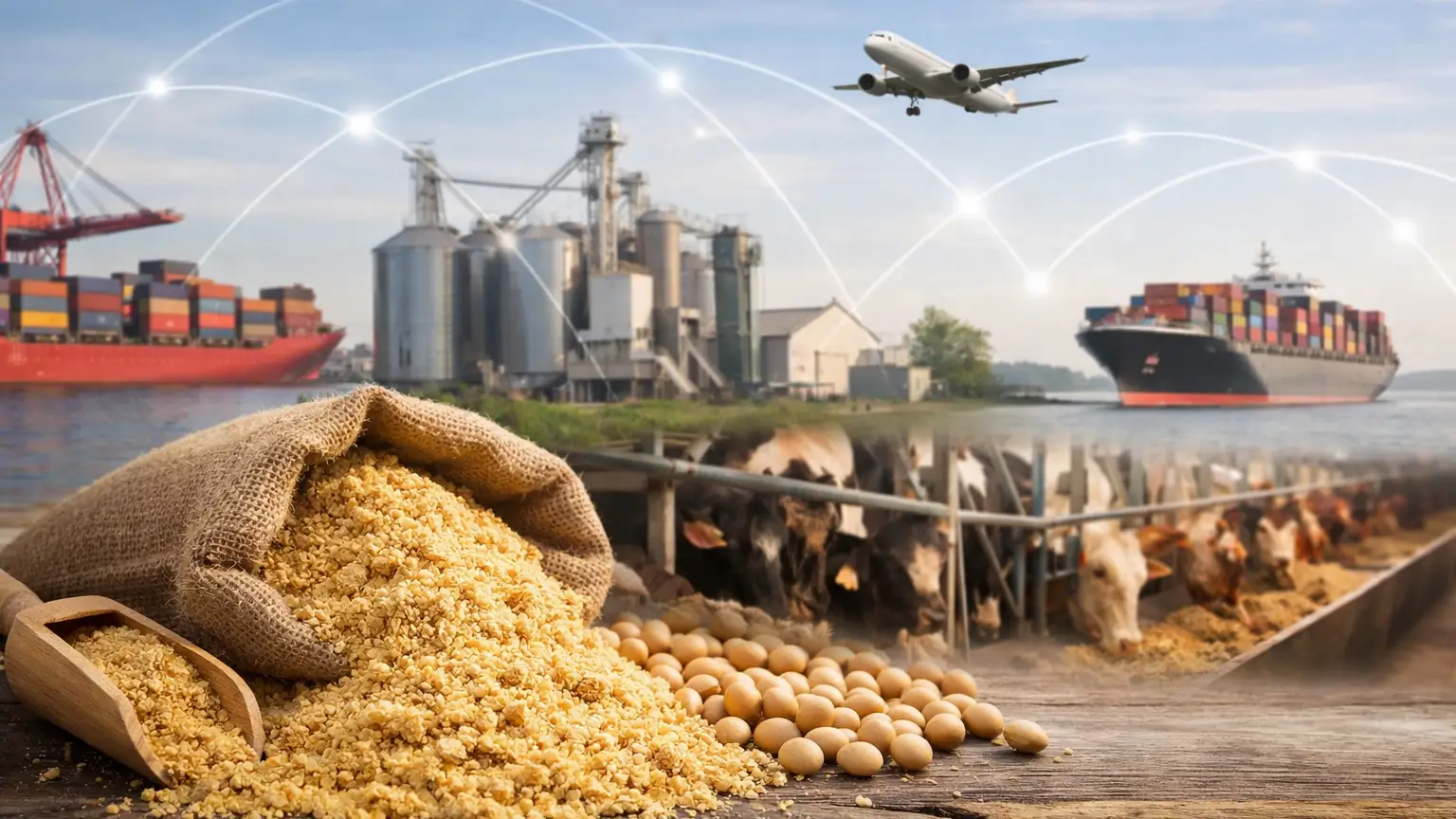
The traditional model of sourcing through large international traders is being complemented by digital B2B platforms that offer transparency, efficiency, and access to a wider supplier network. Platforms like feedingredientsasia.com and the Chemtradeasia network (including Chemtradeasia.sg for Southeast Asia, Chemtradeasia.co.id for Indonesia, and Chemtradeasia.in for India) have become vital tools for procurement managers. They facilitate direct connections between Asian feed manufacturers and reliable global producers, often providing detailed product specifications, shipment histories, and supplier credentials to de-risk transactions.
Logistics and origin are paramount. In Q1 2026, the cost and reliability of shipping from Brazil versus the United States will be a daily calculation for importers. Buyers in East Asia may favor South American meal, while those in Southeast Asia might find cost advantages in cargoes from India or nearby crushers. The role of regional hubs like Singapore, served by entities like Chemtradeasia.sg, and the UAE, via Chemtradeasia.ae, as centers for trade finance, logistics coordination, and quality arbitration, will be more critical than ever in ensuring smooth supply into the final consumption markets.
Strategic Implications and Future Outlook
For industry participants, the Q1 2026 outlook necessitates a multi-pronged strategy. Price volatility hedging through futures and forward contracts will be essential for cost management. Diversifying supplier bases across origins (Brazil, USA, Argentina) and exploring regional crush opportunities can mitigate supply chain risks. Most importantly, building strategic partnerships with technically proficient suppliers or intermediaries who understand the nuances of feed-grade soybean meal specifications will transition from a luxury to a necessity.
Looking beyond Q1 2026, the long-term trajectory points towards even greater product segmentation. Demand for non-GMO, identity-preserved, and sustainably certified (e.g., ProTerra, FEFAC SSG) soybean meal will grow, particularly from integrated producers supplying premium export markets. The integration of blockchain for traceability and the use of AI for predictive logistics and procurement will become more mainstream. The Asia soybean meal market will remain a dynamic, high-stakes arena where informed, agile, and well-connected players will thrive.
Conclusion
The Asia soybean meal market in Q1 2026 will be characterized by resilient demand, nuanced regional variations, and an intensifying focus on quality and supply chain integrity. Success will depend on moving beyond viewing soybean meal as a simple commodity and recognizing it as a strategic feed ingredient where specifications directly impact biological and economic outcomes. By leveraging deep market insights, embracing digital sourcing tools, and forging partnerships with quality-assured suppliers, feed industry stakeholders can navigate this complex landscape effectively.
Disclaimer: This article is for informational and market insight purposes only. It is not intended as technical, safety, financial, or professional advice for specific feed formulation or trading decisions. Market conditions are dynamic and can change rapidly. Readers are strongly advised to verify all information independently, consult with qualified nutritionists, economists, and legal experts, review official product documentation such as Safety Data Sheets (SDS), and conduct their own due diligence. For specific applications and current product offerings, please contact our relevant team directly for the most accurate and up-to-date information.