Introduction
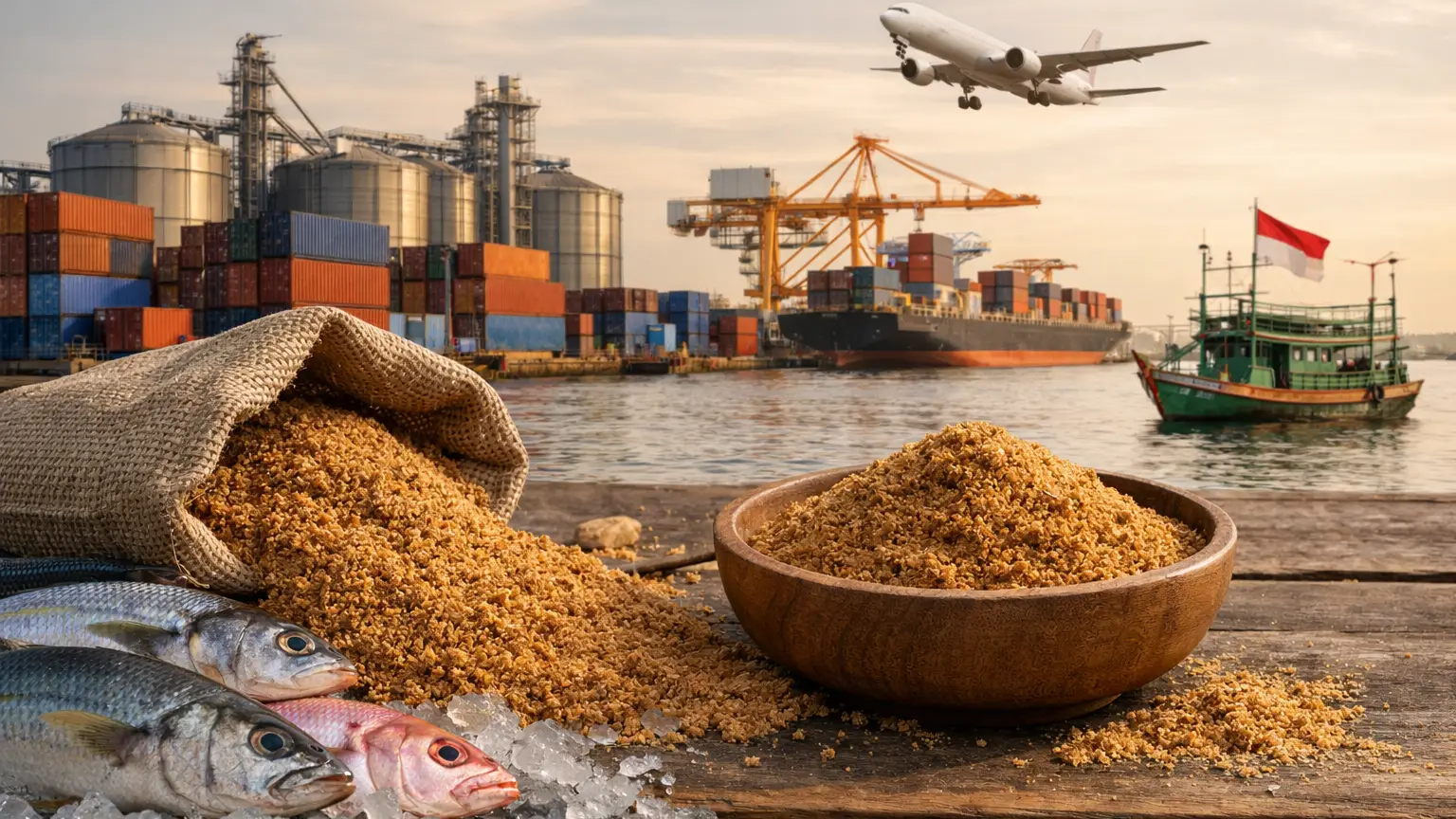
Indonesia has emerged as one of Asia’s most dynamic feed markets, driven by rapid growth in aquaculture, poultry, and livestock production. As the country seeks to secure high-quality protein for compound feeds, fish meal remains a cornerstone ingredient due to its high digestibility, balanced amino acid profile, and functional benefits for animal health. Entering Q1 2026, producers, nutritionists, and traders across Asia are closely monitoring Indonesia’s fish meal demand and its implications for regional supply, pricing, and formulation strategies.
Across Asia, feed manufacturers are under pressure to balance cost, performance, and sustainability. While alternative proteins such as soybean meal, poultry by-product meal, and plant concentrates are gaining share, fish meal continues to play a strategic role, especially in high-performance aquafeeds and starter diets. This creates a nuanced demand pattern: overall inclusion rates may decline, but demand for consistent, high-quality fish meal remains robust in critical life stages and premium feed segments.
In this context, integrated supply platforms such as chemtradeasia.com, chemtradeasia.in, chemtradeasia.co.id, chemtradeasia.ae, chemtradeasia.sg, and feedingredientsasia.com are increasingly important. They connect Indonesian and Asian feed producers with reliable marine and alternative protein sources, technical documentation, and logistics support, helping the industry navigate volatility in raw material availability and pricing as Q1 2026 unfolds.
Q1 2026 Outlook for Indonesia’s Fish Meal Demand
Indonesia is among the world’s largest aquaculture producers, with FAO and regional industry data indicating continuous growth in shrimp, tilapia, catfish, and marine finfish output over the past decade. By early 2026, industry analysts expect Indonesia’s total aquafeed demand to continue growing in the mid-single to high-single digit range annually, driven by export-oriented shrimp farming and expanding domestic consumption of freshwater fish. This growth directly supports structural demand for fish meal, particularly in nursery and grow-out feeds where performance and survival are critical.
However, Indonesia’s fish meal demand is not only a function of feed volume but also of evolving formulation strategies. Nutritionists are increasingly optimizing diets to reduce fish meal inclusion while preserving growth rates and feed conversion ratios (FCR). In many commercial shrimp feeds, for example, fish meal inclusion that once exceeded 20–25% has been gradually reduced to ranges closer to 10–18%, supplemented by plant proteins and functional additives. Nevertheless, the absolute volume of fish meal used in Indonesia remains high because the overall feed tonnage is expanding, and premium segments often maintain higher inclusion levels.
Q1 2026 is also shaped by global supply-side dynamics. Major fish meal exporting countries such as Peru and Chile have faced periodic quota adjustments and climate-related variability (e.g., El Niño events) that affect anchovy catches and fish meal output. These factors can tighten global supply and elevate prices, which in turn influence Indonesia’s procurement strategy. Many Indonesian feed mills and traders are therefore looking to diversify suppliers and contract structures, leveraging regional hubs and digital platforms like chemtradeasia.com and feedingredientsasia.com to secure stable volumes and price visibility.
Key Applications of Fish Meal in Asia’s Feed Market
Fish meal’s primary application in Asia is in aquaculture feeds. High-quality fish meal provides a dense source of digestible protein (often 60–72% crude protein), essential amino acids such as lysine and methionine, and marine-origin lipids containing EPA and DHA. In shrimp feed, fish meal enhances palatability, supports gut health, and helps maintain robust growth under intensive farming conditions. For finfish such as grouper, seabass, and high-value marine species, fish meal remains difficult to replace completely due to its unique nutritional and functional properties.
Beyond aquaculture, fish meal is widely used in poultry and swine feeds, although at lower inclusion levels compared to aquafeed. In broiler starter diets, small amounts of fish meal can significantly improve early growth and feed efficiency, while in breeder and layer diets it can support egg production and shell quality when used judiciously. In swine, fish meal is particularly valued in piglet and pre-starter feeds to improve palatability, digestibility, and immune resilience during weaning, a period highly sensitive to stress and disease challenges.
In Indonesia and the wider Asian region, a further application is in specialty and pet foods. Premium pet food formulations often incorporate fish meal or fish-based protein concentrates to differentiate products with “marine protein” claims and to provide high palatability for cats and dogs. As the middle class in Asia grows and pet ownership rises, this niche but fast-growing segment contributes an additional layer of demand for consistent, high-specification fish meal, often requiring strict quality control, traceability, and compliance with export market regulations.
Product Focus: Fish Meal and Protein Sources from Chemtradeasia
As feed manufacturers optimize their formulations in Q1 2026, reliable access to standardized, quality-controlled fish meal is essential. Through platforms such as chemtradeasia.com, chemtradeasia.in, chemtradeasia.co.id, chemtradeasia.ae, and chemtradeasia.sg, buyers across Asia can source a range of fish meal grades tailored to aquaculture, poultry, and livestock applications. Typical specifications include crude protein ranges from 60% to 72%, controlled fat content, low moisture to reduce spoilage risk, and monitored levels of ash, TVN (Total Volatile Nitrogen), and biogenic amines, all of which influence shelf life and feed performance.
In addition to conventional fish meal, these platforms support access to complementary marine and alternative protein sources such as fish soluble paste, fish protein concentrates, and selected animal and plant proteins that can partially replace fish meal in certain formulations. By working with a diversified supplier base across multiple geographies, chemtradeasia.com and feedingredientsasia.com help mitigate the impact of regional catch fluctuations and regulatory changes on Indonesian and Asian feed producers. This multi-origin approach allows formulators to maintain consistent nutritional profiles even when individual supply regions face disruptions.
For technical and procurement teams, an important advantage of using integrated platforms is the availability of documentation and support. Through chemtradeasia.co.id and regional portals, buyers can typically obtain product data sheets, typical analysis reports, and safety documentation such as MSDS/SDS for fish meal and related feed ingredients. This transparency supports quality assurance, traceability, and compliance with both domestic Indonesian standards and export market requirements. Coupled with logistics and warehousing support in key Asian ports, these services enable feed mills to plan procurement more efficiently and reduce the risk of raw material shortages during peak production periods.
Sourcing & Supply Chain Dynamics in Asia’s Feed Ingredients Market
The supply chain for fish meal into Indonesia and broader Asia is complex, involving fishing fleets, processing plants, traders, ports, and distributors. Seasonality in major producing countries, quota decisions, and environmental factors all contribute to price volatility. In Q1 2026, many buyers are expected to adopt more sophisticated risk management strategies, including forward contracts, diversified supplier portfolios, and closer collaboration with trading partners. Platforms like chemtradeasia.sg and chemtradeasia.ae can play a key role by aggregating supply options, offering multiple incoterms, and providing timely market intelligence on availability and pricing trends.
Indonesia’s domestic fish meal production, based on processing of by-catch, small pelagic fish, and seafood by-products, helps partially offset import dependence. However, local output can be variable, and quality consistency is a recurring challenge. As a result, many medium and large feed mills prefer to blend domestic fish meal with imported material to achieve targeted nutritional and physical properties in finished feed. Regional trading hubs and online platforms make it easier to compare quality parameters, negotiate volumes, and secure shipments from Peru, Vietnam, Thailand, India, and other origins that can complement Indonesian production.
Another critical dynamic in 2026 is sustainability and regulatory scrutiny. Global buyers of shrimp and fish increasingly require proof of responsible sourcing, and certification schemes are expanding. This has implications for fish meal supply chains, where traceability and documentation are becoming more important. By working with established networks such as chemtradeasia.com and feedingredientsasia.com, Indonesian and Asian feed producers can more readily access suppliers who meet emerging sustainability criteria, provide documentation on origin and processing, and support compliance with international market standards, thereby safeguarding long-term export competitiveness.
Conclusion
Indonesia’s fish meal demand in Q1 2026 reflects the broader transformation of Asia’s feed industry: growing volumes, more sophisticated formulations, and heightened attention to cost, quality, and sustainability. Fish meal remains a strategic ingredient, particularly in aquaculture and starter feeds, even as nutritionists work to optimize inclusion levels and incorporate alternative protein sources. For producers, traders, and formulators, the challenge is to secure reliable, consistent supply while maintaining nutritional performance and regulatory compliance in an increasingly competitive and regulated environment.
Integrated sourcing and distribution platforms such as chemtradeasia.com, chemtradeasia.in, chemtradeasia.co.id, chemtradeasia.ae, chemtradeasia.sg, and feedingredientsasia.com are positioned to support this transition. By offering a broad portfolio of fish meal and complementary protein sources, along with documentation, logistics support, and regional presence, these platforms help Indonesian and Asian feed manufacturers navigate market volatility and align raw material strategies with long-term growth objectives in aquaculture, poultry, and livestock production.
This article is intended solely for informational and market insight purposes and does not constitute technical, safety, or professional advice; readers should independently verify all information with qualified experts, review official product documentation such as MSDS/SDS, and contact our technical or commercial teams for guidance on specific formulations, handling, and application conditions.