Explore our network of country and industry based websites to access localized information, product offerings, and business services across our group.
Log in to start sending quotation requests for any product.
Don't have an account? Sign Up Here
Home Poultry By-Product Utilization: Global Supply Chain Optimization Trends in 2026
Trade Insights | Supply Chain | 22 April 2026
Poultry by-products — including feather meal, blood meal, poultry fat, and by-product meal — are processed primarily in the United States, Brazil, China, and the European Union, which together account for the majority of global rendering output. These materials move through integrated rendering networks into animal feed, pet food, aquaculture feed, and biofuel applications, with North American and Brazilian product flowing heavily to Southeast Asian and Middle Eastern buyers. The dominant risk in 2026 is feedstock availability: HPAI outbreaks and geographic concentration of primary processing have created recurring supply gaps that buyers relying on single-origin sourcing are poorly positioned to absorb.
Every commercially slaughtered chicken, turkey, or duck generates by-products that account for roughly 25–35% of live bird weight. This includes feathers, blood, viscera, bone, and fat. For decades, rendering these materials was largely an environmental compliance exercise. In 2026, it is a commercial enterprise with significant market depth.
The global rendered poultry products market was valued at approximately USD 6.74 billion in 2022 and is tracking toward USD 8.65 billion by 2030, according to Fortune Business Insights. Feather meal alone reached USD 619 million in market value in 2025, growing at a compound annual rate of 8.6% through the forecast period. These figures reflect a structural shift: poultry by-products have moved from waste stream to strategic ingredient category, particularly as the pet food, aquaculture, and biofuel industries seek cost-effective, traceable protein and fat inputs.
Feed mills in Southeast Asia cannot substitute away from poultry by-product meal easily. Competing protein sources — fishmeal, soybean meal, whole blood powder — are either more expensive, more geographically restricted, or less functionally versatile. Hydrolyzed feather meal, when properly processed, delivers digestible crude protein exceeding 80% and offers lysine profiles that complement plant-based amino acid gaps. Blood meal carries crude protein of 80–90% with exceptional lysine content. These are not marginal ingredients. They are structural components in commercial aquaculture and livestock rations.
For procurement teams sourcing rendered poultry ingredients in 2026, the question is not whether to use these products — it is how to secure reliable supply across an increasingly fragmented and disrupted sourcing landscape.
The United States is the world's largest producer of chicken by volume, with broiler production sustained at approximately 20–21 million metric tons annually. This generates an enormous and consistent by-product stream. Tyson Foods operates the most extensive integrated rendering network in North America, with facilities co-located at processing plants across Arkansas, Alabama, Georgia, and the Midwest. In 2025, Tyson announced continued capital expenditures directed at increasing rendering throughput and upgrading quality certification for pet food and aquaculture applications.
U.S. rendering output is tightly coupled to primary processing volumes, which in turn are exposed to HPAI disruption. In January and February 2025, approximately 28 million layer birds were depopulated in Ohio and Indiana alone. The HPAI outbreak that began in February 2022 has now cost American consumers an estimated USD 14.5 billion in supply-side price impacts through mid-2025, according to Innovate Animal Ag. Rendering volumes do not track mass culling events — HPAI-positive birds are destroyed, not processed, eliminating the by-product stream entirely while also removing primary protein from the market. This is the counterintuitive risk buyers underestimate most.
Brazil is the world's leading chicken meat exporter, responsible for over 36% of global chicken meat exports in 2025 per USDA FAS data. Brazilian chicken production is forecast to reach 15.35 million metric tons in 2025, generating a proportional by-product stream. BRF S.A. and JBS operate rendering infrastructure embedded in their integrated processing systems, with output flowing into both domestic feed markets and export channels targeting the Middle East and Southeast Asia.
In May 2025, Brazil confirmed its first highly pathogenic avian influenza case in a commercial processing plant. Canada, China (PRC), Malaysia, Pakistan, and East Timor immediately imposed trade restrictions on Brazilian poultry and products. These restrictions, while primarily targeting chicken meat, create knock-on disruptions for by-product meal export channels serving the same buyer base. Buyers in Southeast Asia who depended on Brazilian chicken meal as a primary source faced supply gaps in H2 2025 that required rapid origin switching.
China's chicken industry grew at approximately 7% in the first half of 2025, making it one of the fastest-growing poultry sectors globally. China was a net importer of chicken products as recently as 2023 before becoming a net exporter in 2024. USDA FAS projects Chinese chicken meat exports to reach 8% of production by 2026, compared to 3–5% historically. As primary processing volumes expand, so does the domestic by-product stream available for rendering. Asia-Pacific rendering investment is accelerating, with Chinese and Southeast Asian processors increasingly partnering with European rendering technology providers to upgrade quality certification to export specifications.
China's domestic rendering output feeds primarily into its own aquaculture and livestock sectors, which are among the world's largest by volume. Export-grade by-product meal from China is growing but remains subject to quality variability concerns that multinational pet food and aquaculture buyers evaluate carefully in their sourcing decisions.
The European Union's Animal By-Products Regulation (EC 1069/2009) establishes the most stringent processing and traceability requirements globally for Category 3 poultry by-products entering the feed chain. This regulatory framework has made EU-derived poultry by-product meal and fat a premium-tier product for buyers with strict quality or market access requirements — particularly pet food manufacturers targeting EU retail markets. Germany, France, the Netherlands, and Poland are the primary processing countries.
EU rendering capacity is constrained relative to Asian markets. Tight parent stock supply and slow-growth breed adoption have moderated primary poultry processing volumes through 2025, suppressing by-product feedstock availability. European processing costs are structurally higher due to energy costs and labor regulation. As a result, EU-origin poultry meal commands a price premium of 15–25% over Brazilian and U.S. equivalents in most markets, per industry estimates.
| By-Product Type | Protein Content | Primary Applications | Key Producing Regions |
|---|---|---|---|
| Poultry By-Product Meal | 58–65% crude protein | Animal feed, pet food, aquaculture | USA, Brazil, EU, China |
| Hydrolyzed Feather Meal | 75–85% crude protein | Livestock feed, aquaculture, monogastics | USA, EU, Australia |
| Blood Meal | 80–90% crude protein | Livestock feed, organic fertilizer | USA, Brazil, EU |
| Poultry Fat | High energy (8,500–9,000 kcal/kg) | Pet food palatability, biofuel, animal feed | USA, Brazil, global |
| Bone Meal | High calcium/phosphate | Animal feed, fertilizer | Global, decentralized |
Animal feed is the dominant end-use category, capturing approximately 44% of feather meal consumption and the majority of by-product meal volumes globally. Pet food is the fastest-growing application segment, driven by premiumization trends and the shift toward meat-first formulations. Mars Petcare launched hypoallergenic chicken protein pet food formats in 2025, specifically citing hydrolyzed chicken protein for digestive-sensitive breeds. Hill's Science Diet reformulated its digestive health line using hydrolyzed chicken protein in the same period, reflecting broader category investment in poultry-derived protein fractions for companion animal nutrition.
Cargill expanded its portfolio in 2025 to incorporate renewable diesel derived from poultry fat, reducing reliance on vegetable oil feedstocks and positioning poultry fat as a viable biofuel input alongside traditional tallow and yellow grease. This application is price-sensitive and competes directly with feed uses when energy markets are favorable — buyers sourcing poultry fat for pet food palatability should monitor biofuel demand as a competing price signal.
North American and Brazilian rendering output exports to Southeast Asia and the Middle East where local rendering capacity cannot satisfy growing feed demand. This is a structural, not cyclical, imbalance. Indonesia, Vietnam, the Philippines, and Thailand have expanded primary poultry processing rapidly — Vietnam at 4% growth and the Philippines at 4.5% in the first half of 2025 per Rabobank data — but rendering infrastructure investment has lagged, creating import dependence for high-protein by-product ingredients.
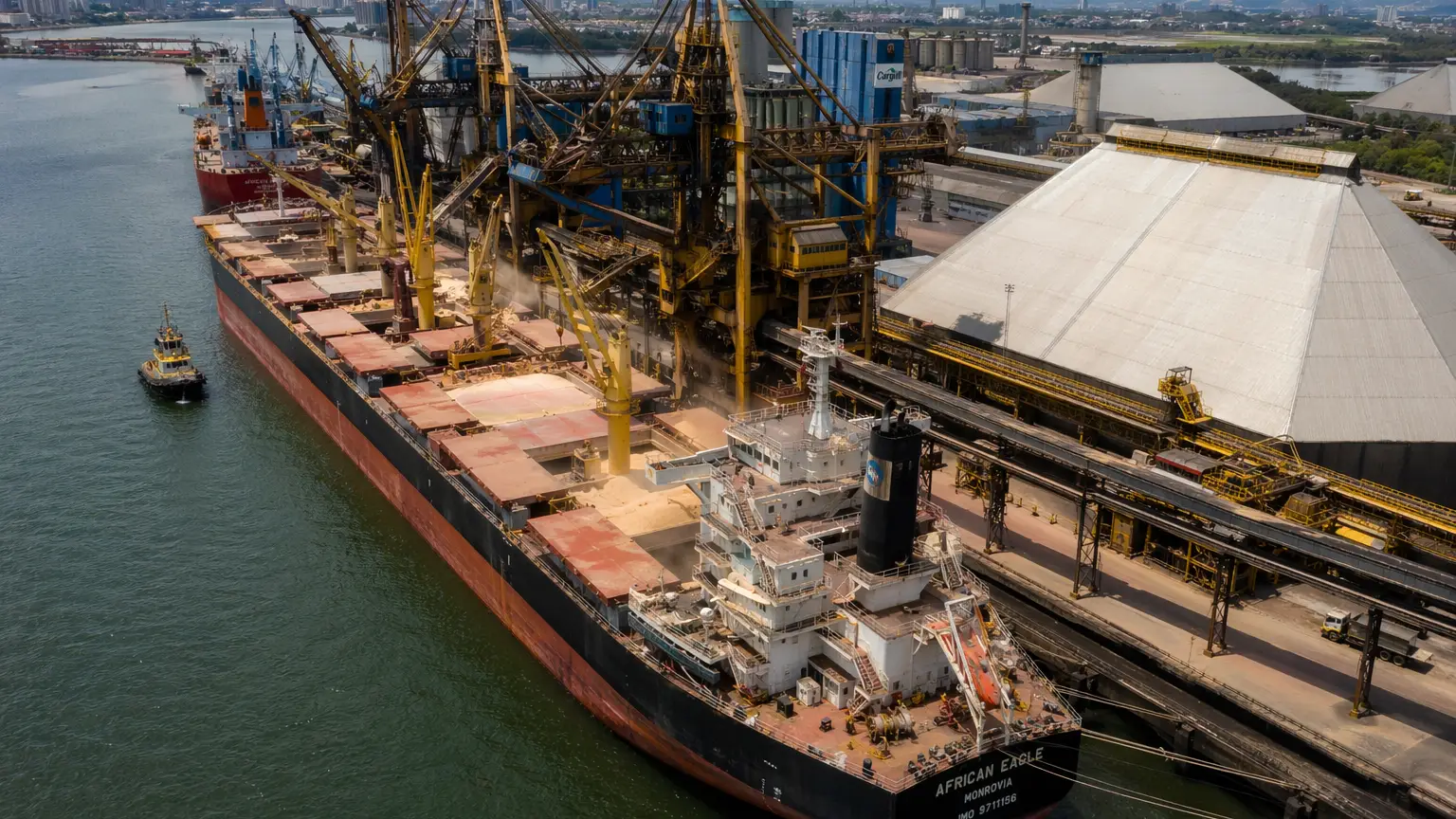
The primary trade corridor is: U.S. Gulf Coast and Brazilian ports (Santos, Paranaguá) loading poultry meal and fat into bulk containers or dry bulk vessels, transiting the Panama Canal or the Cape of Good Hope, arriving at Singapore, Port Klang (Malaysia), Jakarta, and Manila for distribution into regional feed mill networks. Logistics costs on this corridor have stabilized post-2022 but remain sensitive to Panama Canal water level constraints, which periodically force rerouting via the Cape.
Middle Eastern buyers — particularly Saudi Arabia, the UAE, and Egypt — source poultry by-product meal for aquaculture and livestock operations. These markets are price-sensitive and tend to shift origin between U.S. and Brazilian suppliers based on FOB price spreads and freight differentials. When Brazilian currency (BRL) weakens relative to the USD, Brazilian product consistently undercuts U.S. origins by USD 20–40 per metric ton CFR Middle East, pulling market share from North American exporters.
Quality certification is an increasingly important trade flow determinant. AAFCO compliance requirements (for U.S. market pet food applications) and EU feed hygiene regulation compliance function as gating conditions for premium buyer segments. Multinational pet food manufacturers with global procurement — including Nestlé Purina, Mars Petcare, and Hill's — require certified, traceable origin documentation before approving suppliers. This creates a two-tier market: commodity by-product meal flowing to price-sensitive feed mill buyers, and certified-grade product commanding 10–20% premiums for pet food and aquaculture applications.
Avian influenza is the primary feedstock risk for rendered poultry by-products, because HPAI-positive birds are never processed into the commercial supply chain. The U.S. HPAI outbreak that began in February 2022 has resulted in the culling of tens of millions of birds across multiple seasons, with 41.4 million birds depopulated in December 2024 and January 2025 alone. Brazil's May 2025 commercial plant detection triggered immediate import restrictions by five trading partners. These events remove feedstock from the rendering stream entirely, tighten by-product meal availability, and create spot price spikes that contract buyers are insulated from and spot buyers absorb fully.
The risk is structural. HPAI H5N1 clade 2.3.4.4b has demonstrated persistent global presence across wild bird migratory corridors. Seasonal outbreak probability is highest in spring and autumn migration periods. Buyers in Southeast Asia and the Middle East with single-origin sourcing from either the U.S. or Brazil carry compounding concentration risk: if both origins experience simultaneous outbreak disruption (unlikely but precedented), alternative certified supply from the EU is available only at premium pricing and with longer lead times.
While primary poultry production is globally distributed, high-quality rendering capacity is concentrated. U.S., Brazilian, and EU facilities process the majority of export-grade certified by-product meal. Markets in South and Southeast Asia with strong poultry production growth (Vietnam, Indonesia, the Philippines, India) lack proportional rendering infrastructure, creating persistent import dependency. India currently processes only approximately 6% of poultry by volume, per TracexTech, leaving a substantial domestic by-product stream underutilized and creating a gap that buyers currently fill through imports. Investment in rendering capacity in these markets is accelerating through 2026 but will not materially close the gap within the current procurement cycle.
HPAI-triggered import restrictions are the most visible trade policy risk, but they are not the only one. EU feed hygiene regulations are periodically updated, and processing plants in exporting countries must maintain current EU approval status to access premium EU and EU-adjacent buyer markets. Loss of EU approval by a major U.S. or Brazilian rendering facility — due to process failure or regulatory audit — removes that facility's output from the highest-value buyer segment and concentrates demand on competing certified plants. Anti-dumping investigations on specific protein meals, while more common in crop-based commodities, are an emerging consideration in rendered products as China's export volumes of processed by-products grow.
| Risk Factor | Severity | Trigger Event | Buyer Exposure |
|---|---|---|---|
| HPAI feedstock disruption (US/Brazil) | HIGH | Outbreak in commercial processing region | Spot buyers, single-origin sourcing |
| Rendering capacity concentration | MEDIUM-HIGH | Regional supply outage, trade restriction | All Southeast Asian and ME buyers |
| EU certification compliance failure | MEDIUM | Regulatory audit failure at key plant | Pet food and premium aquaculture buyers |
| Panama Canal logistics disruption | LOW-MEDIUM | Drought, draft restrictions | Asia-Pacific importers from Americas |
| Biofuel competition for poultry fat | LOW-MEDIUM | Energy price spike, renewable fuel mandates | Pet food buyers sourcing poultry fat |
Q: Who are the largest processors of poultry by-products globally? A: Tyson Foods leads in North America, with integrated rendering across major broiler-processing states including Arkansas, Alabama, and Georgia. JBS and BRF are the dominant Brazilian processors. Cargill operates rendering in both North America and Europe. In China, Wens Foodstuff Group and vertically integrated poultry processors are expanding rendering capacity in partnership with European rendering technology providers. Darling Ingredients is the largest independent renderer in the U.S. market.
Q: How is poultry by-product meal transported internationally? A: Dry rendered products — feather meal, blood meal, by-product meal — are typically shipped in 25 kg bags or bulk containers (flexitanks or loose-load bulk containers) from U.S. Gulf ports (Houston, New Orleans) or Brazilian ports (Santos, Paranaguá) to Southeast Asian buyers at ports including Singapore, Port Klang, Jakarta, and Manila. Poultry fat moves in heated ISO tanks to prevent solidification. Cold chain is not required for dry rendered products, but moisture control during container transit is critical for preventing mycotoxin development in high-humidity shipping corridors.
Q: What determines the price of poultry by-product meal? A: Primary feedstock availability (directly tied to primary poultry processing volumes and HPAI status), competing ingredient prices (fishmeal, soybean meal, blood powder), energy costs in rendering operations, and freight rates on core trade corridors. Feather meal prices are additionally influenced by nitrogen fertilizer market dynamics, as organic fertilizer demand provides an alternative market that activates at certain commodity price thresholds.
Q: What are the main supply chain risks for poultry by-product meal?
A: HPAI outbreaks in primary poultry processing regions are the dominant risk, because infected birds are culled rather than processed, eliminating feedstock entirely. The U.S.-Brazil combined market share in global by-product meal trade means any simultaneous disruption in both origins creates a material supply gap for Asian buyers. Secondary risks include EU certification compliance requirements, Panama Canal logistics constraints, and biofuel-sector competition for poultry fat feedstocks.
Q: How do buyers typically source poultry by-product meal?
A: Large-scale feed mill buyers use index-linked annual term contracts with approved U.S. or Brazilian processors, often through commodity trading intermediaries. Pet food manufacturers source on qualification-based supplier programs requiring AAFCO or EU certification. Smaller buyers in Southeast Asia access product through regional feed ingredient distributors who aggregate Brazilian and U.S. origins and manage origin diversification on behalf of their clients. Spot purchasing at acceptable cost requires direct processor relationships in the U.S. and Brazil, as spot liquidity thins rapidly during HPAI events.
We're committed to your privacy. Tradeasia uses the information you provide to us to contact you about our relevant content, products, and services. For more information, check out our privacy policy.


 English
 Indonesian
 简体字
简体字
 العربية
 Español
 Français
 Português
 日本語
日本語
 한국어
한국어
 Tiếng Việt