Explore our network of country and industry based websites to access localized information, product offerings, and business services across our group.
Log in to start sending quotation requests for any product.
Don't have an account? Sign Up Here
Home L-Lysine Sulfate Supply Chain: Trade Flows, Pricing, and Feed Demand Trends
Trade Insights | Supply Chain | 16 April 2026
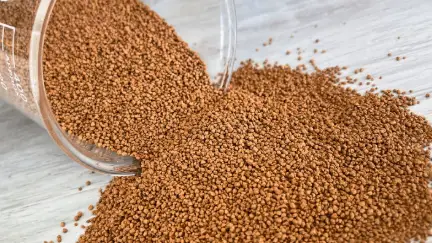
L-lysine sulfate has emerged in 2026 as a structurally critical amino acid derivative within the global feed additives ecosystem, functioning not only as a nutritional enhancer but also as a platform chemical linking agricultural inputs, fermentation biotechnology, and protein efficiency optimization across livestock production systems. Its supply chain reflects a highly industrialized, geographically concentrated, and cost-sensitive network shaped by fermentation capacity, corn-based feedstock flows, and integrated trading hubs. As global demand for animal protein continues to intensify, lysine sulfate has solidified its position as a strategic input in feed formulation economics.
The upstream supply chain remains anchored in corn- and sugar-based fermentation, with China and Southeast Asia accounting for the majority of global production capacity. Total lysine compound output exceeds 4.5 million metric tons annually, with lysine sulfate representing a cost-efficient segment within this volume. Production is largely controlled by a small group of vertically integrated manufacturers, enabling economies of scale but also creating structural supply concentration risk. This tight upstream control has supported market stability while reinforcing dependency on agro-industrial feedstocks that are increasingly exposed to climate and commodity price volatility.
The lysine sulfate market in 2026 is characterized by mid-cycle stabilization following previous feedstock inflation shocks. Average bulk pricing is observed in the range of USD 900–1,200/MT, while high-purity or contract-locked shipments can reach USD 1,300/MT in tight supply conditions. The broader lysine market is expanding toward USD 6.43 billion in 2026, growing at a ~6.0% CAGR, which indirectly supports sulfate derivative demand as buyers seek cost-optimized feed solutions. However, price transmission remains highly sensitive to corn input fluctuations, creating periodic margin compression for distributors and traders.
On the downstream side, feed manufacturers dominate consumption, accounting for over 70–72% of total lysine sulfate utilization, particularly in poultry and swine nutrition systems. Industrial livestock integrators in Asia-Pacific and Latin America increasingly rely on lysine sulfate to reduce dependence on soybean meal while improving feed conversion ratios. This structural substitution trend is reinforcing long-term demand visibility, with demand growth tracking a steady ~5–5.2% CAGR through the decade. The scale of aquaculture expansion is also contributing to incremental uptake, further diversifying demand away from traditional terrestrial livestock channels.
Trade dynamics remain heavily Asia-centric, with China acting as the primary export hub and Southeast Asia, Africa, and Latin America functioning as high-growth import markets. Logistics disruptions in recent years have encouraged regional warehousing strategies and dual-sourcing procurement models among large feed producers. This shift is gradually transforming lysine sulfate from a purely commoditized input into a strategically managed procurement category, where supply security increasingly outweighs marginal price differences.
In this evolving environment, Tradeasia International plays a pivotal role as a global procurement and distribution partner, enabling seamless access to industrial-grade lysine sulfate across fragmented supply markets. By integrating sourcing intelligence, logistics coordination, and supplier diversification, Tradeasia supports manufacturers in achieving both cost efficiency and supply continuity within a tightening global feed additive landscape.
L-lysine sulfate is increasingly functioning as a foundational platform chemical within modern protein production systems, bridging biotechnology-driven fermentation with global food security imperatives. As livestock intensification and aquaculture expansion continue, its role in optimizing feed efficiency will only strengthen, reinforcing its long-term industrial relevance in global commodity chemistry networks.
We're committed to your privacy. Tradeasia uses the information you provide to us to contact you about our relevant content, products, and services. For more information, check out our privacy policy.


 English
 Indonesian
 简体字
简体字
 العربية
 Español
 Français
 Português
 日本語
日本語
 한국어
한국어
 Tiếng Việt