Explore our network of country and industry based websites to access localized information, product offerings, and business services across our group.
Log in to start sending quotation requests for any product.
Don't have an account? Sign Up Here
Home Cottonseed Meal Supply Chain Outlook and Feed Industry Trends in 2026
Trade Insights | Supply Chain | 25 May 2026
Introduction: Cottonseed Meal as a Strategic Protein Ingredient in Global Feed Markets
Global Cottonseed Crushing and Production Trends
Price Volatility and Feed Industry Procurement Strategies
Export Trade Corridors and Supply Chain Optimization
Sustainability Pressures and Future Feed Ingredient Positioning
Conclusion
Sources
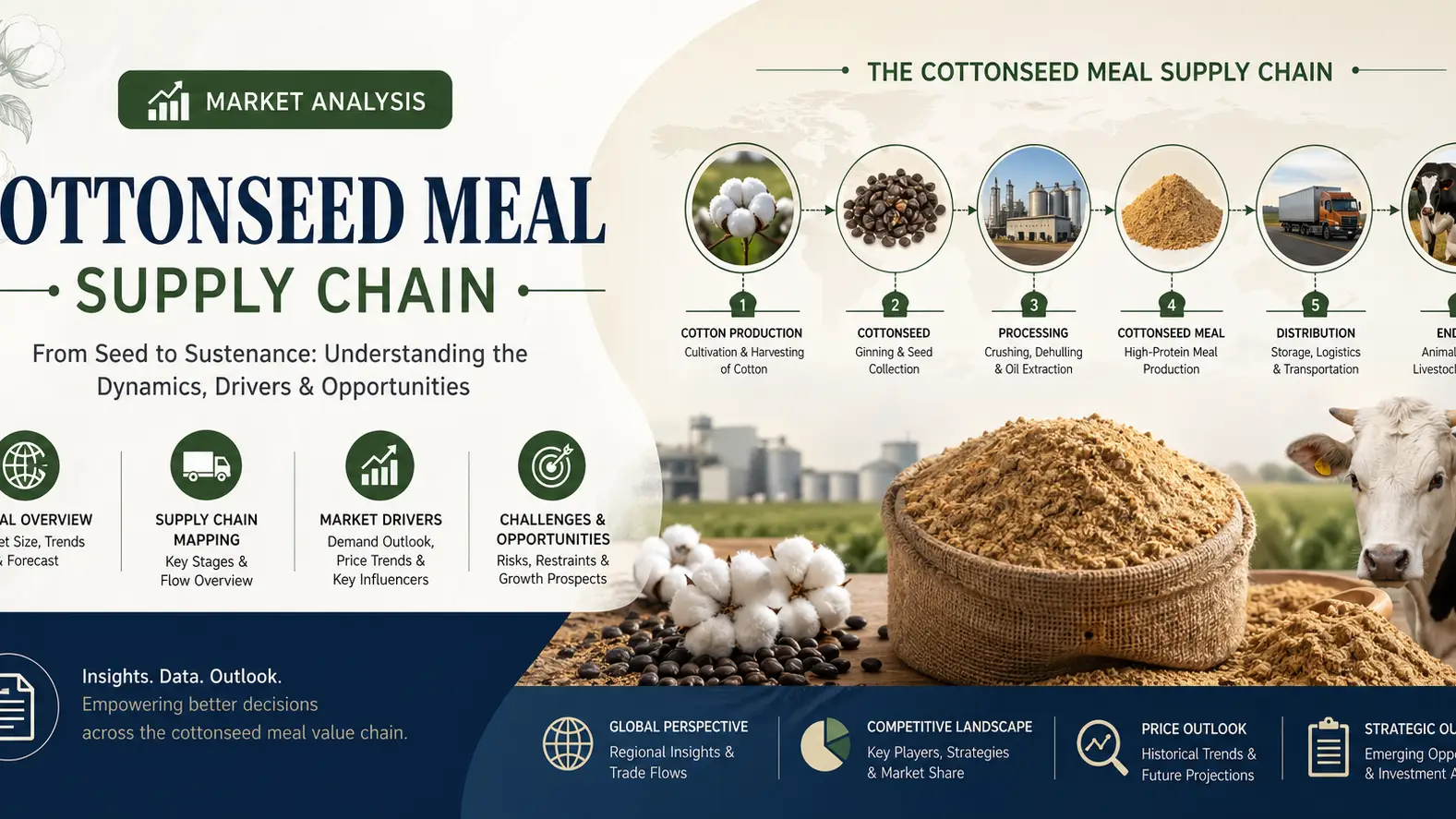
Cottonseed meal continues to strengthen its position as a strategic plant-based protein ingredient within the global livestock and aquaculture industries. Derived as a byproduct from cottonseed oil extraction, the product has become increasingly important for feed formulators seeking cost-efficient alternatives to soybean meal and sunflower meal. In 2026, the cottonseed meal market is benefiting from rising feed demand across Asia-Pacific, Latin America, and the Middle East, while supply chain modernization and commodity diversification continue reshaping procurement strategies. Industry analysts estimate the global cottonseed meal market is expanding at a CAGR of 4.8%, supported by increasing protein consumption and growing industrial feed production.
Global cottonseed processing volumes have shown steady growth as cotton-producing economies maximize byproduct utilization. In 2026, worldwide cottonseed meal production is projected to exceed 16.5 million metric tons, with major contributions from China, India, the United States, Pakistan, and Brazil. China alone accounts for nearly 28% of total global output due to its extensive cotton crushing infrastructure and integrated feed manufacturing sector.
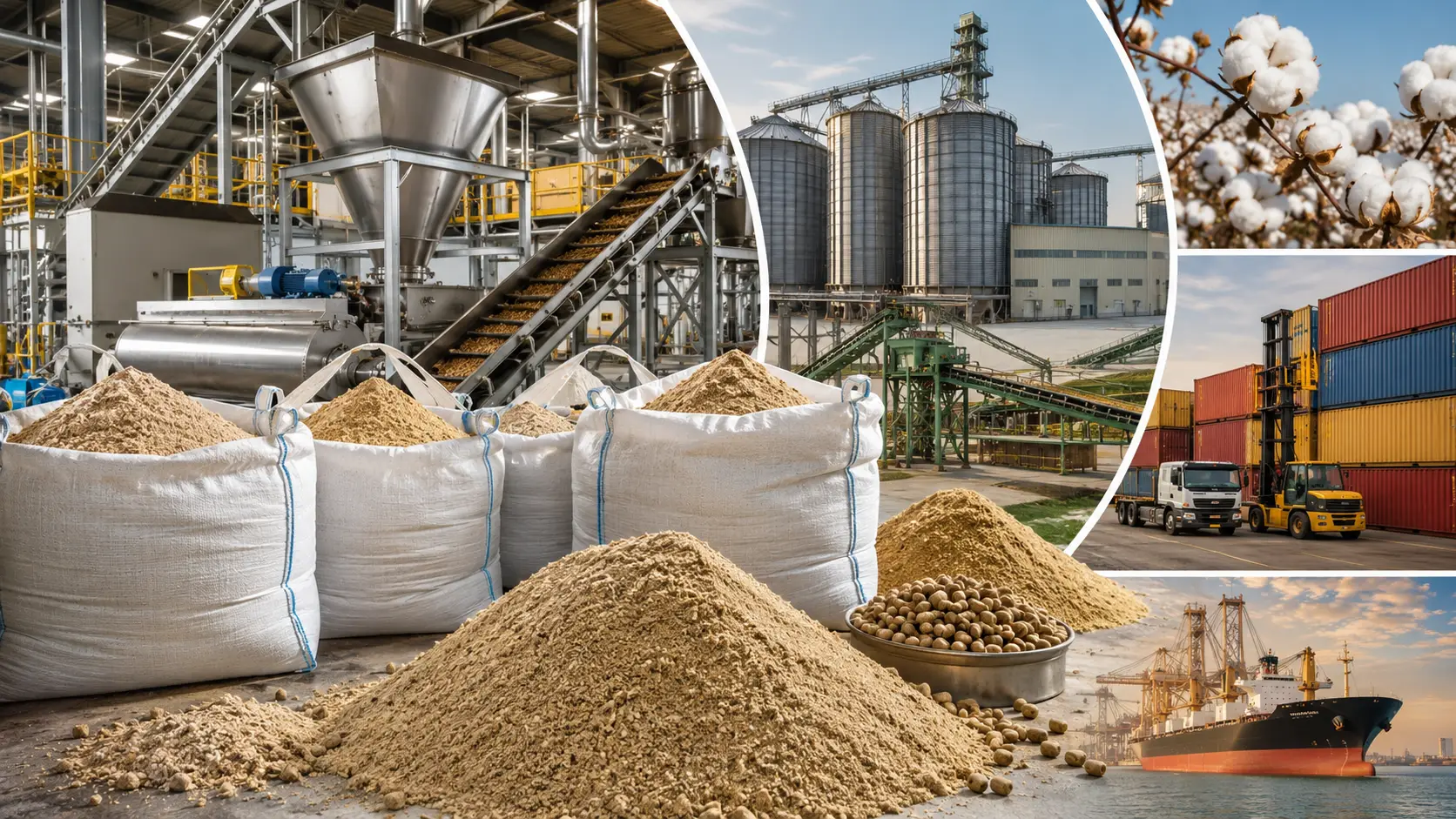
Processing facilities are increasingly investing in automated solvent extraction systems to improve protein recovery rates and reduce processing losses. These investments are helping manufacturers stabilize supply despite fluctuations in raw cotton harvests caused by climate variability. The growing integration between cotton ginning operations and oilseed crushing plants is also shortening logistical timelines and reducing operational costs.
Cottonseed meal pricing in 2026 remains highly influenced by competing protein feed markets and freight conditions. Average global export prices currently range between USD 310–420/MT, depending on protein content, origin, and gossypol specifications. Markets in Southeast Asia have experienced tighter inventories following weather disruptions in major cotton-growing regions during late 2025.
Large-scale feed producers are increasingly adopting long-term sourcing contracts and diversified procurement channels to minimize exposure to price fluctuations. Feed mills in Vietnam, Indonesia, and Türkiye are also blending cottonseed meal with soybean meal to optimize feed formulation costs while maintaining nutritional performance for ruminants and dairy cattle.
Container freight normalization after earlier supply chain disruptions has improved shipment reliability, although inland transportation bottlenecks in producing countries continue affecting lead times during peak harvest periods.
International trade flows for cottonseed meal are becoming more regionalized as importing countries prioritize stable sourcing partnerships. India and the United States remain dominant exporters, while Bangladesh, South Korea, and the UAE continue emerging as important import destinations for industrial feed manufacturers.
Global exports are forecast to surpass 7.2 million metric tons in 2026, supported by stronger demand from dairy and poultry sectors. Bulk shipment handling infrastructure at key agricultural ports has also improved significantly, particularly in India’s western export terminals and Gulf trade hubs.
Digital commodity trading platforms and supply chain visibility systems are increasingly used to track shipment quality, moisture levels, and transit performance. These technologies are helping buyers reduce inventory risks while improving procurement transparency across international supply chains.
Sustainability is becoming a defining factor in cottonseed meal procurement decisions. Feed producers are under increasing pressure to source agricultural byproducts with lower environmental footprints and stronger traceability standards. Cottonseed meal benefits from its positioning as a circular-economy ingredient because it utilizes residues generated from cotton fiber and edible oil production.
In 2026, several multinational feed manufacturers are prioritizing suppliers that comply with sustainable agriculture certifications and carbon reduction initiatives. The market is also seeing growing investment in low-gossypol cotton varieties, which could expand cottonseed meal applications into broader livestock categories over the next decade.
As protein feed markets become increasingly competitive, cottonseed meal is expected to remain a commercially attractive alternative for cost-sensitive feed industries worldwide.
As a platform feed ingredient within the global agricultural supply chain, cottonseed meal continues to offer strong commercial value through its affordability, protein efficiency, and availability across major cotton-producing economies. Market participants are increasingly focused on supply reliability, sustainability compliance, and logistics optimization to maintain competitiveness in 2026’s evolving feed sector.
Companies seeking dependable sourcing networks and integrated commodity solutions are also turning toward experienced global trading partners such as Tradeasia International, which continues supporting international buyers with industrial feed ingredient sourcing, market accessibility, and cross-border supply chain solutions.
We're committed to your privacy. Tradeasia uses the information you provide to us to contact you about our relevant content, products, and services. For more information, check out our privacy policy.


 English
 Indonesian
 简体字
简体字
 العربية
 Español
 Français
 Português
 日本語
日本語
 한국어
한국어
 Tiếng Việt