Explore our network of country and industry based websites to access localized information, product offerings, and business services across our group.
Log in to start sending quotation requests for any product.
Don't have an account? Sign Up Here
Home Global Linseed Meal Applications and Buyer Dynamics 2026
Trade Insights | Applications and Buyers | 25 May 2026
Introduction: Linseed Meal in Industrial Feed Systems
Applications in Animal Nutrition Markets
Key Buyers Across Feed Manufacturing and Aquaculture
Price Trends and Supply Chain Economics
Production Capacity and Trade Flows
Conclusion: Strategic Outlook for Global Buyers
Sources
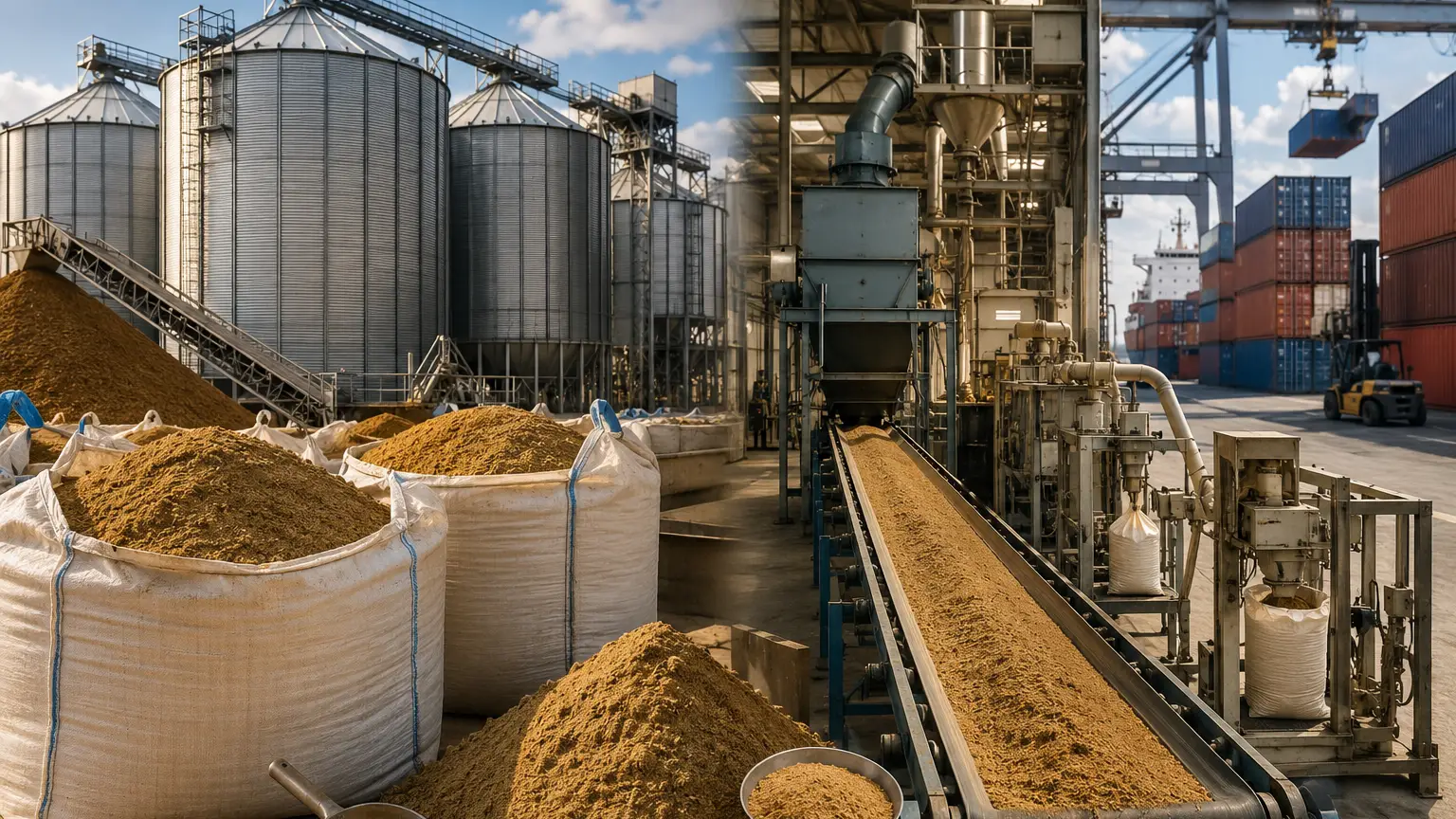
Linseed meal, a protein-rich by-product of flaxseed oil extraction, is gaining momentum in 2026 as global feed industries prioritize sustainable and cost-efficient protein sources. Driven by livestock expansion and aquaculture growth, the market reaches about 3.2 million metric tons, growing at a CAGR of 4.8% across key regions. Average pricing remains between USD 240–320/MT, shaped by oilseed supply cycles and regional demand shifts and trade dynamics.
Linseed meal is widely used in ruminant, poultry, and aquafeed formulations, offering 30–36% protein content and digestible fiber. Dairy cattle feed dominates usage at nearly 45% of demand, supporting milk productivity and rumen health. Its role as a partial substitute for soybean meal is expanding in cost-sensitive regions where feed optimization is essential for margin stability in intensive livestock systems.
Primary buyers include feed millers, dairy cooperatives, and aquaculture producers across Europe and Asia. Large feed manufacturers secure long-term supply contracts to stabilize input costs amid oilseed volatility. Aquaculture demand in India, Vietnam, and China continues to expand, with industrial buyers accounting for over 2.1 million MT of annual consumption, reflecting strong downstream integration in feed supply chains.
In 2026, linseed meal prices average USD 220–340/MT, influenced by flaxseed yields, extraction margins, and logistics costs. European-origin material trades at a premium due to certification standards. Seasonal supply disruptions in Eastern Europe can push prices up by 10–12%, while correlation with soybean meal remains a key pricing benchmark for global feed formulators.
Global production stands near 3.5 million MT, led by Canada, Kazakhstan, and the EU. Export flows are increasingly directed toward Asia-Pacific, which absorbs over 55% of global volumes. Efficient port logistics and bulk handling infrastructure significantly influence competitiveness in international trade of linseed meal within commodity feed markets.
Linseed meal continues to strengthen its role as a sustainable feed ingredient in global agriculture. Buyers are increasingly prioritizing secure sourcing, pricing stability, and quality assurance. In this evolving landscape, Tradeasia International provides integrated supply chain solutions, enabling consistent access to agricultural raw materials and supporting industrial clients in optimizing procurement efficiency across volatile commodity markets.
We're committed to your privacy. Tradeasia uses the information you provide to us to contact you about our relevant content, products, and services. For more information, check out our privacy policy.


 English
 Indonesian
 简体字
简体字
 العربية
 Español
 Français
 Português
 日本語
日本語
 한국어
한국어
 Tiếng Việt



















