Introduction
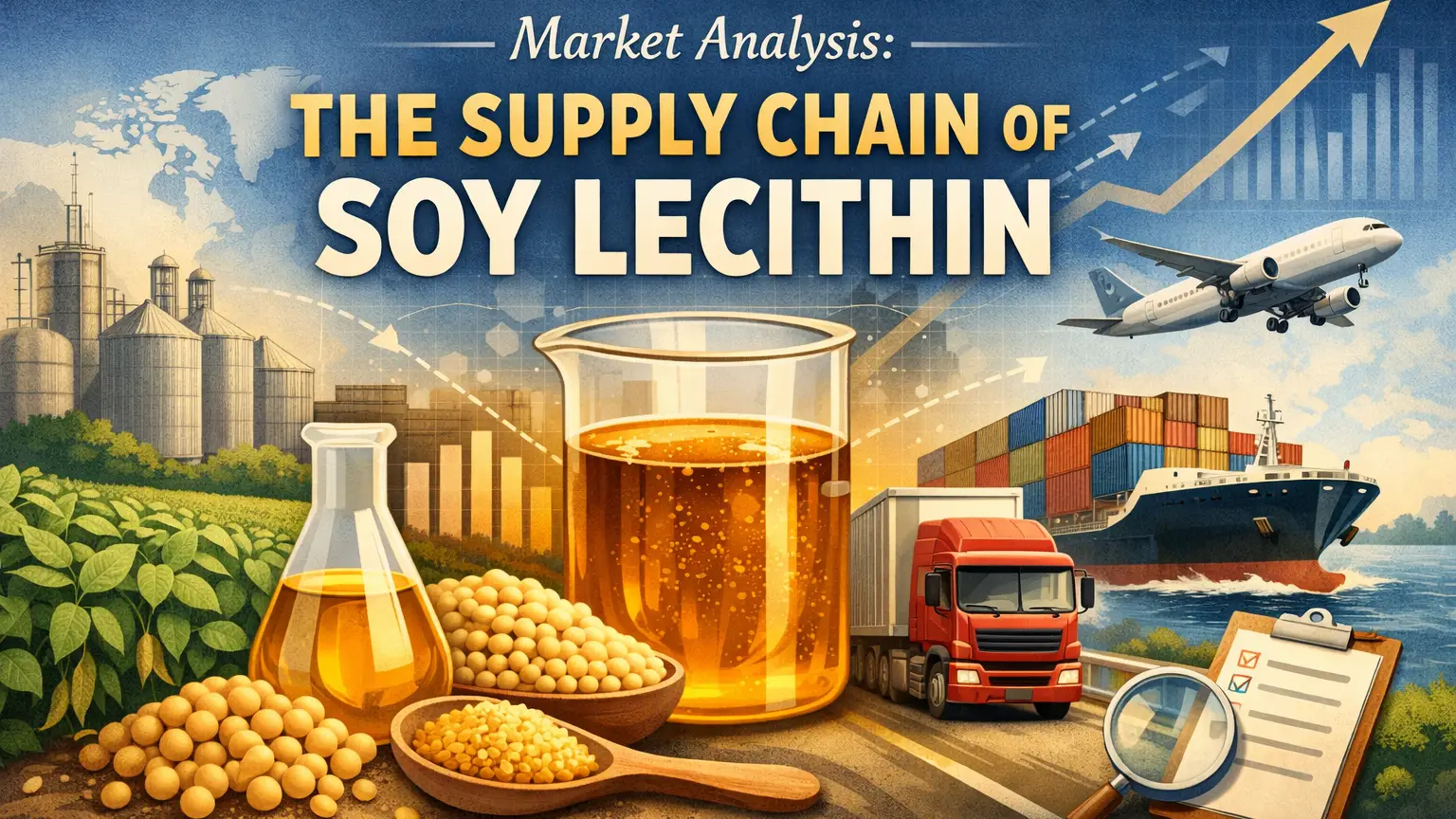
Soy lecithin, a key phospholipid byproduct of soybean oil refining, remains a vital emulsifier across food, feed, and pharmaceutical industries. In 2026, its supply chain is shaped by concentrated soybean production, processing bottlenecks, and fluctuating global trade flows. The market is expanding at a CAGR of 5.1%, while average prices range between USD 1,250–1,850/MT, driven by raw soybean volatility and tightening downstream specifications.
Feedstock Concentration and Crushing Dependence
The upstream supply structure for soy lecithin is heavily dependent on soybean-producing giants, with the United States, Brazil, and Argentina contributing more than 75% of global output. In 2026, global soybean crushing is estimated to generate around 3.2 million MT of lecithin annually. However, climate variability, export policy shifts, and margin optimization in oilseed crushing plants frequently disrupt availability, making long-term procurement contracts increasingly essential for industrial buyers.
Refining Efficiency and Midstream Constraints
Midstream processing plays a decisive role in lecithin yield and quality consistency. Degumming processes typically extract only 1–3% lecithin from crude soybean oil, making efficiency critical. Yet, aging infrastructure in several Asian refining hubs limits output optimization. Rising energy costs have increased processing expenses by 8–12%, widening the gap between food-grade and industrial-grade lecithin streams and tightening overall supply reliability.
Logistics Volatility and Trade Flow Disruptions
Global soy lecithin distribution is increasingly influenced by freight instability and port congestion. In 2026, shipping fluctuations have added approximately USD 40–120/MT to landed costs. South American exporters face inland transport delays, while Asian import markets operate on lean inventories. Europe maintains relatively stable demand, but periodic shipment delays continue to trigger short-term price spikes and contract renegotiations across global buyers.
Industrial Demand Expansion Across Key Sectors
Demand dynamics remain strong, with the food industry accounting for over 45% of global consumption, particularly in bakery and confectionery emulsification. The feed sector continues expanding alongside global livestock production growth. Meanwhile, pharmaceutical-grade lecithin commands premium pricing of up to USD 2,400/MT, driven by stringent purity and compliance standards. This diversified demand base reinforces steady long-term market growth despite supply-side pressures.
Conclusion
In conclusion, the soy lecithin supply chain in 2026 is defined by concentrated feedstock origins, processing efficiency limits, and persistent logistics volatility. While demand growth remains stable, pricing fluctuations and regional disruptions continue to shape procurement strategies. Buyers increasingly prioritize long-term sourcing stability and diversified supplier bases. In this environment, Tradeasia International provides integrated sourcing solutions, ensuring consistent quality, competitive pricing, and reliable global distribution channels for industrial consumers navigating a tightening soy lecithin market landscape.
Sources