Introduction
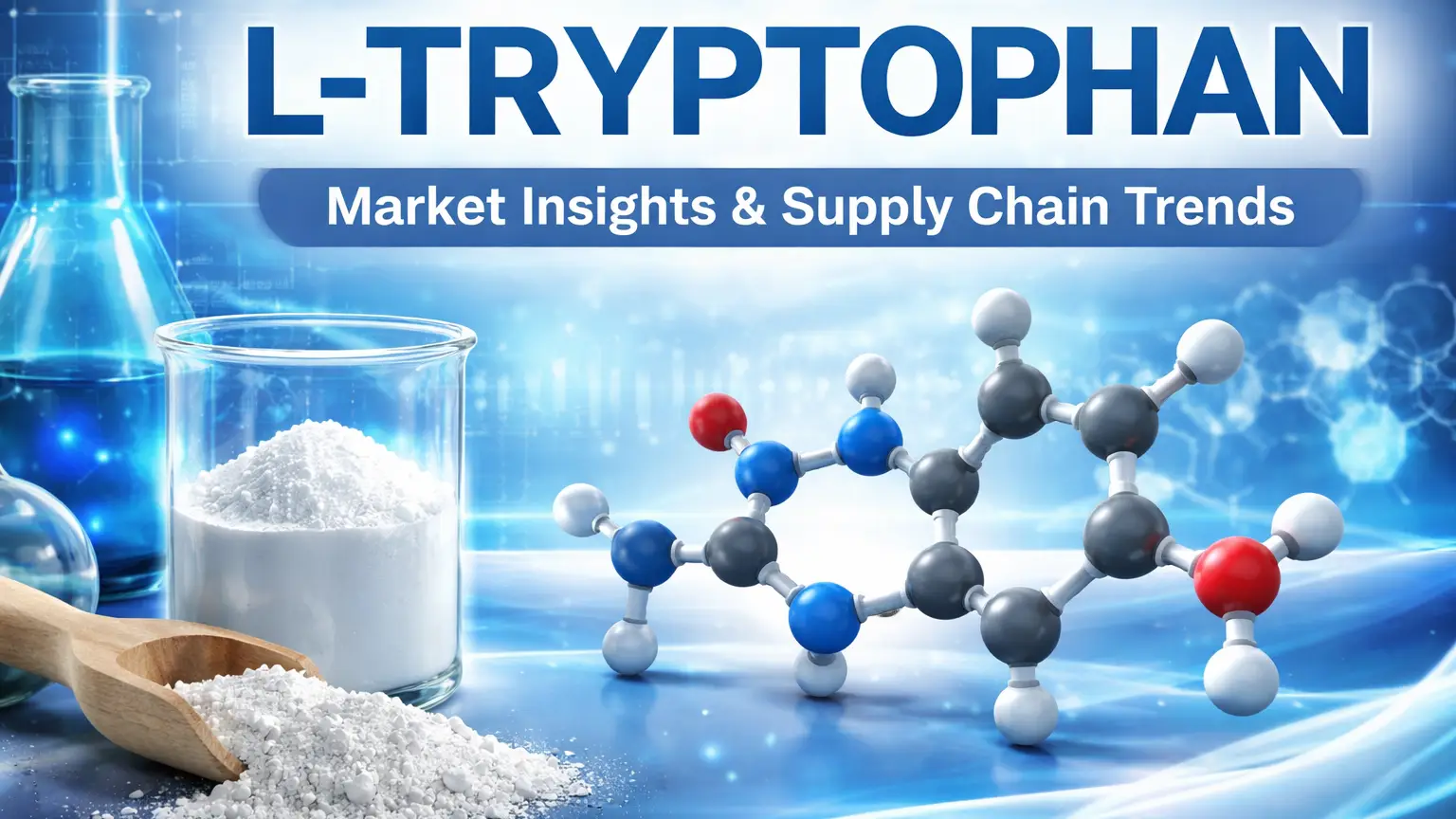
L-Tryptophan, a critical aromatic amino acid, continues to function as a platform chemical in pharmaceuticals, animal nutrition, and functional foods. As of 2026, its supply chain reflects a complex interplay between fermentation-based production, agricultural feedstocks, and evolving global demand centers. Market analysts estimate the L-Tryptophan market is expanding at a CAGR of 6.2%, driven by increasing demand for protein-enriched diets and mental wellness supplements. With production exceeding 95,000 MT annually, supply chain resilience has become central to maintaining stable pricing and consistent availability.
Feedstock Dynamics and Fermentation Inputs
The upstream supply chain is heavily dependent on glucose derived from corn and other starch-rich crops. Volatility in agricultural commodities—especially in Asia and North America—has had a direct impact on fermentation costs. In 2026, feedstock expenses account for nearly 45% of total production cost, with glucose prices fluctuating between USD 420–480/MT. Advances in microbial strain efficiency have slightly offset these pressures, improving yield rates by approximately 8% compared to 2023 benchmarks.
Global Production Capacity and Regional Shifts
China continues to dominate L-Tryptophan production, contributing over 60% of global output, followed by emerging capacity expansions in Southeast Asia. Strategic investments in countries like Indonesia and Vietnam are reshaping supply routes, reducing overreliance on a single geography. Total global installed capacity has reached approximately 120,000 MT, though utilization rates hover around 80–85% due to environmental regulations and periodic shutdowns for compliance upgrades.
Pricing Trends and Trade Flows
L-Tryptophan prices in 2026 have stabilized after pandemic-era volatility, currently ranging between USD 6,800–7,500/MT depending on purity and origin. Export markets remain concentrated, with Europe and North America importing over 40% of traded volumes. Freight costs and geopolitical trade adjustments have introduced regional price disparities, particularly between Asian FOB and Western CIF markets. Long-term contracts are increasingly favored to hedge against short-term fluctuations.
Downstream Demand and Application Expansion
Demand growth is anchored in animal feed, accounting for nearly 55% of total consumption, while nutraceuticals and pharmaceuticals represent high-margin segments. Rising consumer awareness of mental health and sleep support has increased demand for L-Tryptophan-based supplements by 9% year-on-year. This diversification is strengthening the overall supply chain by reducing dependence on a single downstream sector.
Conclusion
As a platform chemical, L-Tryptophan sits at the intersection of biotechnology, agriculture, and health industries. Its supply chain in 2026 reflects both vulnerabilities and opportunities, shaped by feedstock economics, regional production strategies, and evolving end-use demand. Companies navigating this landscape require not only sourcing stability but also market intelligence and logistical agility.
In this context, Tradeasia International positions itself as a reliable global partner, offering integrated supply solutions, competitive sourcing networks, and consistent quality assurance for L-Tryptophan and related amino acids across international markets.
Sources