Global Linseed Meal Supply Chain Structure and Market Flow Analysis 2026
Introduction
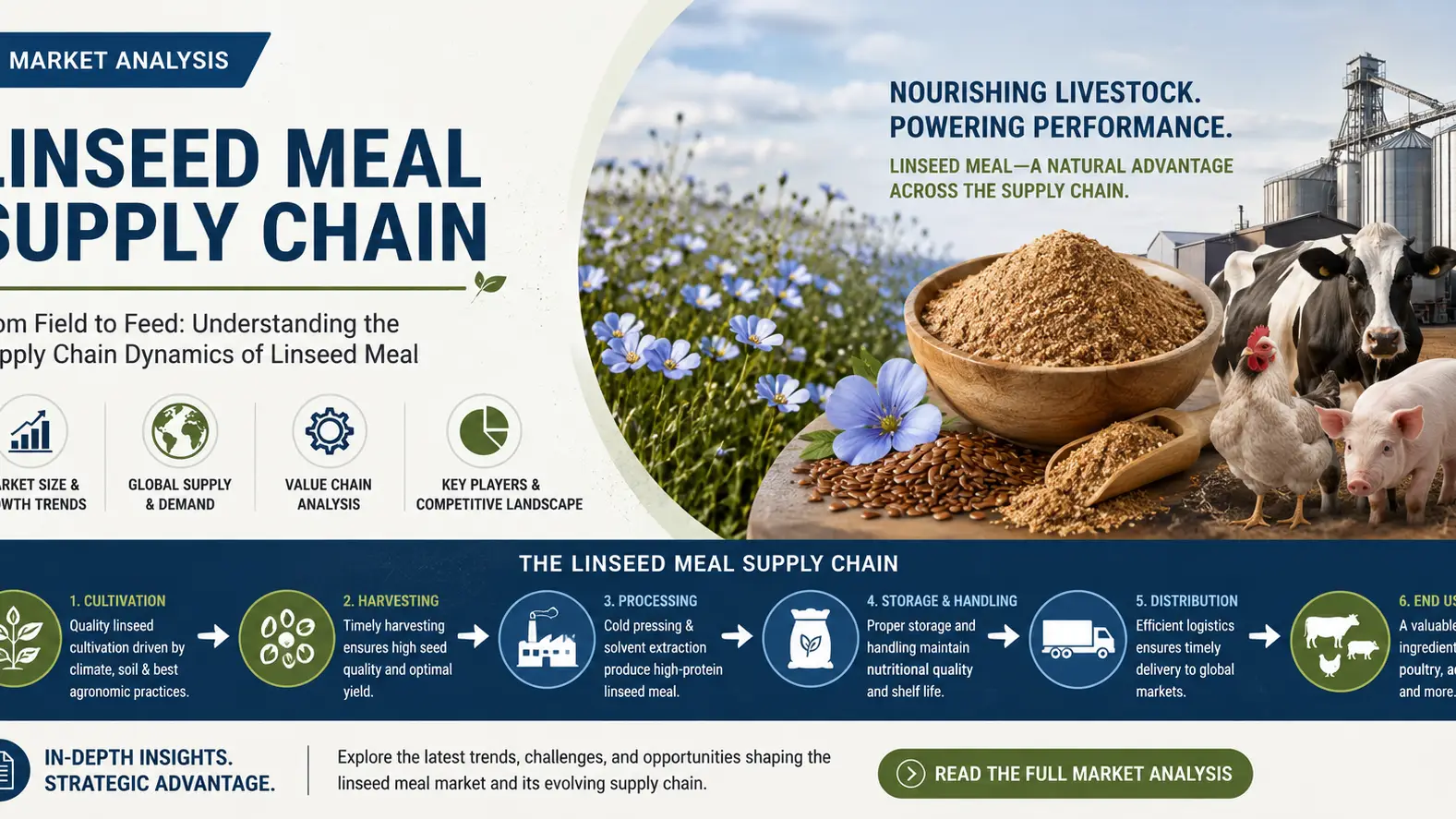
Linseed meal, derived as a by-product of flaxseed oil extraction, has steadily positioned itself as a strategic protein-rich feed ingredient within the global animal nutrition ecosystem. As of 2026, it is increasingly treated as a platform commodity in feed formulation due to its balanced amino acid profile and sustainable sourcing advantages. The global linseed meal market is expanding at a projected CAGR of 4.3%, driven by rising demand for non-GMO protein alternatives and tighter corn-soybean supply cycles. However, its supply chain remains highly sensitive to agricultural output fluctuations, crushing capacity, and regional export policies, making its trade dynamics increasingly complex.
Production Concentration and Global Output Shifts
Global production of linseed meal is estimated at 7.2 million metric tons (MT) in 2026, heavily concentrated in Canada, Kazakhstan, and the European Union. Canada alone accounts for nearly 32% of total output due to its strong flaxseed farming base. However, climate variability has introduced yield instability, particularly in Eastern Europe, where production variability has widened by 12–15% year-on-year, directly affecting downstream meal availability.
Trade Flow Realignment and Export Dependencies
The supply chain is experiencing notable trade rerouting, with China and Southeast Asia increasing imports by over 18% annually. Export reliance from Kazakhstan has grown, but logistical bottlenecks through Black Sea corridors continue to disrupt steady flow. These shifts have forced buyers to diversify sourcing strategies, increasing spot market exposure and reducing long-term contract stability across feed manufacturers.
Pricing Dynamics and Volatility in Feed Markets
Linseed meal prices have shown significant volatility, trading between USD 240–310/MT in 2026, influenced by oilseed crush margins and freight fluctuations. Compared to soybean meal, linseed meal retains a niche price premium in organic feed formulations. However, tightening freight capacity and rising energy costs have amplified landed price disparities across importing regions by up to 22%.
Logistics, Storage Constraints, and Risk Exposure
The supply chain faces persistent challenges in storage stability due to the product’s moderate oil content, requiring controlled humidity environments. Port congestion in European hubs has increased average delivery lead times by 8–12 days. Additionally, limited bulk handling infrastructure in emerging markets continues to restrict scalable distribution, raising dependency on intermediaries and increasing supply chain fragmentation risk.
Conclusion
As demand for sustainable feed inputs accelerates, linseed meal continues to strengthen its position as a resilient yet structurally constrained commodity. Its evolving trade dynamics, price sensitivity, and production concentration underscore the need for integrated sourcing strategies and reliable supply partners. In this context, Tradeasia International emerges as a trusted global solution provider, offering streamlined procurement support and cross-regional supply chain connectivity to ensure consistent access to quality linseed meal across diverse industrial applications.
Sources
-
https://www.ers.usda.gov/data-products/oil-crops-yearbook/ (Economic Research Service)
-
https://www.oecd.org/en/publications/oecd-fao-agricultural-outlook-2020-2029_1112c23b-en.html (OECD)
-
https://www.fao.org/markets-and-trade/commodities-overview/basic-foods/oilcrops-food-price-indices/en