Introduction
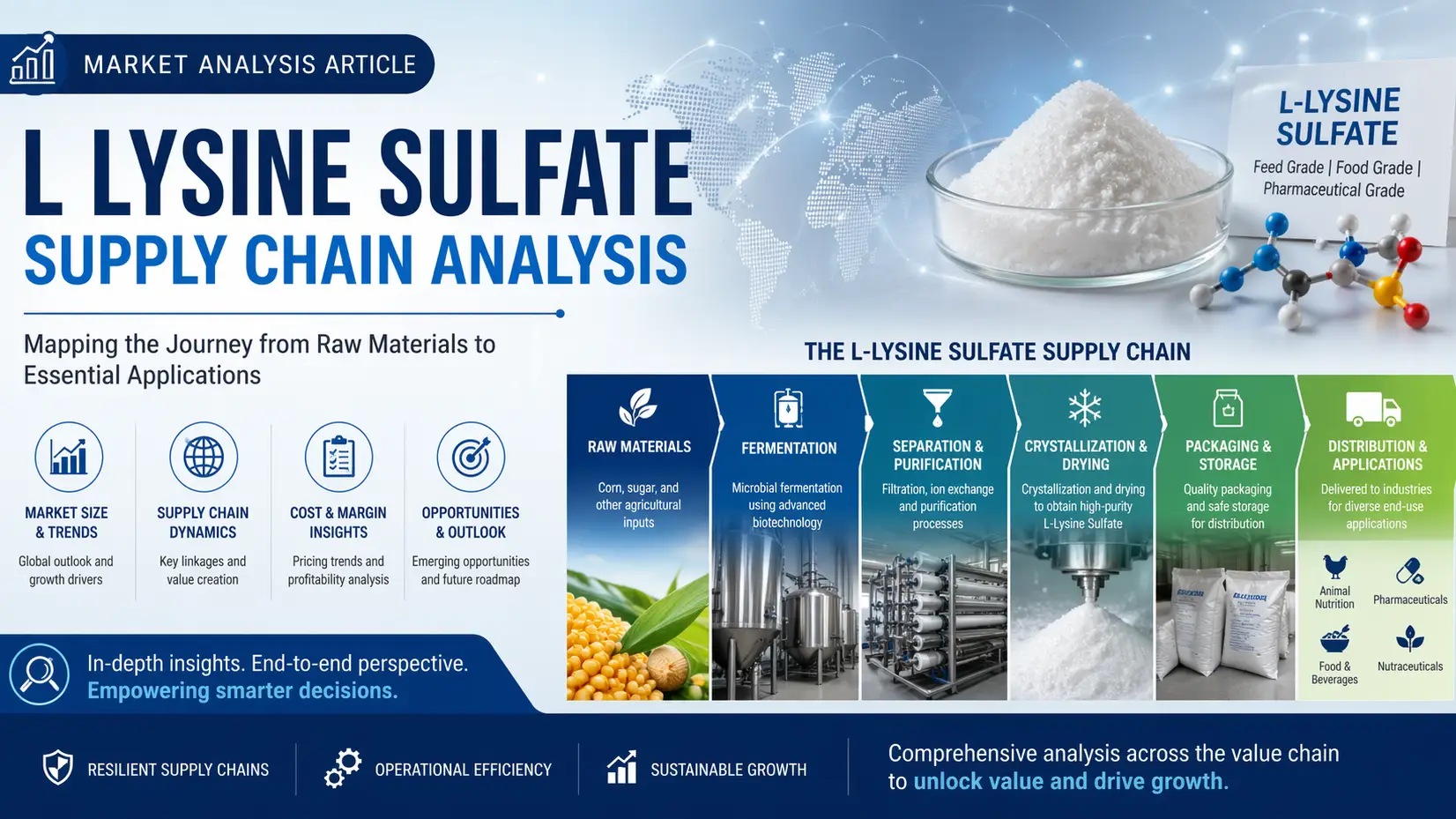
L-lysine sulfate, a key amino acid widely used in animal feed, has evolved into a critical platform chemical within the global agri-nutrition ecosystem. As livestock producers increasingly prioritize cost-efficient protein supplementation, L-lysine sulfate plays a pivotal role in balancing feed formulations while improving growth performance. In 2026, the market reflects steady industrial maturity, supported by advancements in fermentation technology and expanding feed demand across emerging economies.
Global Production Concentration and Capacity Expansion
The global L-lysine sulfate supply chain remains heavily concentrated in Asia, particularly China, which accounts for over 65% of global production capacity. Total output is estimated at approximately 3.8 million metric tons, with leading producers continuing to scale operations through bio-fermentation efficiency upgrades. The market is projected to grow at a CAGR of 5.6% through 2030, driven by rising meat consumption in Southeast Asia and Africa. Strategic capacity additions in countries like Indonesia and Vietnam are gradually diversifying production risks, although China retains dominant pricing power.
Raw Material Volatility and Cost Pressures
Corn and sugar derivatives, the primary feedstocks for lysine fermentation, remain subject to price volatility due to climate variability and competing biofuel demand. In 2026, average production costs have risen moderately, pushing L-lysine sulfate prices into the range of USD 780–920/MT, depending on purity and regional supply conditions. Energy costs and environmental compliance expenses in China have further influenced cost structures, prompting producers to optimize fermentation yields and invest in waste-to-energy systems to maintain margins.
Logistics, Trade Flows, and Regional Demand Centers
Supply chain efficiency is increasingly shaped by evolving trade flows and logistics infrastructure. Major export corridors from China to Latin America, the Middle East, and Europe continue to dominate, with shipping costs stabilizing after prior disruptions. The Middle East, including the UAE, is emerging as a strategic redistribution hub due to its proximity to Africa and South Asia. Meanwhile, growing domestic demand in India and Brazil is tightening spot availability, contributing to periodic price fluctuations and reinforcing the importance of long-term supply contracts.
Sustainability and Process Optimization Trends
Sustainability has become a defining factor in the L-lysine sulfate market. Producers are under pressure to reduce carbon emissions and wastewater output from fermentation processes. Innovations such as strain engineering and circular by-product utilization are improving efficiency, reducing environmental impact, and aligning with global ESG standards. Companies adopting greener production methods are gaining a competitive edge, particularly in export markets with stricter regulatory frameworks.
Conclusion
As a platform chemical, L-lysine sulfate continues to underpin the global animal nutrition industry, with its supply chain reflecting both resilience and transformation in 2026. From concentrated production bases to evolving sustainability mandates, the market is navigating a complex landscape of cost pressures and demand growth.
For businesses seeking reliable sourcing and market intelligence, Tradeasia International offers a strategic advantage as a global solution provider. With an established network across key production regions and a commitment to supply chain transparency, the company supports clients in securing consistent quality and competitive pricing in a dynamic market environment.
Sources