Introduction
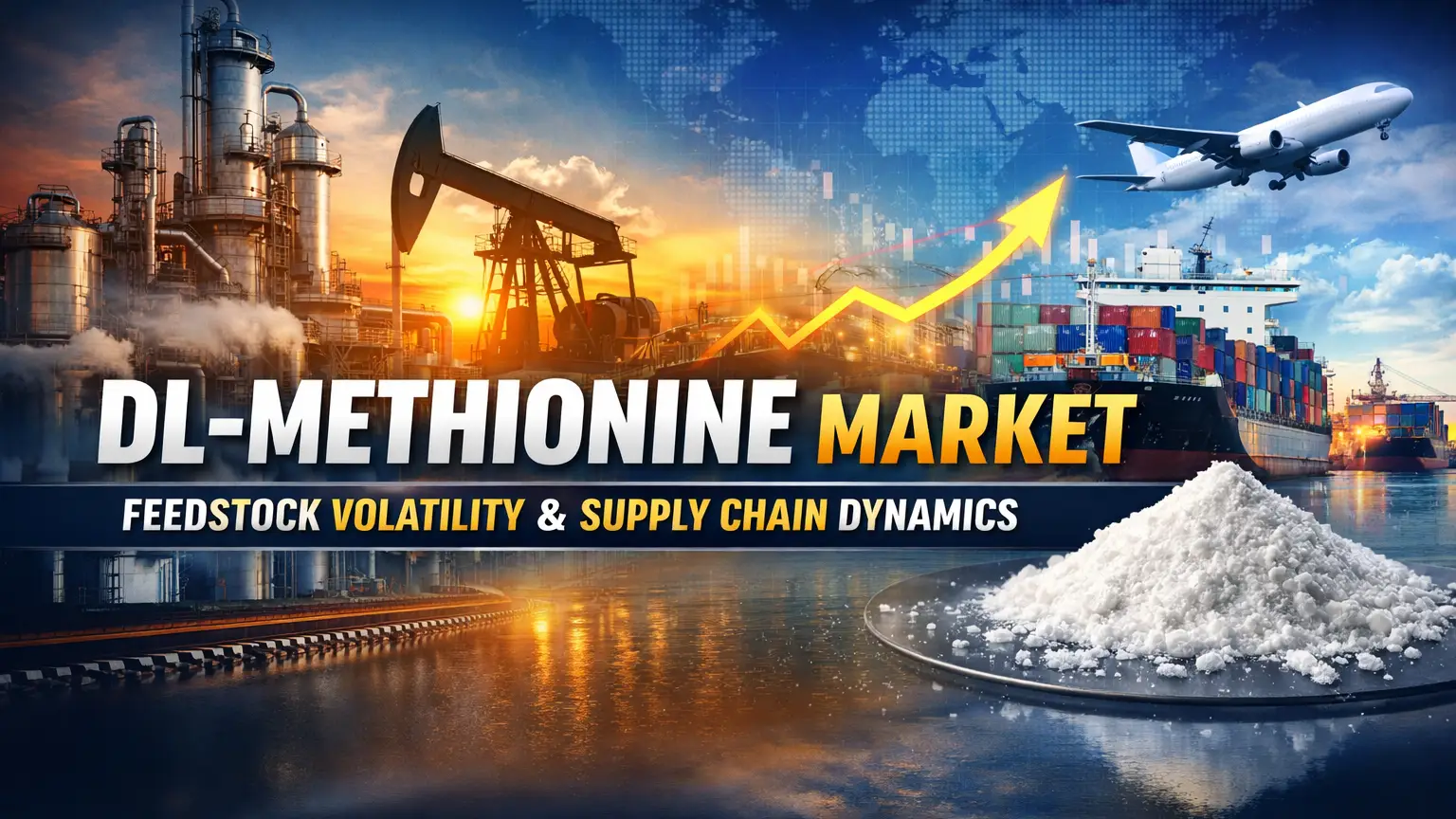
In 2026, DL methionine remains a key platform chemical in the amino acids industry, essential for poultry and livestock nutrition. Demand is driven by protein consumption growth and efficiency-focused feed formulations. Supply chains are shaped by concentrated Asia-Pacific production and steady demand across Europe and the Americas, making it a strategically managed petrochemical-derived commodity.
Global Supply Chain Concentration & Production Hubs
DL methionine production is highly consolidated, with Asia-Pacific supplying around 68% of global output. Total capacity is approximately 2.1 million MT in 2026. China and South Korea dominate production, forming an oligopolistic structure. While scale improves efficiency, the system remains exposed to shutdown risks, regulatory pressures, and methanol-linked energy cost volatility.
Feed Demand Dynamics & Downstream Pull
Demand is driven by poultry and swine feed, accounting for over 85% of global consumption. The market grows at a CAGR of 4.8% (2026–2030), supported by rising meat demand. Prices range between USD 2,350–2,800/MT, influencing feed economics in emerging markets. Producers increasingly use methionine to improve feed conversion and reduce protein waste.
Logistics, Feedstock Dependencies & Pricing Volatility
The supply chain relies on petrochemical intermediates, making DL methionine sensitive to crude oil and methanol price fluctuations. Logistics disruptions and container shortages periodically tighten availability. Industry players maintain 6–10 weeks of inventory to stabilize supply. Price volatility can reach up to 18% annually, driven by energy costs and plant maintenance schedules.
Trade Flows, Regional Imbalances & Inventory Strategies
Trade flows are mainly East-to-West, with Asia exporting to Europe and North America. Import-dependent regions rely on long-term contracts and diversified sourcing. Strategic warehousing in hubs like Singapore and Rotterdam improves responsiveness. Feed manufacturers are increasingly considering backward integration to secure raw material stability and reduce external supply risks.
Conclusion
DL methionine, as a platform chemical, underpins global feed efficiency and protein production systems. Its market is shaped by consolidation, logistics optimization, and demand expansion. With ongoing volatility in energy and raw materials, supply chain resilience is critical. Tradeasia International supports this ecosystem through integrated sourcing and distribution solutions, ensuring reliable access, cost efficiency, and stable procurement for global buyers.
Sources