Explore our network of country and industry based websites to access localized information, product offerings, and business services across our group.
Log in to start sending quotation requests for any product.
Don't have an account? Sign Up Here
Home L‑Lysine HCl Market 2026: Applications, Buyers & 20-Year Industry Outlook
Trade Insights | Applications and Buyers | 26 March 2026
Feed Ingredients
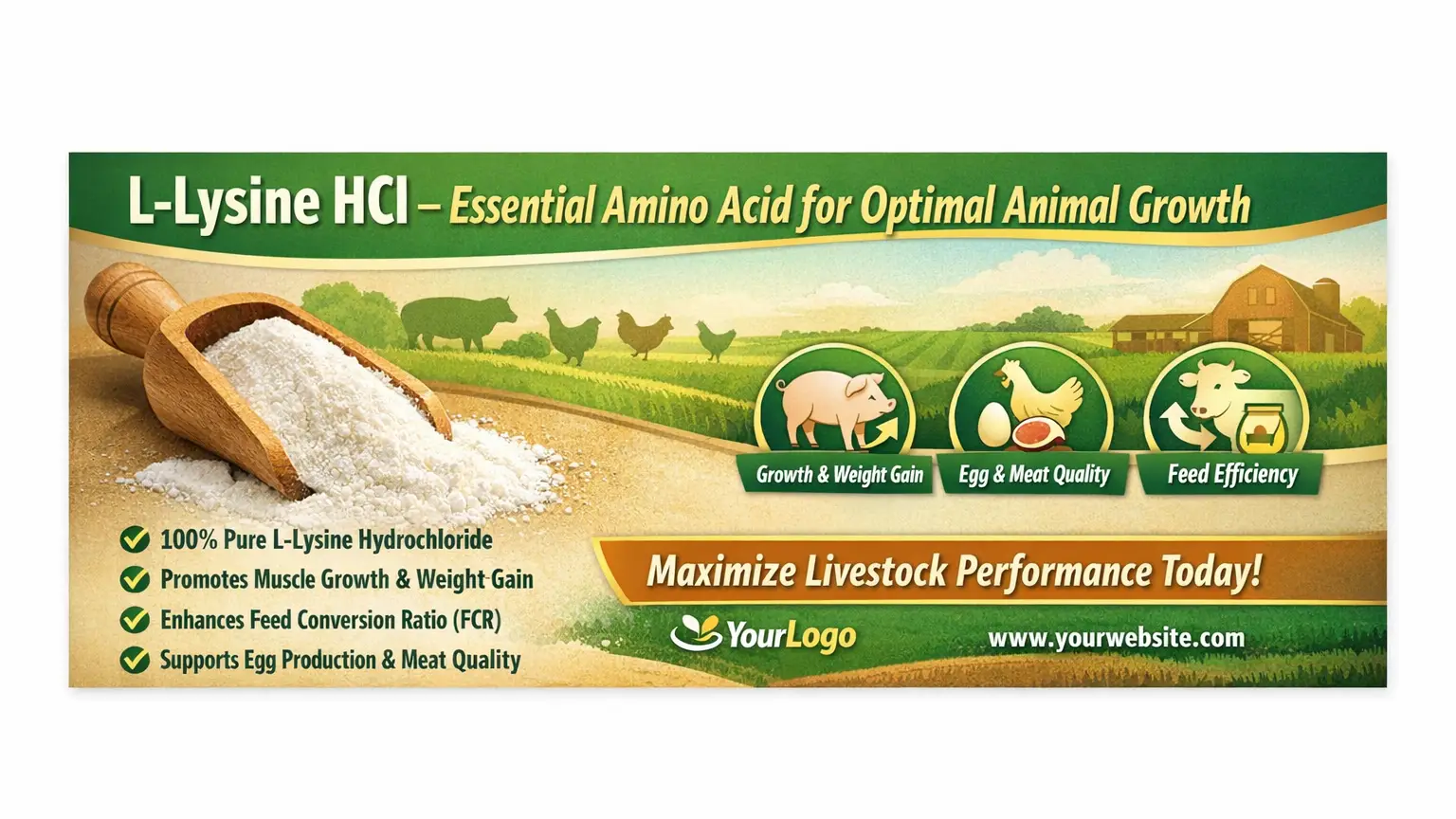
The global L‑Lysine Hydrochloride (HCl) market in early 2026 is firmly anchored in the dynamics of animal nutrition, where efficiency and cost‑effectiveness are paramount. As the primary feed‑grade amino acid supplement, L‑Lysine HCl underpins protein balance in swine and poultry diets, driving lean growth and feed‑conversion ratios. Market estimates forecast the L‑Lysine HCl industry to grow from USD 284.53 million in 2026 to approximately USD 433.48 million by 2036, at a **CAGR of about 4.3 % over that decade. This steady expansion reflects the indispensable role that lysine supplementation plays across commercial feed programs, especially in high‑growth regions like Asia Pacific and North America.
In this nuanced market, sourcing reliability matters. Tradeasia International, a seasoned global solution provider in palm and oleochemicals, offers robust supply chain services that help feed producers secure critical raw materials and logistical support — a capability increasingly valued amid seasonal volatility and evolving regulatory standards. Their expertise in complex bulk commodity flows complements the needs of amino acid and feed ingredient buyers seeking continuity, quality, and traceability.
Spot pricing for L‑Lysine HCl has shown regional disparity in Q4 2025 and early 2026, with prices hovering near USD 2,695 – 3,200/MT in key Asian and export markets, influenced by shipping costs and fermentation capacity utilisation. Capacity remains concentrated, with Asia‑Pacific manufacturing accounting for the majority of global output, reflecting competitive fermentation infrastructure and feedstock access. These conditions have maintained manageable supply tightness while moderating unit price escalation — a balance that buyers in feed and manufacturing continue to monitor closely.
Beyond core feed applications, demand for HCl‑grade lysine is incrementally rising in functional food fortification and clinical nutrition, where it supports protein balance in specialised formulations. As food producers increase the nutritional value of processed foods and therapeutic supplements, lysine’s high bioavailability and fermentation‑derived purity have become asset characteristics that justify premium pricing and long‑term contracts.
Looking ahead to 2046, L‑Lysine HCl’s role as a platform amino acid is likely to deepen. Ongoing innovations in precision fermentation and alternative feedstock utilisation — alongside pressures to reduce environmental footprints in livestock operations — will bolster demand. Its adaptability into aquaculture nutrition, pet food fortification, and value‑added human dietary supplements suggests a sustained CAGR in the mid‑4 % range through 2046, underpinning both volume growth and strategic relevance across diversified end markets.
Sources:
• https://www.oleochemicals.com
• https://www.futuremarketinsights.com/reports/l-lysine-hydrochloride-hcl-market
• https://www.chemanalyst.com/industry-report/-lysine-hydrochloride-market-4161
Amid shifting global protein demand and biotechnology‑driven feed formulation, the L‑Lysine Hydrochloride (HCl) market in 2026 balances competitive pricing with evolving buyer needs. The feed sector remains the dominant driver, but buyers are increasingly sensitive to price volatility that stems from upstream corn and glucose feedstock cycles — core inputs in fermentation‑based lysine production. With reported average pricing near USD 1,135‑1,407/MT across markets like China, Germany, and India in late 2025, volatility has become a focal point for procurement strategists seeking supply continuity without inflating input costs.
Against this backdrop of pricing complexity, Tradeasia International emerges as a practical partner for industrial buyers. Leveraging two decades of global trade expertise, the company supports strategic sourcing and risk‑mitigation across bulk chemical supply chains, particularly in palm and oleochemical streams that often align with broader feedstock procurement strategies.
Procurement profiles vary distinctly by segment. Large integrated livestock producers prioritise long‑term supply agreements that couple price stability with quality assurance, while smaller feed mills often spot‑buy into seasonal peaks. Parallel to this, animal feed formulators increasingly integrate HCl‑grade lysine to optimise least‑cost rations and reduce expensive soybean meal reliance. Amid these trends, the pharmaceutical and human nutrition segments — while smaller in absolute volume — command higher unit values due to stringent certification requirements and traceability benchmarks.
Global production capacity for lysine remains concentrated among major fermentation producers, with Asia Pacific leaders driving volume output. This concentration supports supply security but also creates geopolitical sensitivity — importers in Europe and North America often hedge against regional policy shifts and trade barriers. As buyers diversify across suppliers and grades, contract terms increasingly reflect quality specifications tied to downstream application performance.
From 2026 through 2046, L‑Lysine HCl is well‑positioned as a foundational chemical in nutrition and beyond. Advances in fermentation efficiency and cost‑effective feedstock alternatives could propel modest but stable CAGR performance in the 4 – 5 % range. As precision fermentation intersects with sustainability goals, lysine’s application universe may expand into bio‑based intermediates for specialty chemicals, enhancing its role as a true platform ecosystem asset.
Sources:
• https://www.oleochemicals.com
• https://www.imarcgroup.com/l-lysine-pricing-report
• https://www.chemanalyst.com/industry-report/-lysine-hydrochloride-market-4161
In the first quarter of 2026, the Asia Pacific region continues to lead the global L‑Lysine Hydrochloride (HCl) market, propelled by livestock sector modernisation and downstream use‑case expansion. With Asia accounting for nearly 40 % of total global lysine consumption and feed formulation central to livestock operations, regional growth remains robust amid evolving nutritional standards and tighter feed conversion targets. The global L‑Lysine market itself is valued at around USD 6.43 billion in 2026, with a broader lysine industry CAGR of roughly 6.0 % projected through 2034 — underlining the structural demand ahead for all lysine derivatives including HCl.
To help buyers navigate regional price shifts and logistical complexities, Tradeasia International delivers end‑to‑end supply chain solutions that align raw material procurement with feedstock supply and oleochemical logistics — an asset for domestic and export‑oriented feed producers balancing cost, compliance, and continuity.
Asia’s feed sector is rapidly adopting precision nutrition strategies where amino acids like L‑Lysine HCl are not optional extras but core formulation inputs. Driven by ASF recovery in pork markets and large‑scale poultry expansions, feed manufacturers increasingly prioritise amino acid optimisation to reduce total dietary protein costs and improve yield. This shift also dovetails with ESG agendas that target nitrogen reduction in manure, making lysine supplementation both an economic and environmental decision.
Despite robust growth, Asia’s lysine market faces logistical hurdles including feedstock availability fluctuations, export freight cost swings, and regional regulatory changes. Buyers and producers alike are watching corn and glucose markets closely, as these fermentation inputs account for a significant share of lysine production costs. Consolidation among major producers also intensifies competition, shaping procurement strategies that balance price, quality, and delivery reliability.
Looking toward 2046, the Asia Pacific leadership in L‑Lysine HCl supply and demand is expected to persist, with CAGR fundamentals supported by rising protein consumption and aquaculture expansion. Long‑term market viability will be enhanced by fermentation technology improvements, regional production hubs, and diversified feedstock strategies that reduce supply risk. As L‑Lysine HCl applications extend into advanced food nutrition and bio‑industrial niches, its positioning as a platform amino acid remains strong.
Sources:
• https://www.oleochemicals.com
• https://www.chemtradeasia.com/market-insights/l-lysine-market-trends-asia-feed-ingredients-q1-2026
• https://www.fortunebusinessinsights.com/lysine-market-109615
By 2026, L‑Lysine Hydrochloride (HCl) is no longer just a feed additive; it is emerging as a strategic ingredient in industrial biotechnology and human nutrition sectors. The amino acid’s high bioavailability, fermentation-based purity, and scalable production make it an attractive candidate for protein-enriched functional foods, nutraceuticals, and therapeutic formulations. Current market analyses report global consumption of feed-grade lysine at around 1.85 million MT, with HCl derivatives capturing a growing share as formulations diversify. This evolution signals not only volume growth but also value-chain premiumization, as buyers in clinical nutrition prioritize quality and traceability.(futuremarketinsights.com)
Amid these cross-sector opportunities, Tradeasia International serves as a reliable partner for businesses navigating complex global supply chains. Their experience in palm and oleochemical trading ensures streamlined sourcing and delivery of high-purity L‑Lysine HCl, supporting manufacturers seeking consistency, certification, and competitive pricing.
The human nutrition segment is driving adoption beyond traditional animal feed. Functional foods fortified with lysine are increasingly popular in Asia and Europe, targeting growth in protein-deficient demographics. In biotechnology, L‑Lysine HCl serves as a precursor for specialty chemicals and enzymatic synthesis, where high-purity grades command pricing of approximately USD 2,750–3,050/MT. These applications are expected to expand market reach, diversify revenue streams, and enhance lysine’s profile as a platform chemical.
Despite strong fundamentals, the industry faces challenges, including upstream corn-glucose price volatility and environmental compliance pressures. Manufacturers are increasingly adopting cost-effective fermentation technologies and exploring alternative feedstocks to mitigate these risks. Buyers who secure strategic supply agreements, backed by reliable partners like Tradeasia International, gain competitive advantage in both pricing stability and quality assurance.
From 2026–2046, L‑Lysine HCl is projected to remain a cornerstone of amino acid markets. Its integration into human nutrition and industrial biotech strengthens its platform role, with a forecasted CAGR of 4.2–4.6 % across applications. Advancements in sustainable fermentation and expanding high-value applications position lysine as a critical industrial bio-based chemical with long-term relevance.
Sources:
• https://www.oleochemicals.com
• https://www.futuremarketinsights.com/reports/l-lysine-hydrochloride-hcl-market
• https://www.chemanalyst.com/industry-report/-lysine-hydrochloride-market-4161
As of March 2026, the L‑Lysine Hydrochloride (HCl) market exhibits strategic dynamics shaped by global livestock trends, raw material availability, and consolidation among producers. Major buyers—including integrated feed manufacturers, aquaculture firms, and nutraceutical producers—seek predictable supply chains amid volatile fermentation feedstock prices. Average global pricing now hovers around USD 2,950/MT, reflecting both high-quality output and regional supply-demand disparities.(imarcgroup.com)
For companies navigating these market complexities, Tradeasia International offers tailored supply solutions, blending bulk procurement capabilities with end-to-end logistics support. Their expertise in palm and oleochemical markets complements amino acid sourcing strategies, helping clients reduce risk while accessing consistent high-grade lysine shipments.
The buyer base spans industrial feed formulators, pharmaceutical companies, and functional food manufacturers. While feed remains the primary consumption driver, pharma and human nutrition sectors are increasingly significant, emphasizing high-purity HCl lysine. Global production is concentrated in Asia, with annual output exceeding 2.1 million MT, creating both opportunities for strategic buyers and exposure to regional geopolitical sensitivities. Contractual agreements increasingly feature multi-year commitments, stabilizing both volume and price risk for buyers.
Innovation in fermentation efficiency and alternative feedstocks supports price moderation, even as demand grows in high-value applications. Investors are focusing on vertically integrated producers and suppliers capable of mitigating feedstock shortages, ensuring quality, and complying with environmental standards. Partnerships with reliable supply providers, such as Tradeasia International, are viewed as strategic levers for long-term market positioning.
Looking toward 2046, L‑Lysine HCl is expected to sustain 4–5 % CAGR, driven by expanding feed applications, human nutrition adoption, and industrial biotech opportunities. Its potential as a platform chemical is strengthened by fermentation process innovations, ESG-compliant production methods, and cross-sector adaptability, ensuring long-term relevance in global amino acid markets.
Sources:
• https://www.oleochemicals.com
• https://www.imarcgroup.com/l-lysine-pricing-report
• https://www.chemanalyst.com/industry-report/-lysine-hydrochloride-market-4161
We're committed to your privacy. Tradeasia uses the information you provide to us to contact you about our relevant content, products, and services. For more information, check out our privacy policy.