Explore our network of country and industry based websites to access localized information, product offerings, and business services across our group.
Log in to start sending quotation requests for any product.
Don't have an account? Sign Up Here
Home What Makes Soya Lecithin a Strategic Ingredient for Feed Formulation in 2026?
Trade Insights | Applications and Buyers | 07 April 2026
Introduction Soya Lecithin
Understanding Soya Lecithin: A Versatile Feed Ingredient
Key Applications in Industrial Animal Feed
The Global Market Landscape: Trends Driving Demand to 2026
Critical Considerations for Industrial Buyers
Conclusion
The global animal feed industry is a cornerstone of modern agriculture and food security, constantly evolving to meet the dual demands of efficiency and nutritional excellence. Within this complex ecosystem, functional feed ingredients play a pivotal role in optimizing animal health, growth performance, and feed manufacturing efficiency. As we look toward 2026, one ingredient stands out for its multifunctional properties and growing indispensability: Soya Lecithin. Derived from soybean oil, this natural emulsifier and nutritional supplement is transitioning from a niche additive to a mainstream staple in feed formulations worldwide.
For industrial buyers and procurement specialists in the feed sector, understanding the nuances of Soya Lecithin is no longer optional, it's a strategic imperative. The market is influenced by factors ranging from sustainability mandates and supply chain dynamics to advancements in animal nutrition science. This comprehensive guide is designed to provide feed ingredient buyers with a detailed analysis of Soya Lecithin, its applications, the global market trajectory, and essential procurement considerations, empowering informed decision-making for the years ahead.
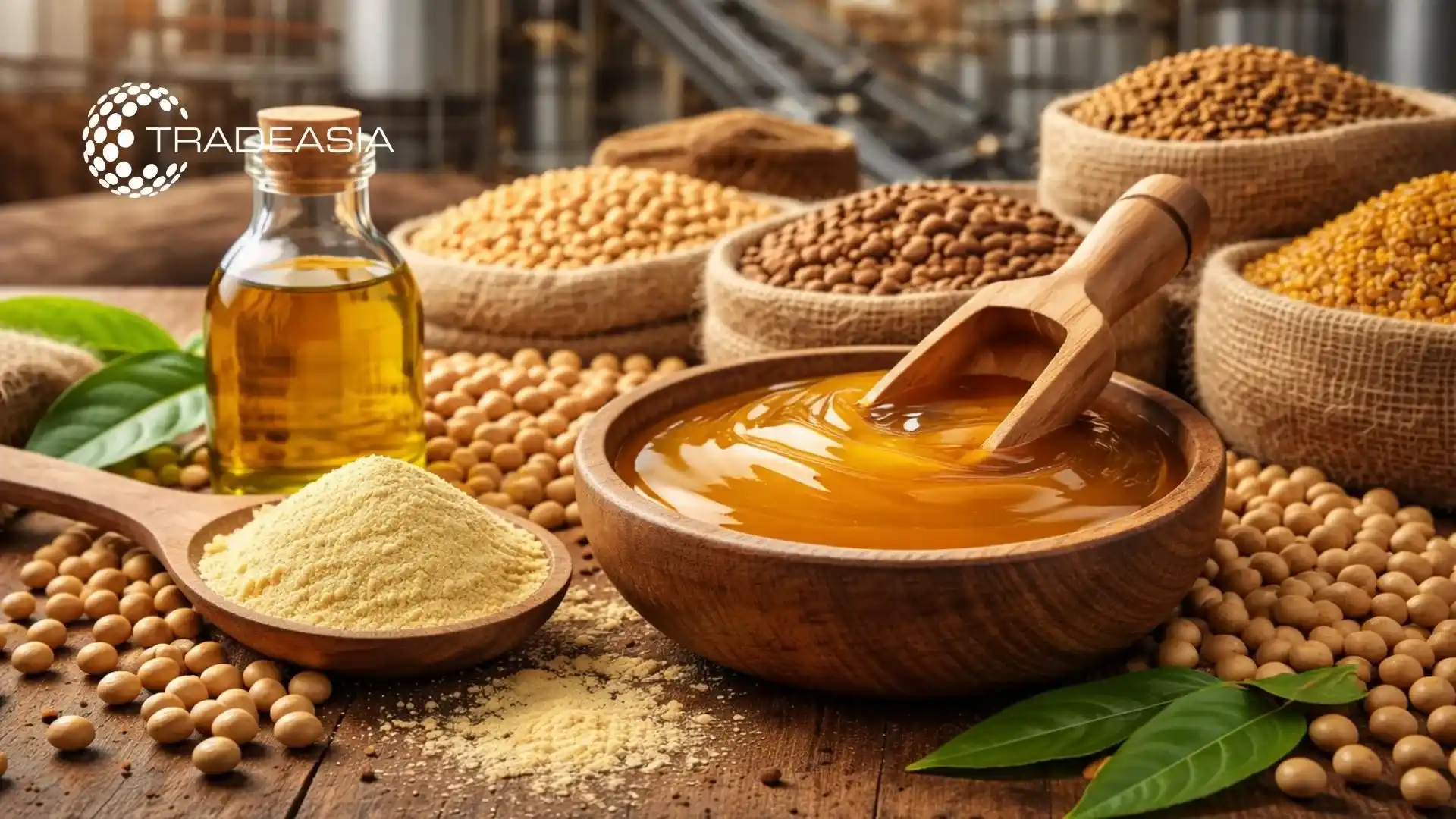
Soya Lecithin is a by-product of soybean oil refining, primarily composed of phospholipids like phosphatidylcholine, phosphatidylethanolamine, and phosphatidylinositol. It is available in various forms to suit different industrial applications, including fluid lecithin, de-oiled lecithin powder, and chemically or enzymatically modified lecithins. Each form offers distinct functional properties. For instance, fluid lecithin is often used as a natural emulsifier and pellet binding agent, while de-oiled powdered lecithin is favored for its ease of handling, higher phospholipid concentration, and stability in dry mix applications.
From a nutritional standpoint, Soya Lecithin is a source of metabolizable energy, essential fatty acids, and choline—a critical nutrient for liver function, cell membrane integrity, and nerve signaling in livestock and poultry. Its phospholipid structure is integral to cellular health. Technologically, its amphiphilic nature (attracting both water and fat) makes it an unparalleled emulsifier. This property is crucial in feed manufacturing, as it ensures the homogeneous distribution of fats and fat-soluble vitamins (A, D, E, K) throughout the feed matrix, preventing separation and improving nutrient bioavailability.
When compared to synthetic emulsifiers or alternative fat sources, Soya Lecithin offers a compelling "clean-label" advantage, being a natural, non-GMO (when sourced accordingly), and recognizable ingredient. Its multifunctionality, serving as an energy source, nutrient, and processing aid, often provides a better total cost-in-use value than single-function additives, a key consideration for cost-conscious industrial buyers.
The applications of Soya Lecithin span across all major livestock sectors, each leveraging its unique properties to solve specific challenges. In poultry feed, particularly for broilers and layers, it is extensively used to improve the digestibility and absorption of dietary fats. This leads to enhanced feed conversion ratios (FCR), better energy utilization for growth and egg production, and improved pellet quality by reducing dust and fines. The choline content supports optimal liver function, which is vital for high-producing birds.
In swine nutrition, especially for weanling piglets, Soya Lecithin plays a critical role. Piglets have an immature digestive system with limited bile salt secretion, hindering fat digestion. The emulsifying action of lecithin compensates for this, dramatically improving the digestibility of soybean oil and other energy-dense fats. This results in higher energy intake, reduced incidence of post-weaning growth lag, and improved overall vitality. For sows, it contributes to better body condition and milk fat quality.
Beyond poultry and swine, Soya Lecithin finds significant use in aquafeed for fish and shrimp, where high-fat diets are common for rapid growth. It ensures stable fat dispersion in water, reducing nutrient leaching. In ruminant feed for dairy cows, it is incorporated into calf milk replacers to improve fat blend homogenization and digestion. Furthermore, its role as a pellet binding agent and dust control agent is universal in feed mills, improving production efficiency, reducing waste, and ensuring worker safety and plant cleanliness.
The global market for Soya Lecithin in feed is on a robust growth trajectory, projected to expand at a steady CAGR through 2026. This growth is fueled by the relentless intensification of livestock production and the parallel need for precision nutrition to maximize yield and profitability. Regions like Asia-Pacific, led by China, India, and Southeast Asian nations, are experiencing the fastest demand growth, driven by expanding middle-class populations, rising meat consumption, and the industrialization of their livestock sectors. North America and Europe remain mature but innovation-driven markets, focusing on specialty and non-GMO lecithin variants.
Several key trends are shaping buyer behavior and supplier strategies. Firstly, the shift towards sustainable and traceable supply chains is paramount. Buyers are increasingly scrutinizing the origin of soybeans, seeking lecithin derived from responsibly sourced, non-deforestation-linked soy, often certified by schemes like the Round Table on Responsible Soy (RTRS). Secondly, the demand for non-GMO and organic-certified lecithin is rising sharply, particularly in European and premium feed markets, reflecting consumer-driven changes in the food chain.
Technological innovation is another major driver. Advances in enzymatic modification are creating lecithins with enhanced emulsification properties at lower inclusion rates, offering cost savings and formulation flexibility. Furthermore, the integration of digital platforms for B2B procurement, such as chemtradeasia, is transforming how buyers source ingredients. These platforms provide transparent access to a global network of verified suppliers, real-time price benchmarks, and detailed product specifications, enabling more efficient and informed purchasing decisions in a volatile market.
Procuring Soya Lecithin for industrial feed applications requires a strategic approach beyond simple price comparison. The first and most critical factor is specification and quality consistency. Buyers must define their required parameters: phospholipid content (often 60-70% for de-oiled), acetone insolubles, moisture, acid value, and peroxide value. Consistency in these metrics batch-after-batch is essential for maintaining stable feed formulation and animal performance. Reliable suppliers will provide comprehensive Certificates of Analysis (CoA) for each shipment.
Supplier reliability and certification form the second pillar. In a global market, partnering with suppliers who have robust logistics, multiple sourcing origins to mitigate geopolitical risks, and necessary certifications (ISO, FAMI-QS, GMP+, Non-GMO Project Verified, RTRS) is crucial. Evaluating a supplier's technical support capability is also wise; can they assist with formulation challenges or optimize inclusion rates? Leveraging B2B platforms can streamline this vetting process by offering vetted supplier lists and historical transaction data.
Finally, a holistic total cost-in-use analysis must guide the buying decision. While the price per metric ton is important, the functional benefits of Soya Lecithin, improved FCR, better pellet quality reducing waste, enhanced animal health, deliver tangible economic value downstream. Buyers should calculate the return on investment based on improved zootechnical performance in their specific operations. Furthermore, understanding incoterms, packaging options (bulk tanker vs. drums), and securing flexible supply agreements to manage price volatility are key components of a savvy procurement strategy.
As the global feed industry marches toward greater efficiency, sustainability, and nutritional precision, Soya Lecithin solidifies its position as an indispensable multifunctional ingredient. Its unique ability to bridge nutritional science and feed manufacturing technology offers unparalleled value for poultry, swine, aquaculture, and ruminant production. For the industrial buyer, success in 2026 and beyond will hinge on a deep understanding of this product's specifications, a keen eye on sustainability and non-GMO trends, and the strategic use of digital procurement tools to navigate a complex global marketplace.
The journey from a simple commodity to a strategic feed component underscores the evolution of animal nutrition. By making informed, data-driven sourcing decisions for ingredients like Soya Lecithin, feed manufacturers and integrators can not only optimize their costs but also enhance the health and productivity of livestock, contributing to a more resilient and efficient global food system. The future of feed is intelligent, functional, and natural, with Soya Lecithin firmly at its core. For detailed specifications, pricing, and supply availability of Soya Lecithin, please contact our team to discuss your specific feed requirements.
Disclaimer: This article is for informational and market insight purposes only. It is not intended to serve as technical, safety, or professional advice for feed formulation or manufacturing. The data and trends presented are based on market analysis and are subject to change. Readers are strongly advised to verify all information independently with qualified experts, consult official product documentation and safety data sheets (SDS/MSDS), and contact our technical team or the ingredient supplier for guidance on specific applications, formulations, and regulatory compliance.
We're committed to your privacy. Tradeasia uses the information you provide to us to contact you about our relevant content, products, and services. For more information, check out our privacy policy.


 English
 Indonesian
 简体字
简体字
 العربية
 Español
 Français
 Português
 日本語
日本語
 한국어
한국어
 Tiếng Việt