Explore our network of country and industry based websites to access localized information, product offerings, and business services across our group.
Log in to start sending quotation requests for any product.
Don't have an account? Sign Up Here
Home Soya Lecithin in Asia: Market Dynamics and Supply Chain Evolution to 2026
Trade Insights | Supply Chain | 31 March 2026
Introduction Soya Lecithin
The Asian Soya Lecithin Market: A 2026 Projection
Key Applications and Benefits of Soya Lecithin
Navigating the Supply Chain: From Soybean to End-User
Major Challenges and Risk Mitigation Strategies
Conclusion
The global chemical landscape is witnessing a significant eastward shift, with Asia emerging as the epicenter for both production and consumption of vital industrial ingredients. Among these, Soya Lecithin stands out as a critical multifunctional additive, indispensable to sectors ranging from food and beverages to pharmaceuticals and animal feed. As we look towards 2026, understanding the dynamics of Asia's Soya Lecithin supply chain is not just an academic exercise but a strategic imperative for businesses worldwide. This article provides a comprehensive analysis of the market forces, supply chain intricacies, and future trends that will define the Asian Soya Lecithin landscape over the next few years, offering crucial insights for procurement specialists, product developers, and industry strategists.
The region's dominance is underpinned by its massive soybean crushing capacity, primarily in China, India, and Southeast Asia. Soya Lecithin, a by-product of soybean oil refining, is thus intrinsically linked to the fortunes of the oilseed industry. With rising health consciousness, clean-label trends, and industrial growth across Asia, demand for this natural emulsifier and stabilizer is projected to follow a robust upward trajectory. This analysis will delve into the specific drivers, potential bottlenecks, and evolving applications that stakeholders must navigate to secure a resilient and cost-effective supply.
The Asia-Pacific region is poised to consolidate its position as the largest and fastest-growing market for Soya Lecithin. Driven by population growth, urbanization, and expanding middle-class consumption, demand is expected to grow at a Compound Annual Growth Rate (CAGR) of approximately 5-6% through 2026. China remains the undisputed leader, both as a producer and consumer, accounting for over half of the regional market. Its vast soybean processing industry, despite reliance on imports for raw beans, ensures a steady stream of lecithin production. Following closely are markets like India, Japan, Indonesia, and Vietnam, where food processing industries are modernizing rapidly, incorporating more processed ingredients that require functional additives like lecithin.
Key market drivers extend beyond sheer volume. The clean-label movement is a powerful force, pushing manufacturers to replace synthetic emulsifiers (e.g., mono- and diglycerides) with natural alternatives like Soya Lecithin. Furthermore, the growth of the nutraceutical and pharmaceutical sectors in Asia is opening new avenues for high-purity, de-oiled lecithin used in encapsulation and drug delivery systems. From a supply perspective, investments in refining technology are enabling Asian producers to move up the value chain, offering standardized, consistently high-quality lecithin products, such as fluid, de-oiled, and fractionated lecithin, that compete directly with Western offerings. This technological advancement is crucial for meeting the stringent specifications of multinational food and pharma companies operating in the region.
Soya Lecithin is prized for its unique molecular structure, containing both hydrophilic (water-loving) and lipophilic (fat-loving) components. This makes it an exceptionally effective emulsifier, allowing the stable mixing of oil and water, a fundamental requirement in countless products. Its functionality, however, extends far beyond emulsification. It acts as a release agent, lubricant, wetting agent, and nutritional supplement. In the food industry, which consumes over 70% of global lecithin, it is essential in chocolate and confectionery to control viscosity and prevent fat bloom, in baked goods to improve dough handling and extend shelf life, and in instant products to enhance dispersion.
In technical and industrial applications, Soya Lecithin finds use as a natural release agent in plastics manufacturing, a softening and conditioning agent in leather processing, and a dispersing agent in paints and coatings. Perhaps one of the most significant growth areas is in animal feed, where it improves pellet quality, reduces dust, and enhances fat digestibility, leading to better feed efficiency. The specifications of Soya Lecithin vary significantly by application. Food-grade lecithin must meet strict purity and safety standards (e.g., low peroxide value, specific acetone insolubles content), while feed-grade may have different tolerances. Pharmaceutical-grade lecithin undergoes the most rigorous purification processes to ensure it is free from allergens, solvents, and contaminants, making it suitable for sensitive medical applications.
The benefits of using Soya Lecithin are multifaceted. From a formulation standpoint, it improves texture, consistency, and shelf stability. From a marketing perspective, its natural origin aligns with consumer demand for clean labels. From a nutritional viewpoint, it is a source of choline and phospholipids, supporting brain and liver health. This combination of technical performance, consumer appeal, and nutritional value solidifies its status as a workhorse ingredient across industries.
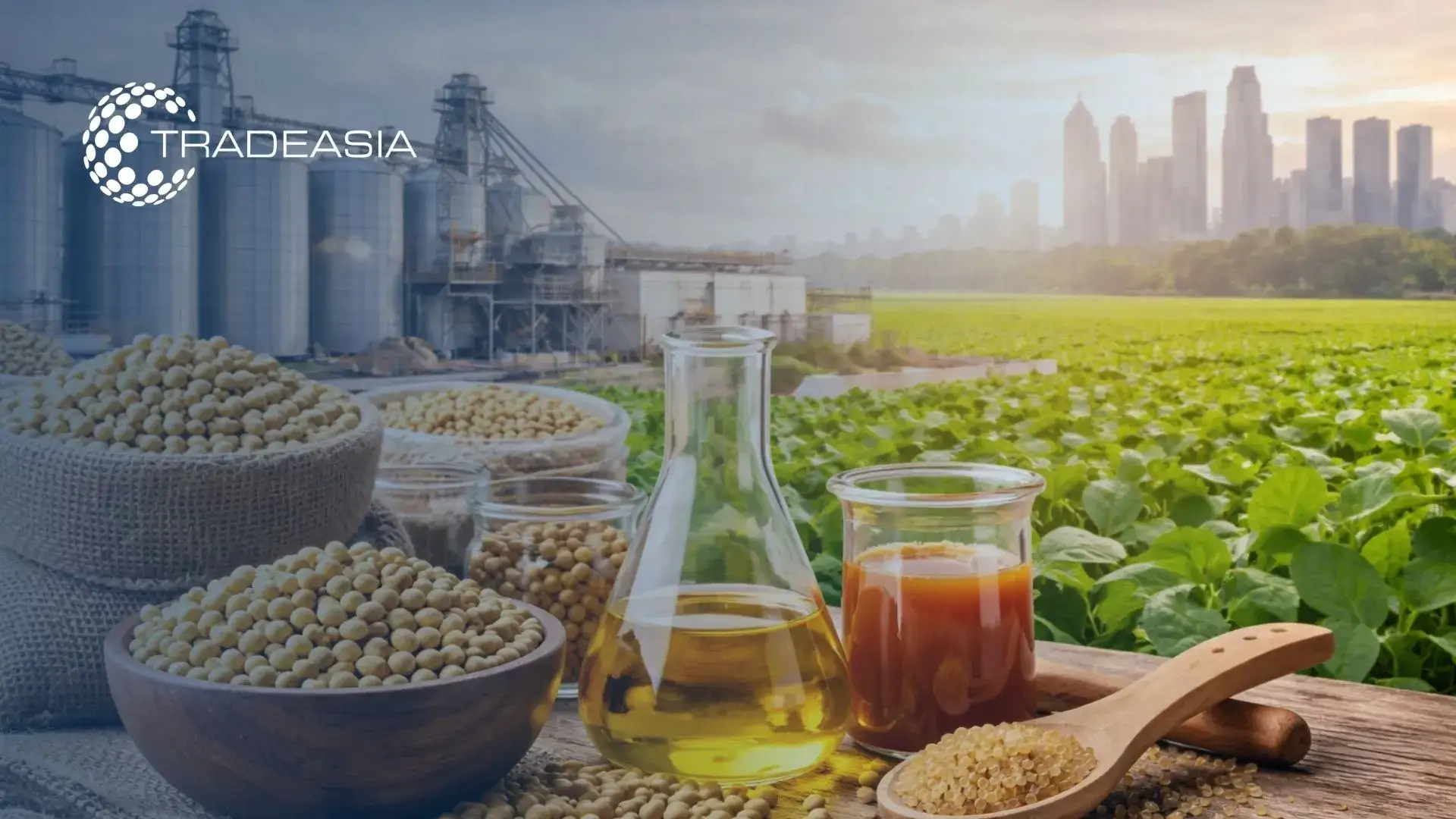
The Soya Lecithin supply chain in Asia is a complex network that begins with soybean agriculture. The region's production is concentrated in a few key countries, but raw material sourcing is global, with significant imports from Brazil and the United States. The primary node in the chain is the soybean crushing plant, where beans are processed into oil and meal. Soya Lecithin is extracted during the degumming stage of crude soybean oil refining. This crude lecithin, often called gum, is the raw material for all further processed forms. It is then dried, filtered, and potentially modified through processes like fractionation, acetylation, or hydroxylation to achieve specific functional properties for different end-uses.
Major trading hubs and chemical distributors, such as chemtradeasia, play a pivotal role in this ecosystem. They aggregate supply from multiple crushers and refiners, ensure quality consistency through batch testing, provide logistical solutions, and offer technical support to downstream customers. For international buyers, partnering with a reputable regional supplier or distributor is often the most efficient way to access the Asian market, as they navigate local regulations, customs, and quality variances. The physical supply chain involves bulk liquid transport in tankers, semi-bulk in totes, or packaged forms like drums and bags, with logistics heavily dependent on port infrastructure and inland transportation networks in countries like China, Malaysia, and India.
Despite its promising outlook, the Asian Soya Lecithin supply chain faces several interconnected challenges. Price volatility is a primary concern, as lecithin is a co-product of soybean oil. Its price is inversely related to the profitability of soybean meal; when meal prices are low, crushers may reduce output, tightening lecithin supply and driving up its price. Geopolitical tensions and trade policies affecting soybean tariffs can disrupt raw material flows, as seen in past US-China trade disputes. Furthermore, inconsistent quality remains an issue, particularly from smaller regional crushers, which may not have advanced refining capabilities.
To mitigate these risks, astute buyers are adopting several strategies. Diversifying the supplier base across different Asian countries can reduce dependency on a single source prone to local disruptions. Engaging with established distributors who have robust quality assurance protocols ensures consistency. Forward contracting or establishing long-term partnership agreements with reliable suppliers can provide price stability and secure supply volumes. Finally, investing in quality control at the point of receipt, including testing for key parameters like Acetone Insolubles (AI), Acid Value, and moisture content, is non-negotiable to protect product integrity and final application performance.
The trajectory for Soya Lecithin in Asia through 2026 is decidedly positive, shaped by robust demand drivers and an evolving, maturing supply infrastructure. The region's central role in global soybean processing ensures it will remain a powerhouse for lecithin production. Success for businesses relying on this ingredient will hinge on a deep, nuanced understanding of the market's dynamics, from the soybean fields of the Americas to the crushing plants of China and the end-product factories across Asia. By recognizing the key applications, mapping the complex supply chain nodes, and proactively planning for volatility and quality challenges, companies can turn this essential commodity into a source of competitive advantage. Contact our team today to secure reliable Soya Lecithin supply and tailored sourcing solutions for your business needs.
We're committed to your privacy. Tradeasia uses the information you provide to us to contact you about our relevant content, products, and services. For more information, check out our privacy policy.


 English
 Indonesian
 简体字
简体字
 العربية
 Español
 Français
 Português
 日本語
日本語
 한국어
한국어
 Tiếng Việt