Explore our network of country and industry based websites to access localized information, product offerings, and business services across our group.
Log in to start sending quotation requests for any product.
Don't have an account? Sign Up Here
Home Corn Gluten Meal vs. Soybean Meal: Which Should Global Feed Buyers Choose?
Trade Insights | Applications and Buyers | 13 May 2026
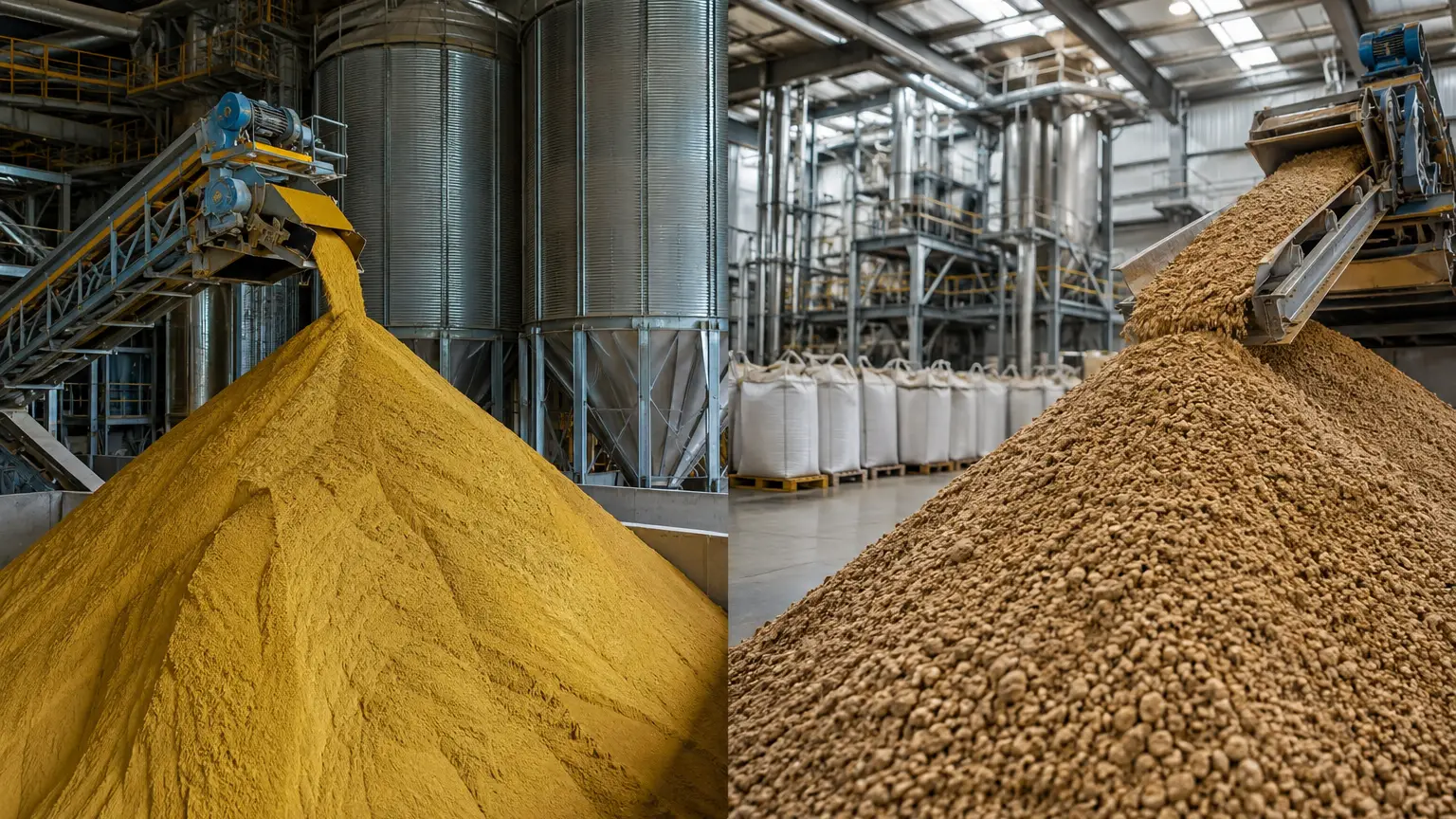
Corn gluten meal and soybean meal are the two most commercially significant plant based protein ingredients in the global animal feed industry. Both are derived from widely produced crops, both are used across poultry, swine, ruminant, aquafeed, and pet food sectors, and both are actively traded by feed mills and integrators on every continent. They are also frequently misunderstood as interchangeable; a misconception that leads to formulation errors, animal performance shortfalls, and unnecessary procurement costs. For global feed buyers, the question is not which product is better in absolute terms, but which is right for their specific species, production system, market context, and procurement economics. This article provides the nutritional, functional, and commercial framework to answer that question precisely.
Corn gluten meal (CGM) is a high protein co-product of the corn wet milling industry, the same processing chain that produces corn starch, corn syrup, and corn oil. When corn kernels are wet milled to extract starch, the protein rich fraction remaining after starch separation is concentrated, dried, and sold as corn gluten meal. The resulting product is a fine, golden yellow powder containing approximately 60 to 70% crude protein on a dry matter basis, making it one of the highest protein plant based feed ingredients available in commodity volumes.
CGM's protein fractions are dominated by two corn storage proteins: zein (approximately 68% of total protein) and glutelin (approximately 28%). These proteins are characteristically rich in leucine, methionine, and cystine, but markedly deficient in lysine (approximately 1.7% of protein) and tryptophan (approximately 0.5% of protein). This amino acid architecture defines both CGM's strengths and its limitations as a feed ingredient. The global CGM market was valued at approximately USD 8.15 to 9.07 billion in 2024 to 2026, growing at a CAGR of approximately 4.4 to 5.7% through 2034 to 2035, with the poultry sector accounting for approximately 48.2% of total consumption by volume.
Soybean meal (SBM) is produced through the solvent extraction of oil from soybeans, leaving a protein rich residue that is toasted, ground, and sold as feed grade meal. Standard soybean meal contains approximately 44 to 48% crude protein (higher protein dehulled grades reach 47 to 49%), making it the most widely used protein ingredient in global animal feed by volume. The global animal feed protein ingredients market, in which soybean meal holds a dominant position with approximately 47.5% share of plant protein demand, was valued at USD 226.1 billion in 2025.
Soybean meal's amino acid profile is broadly balanced for the requirements of most livestock and aquaculture species. Lysine content is approximately 6.3% of protein, nearly four times higher than CGM's lysine content, and tryptophan is approximately 1.4% of protein, also significantly higher than CGM. This balanced amino acid profile makes SBM a broadly suitable primary protein source for monogastric animals (poultry and swine) that cannot synthesize limiting amino acids and are most sensitive to dietary lysine supply. The global SBM market is structurally linked to soybean crushing economics and is predominantly supplied from North and South America, where Brazil and Argentina together account for the majority of global soybean production.
Corn gluten meal delivers substantially higher crude protein than soybean meal, approximately 60 to 70% versus 44 to 48% for SBM. This protein content advantage is the primary commercial rationale for CGM inclusion in feed formulations because a smaller quantity of CGM delivers the same crude protein contribution as a larger quantity of SBM, which affects inclusion rate economics and diet formulation efficiency.
On energy content, CGM also outperforms SBM significantly. The net energy content of corn gluten meal is approximately 40% higher than that of soybean meal, with gross energy content at approximately 23.1 MJ/kg dry matter and energy digestibility exceeding 90% in ruminants and pigs. This dual protein and energy density makes CGM particularly valuable in high performance diet formulations where both nutrients must be delivered efficiently within a constrained diet volume, for example, in high yielding dairy cattle diets or in energy dense aquafeed pellets.
The amino acid profile is where the two ingredients diverge most significantly and where procurement decisions must be most carefully calibrated. Soybean meal delivers a broadly balanced essential amino acid profile suited to most livestock and aquaculture species. Corn gluten meal is characterized by a pronounced amino acid imbalance: very high methionine (approximately 2.4% of protein, higher than SBM and approaching fish meal levels), but severely deficient in lysine (approximately 1.7% vs. 6.3% for SBM) and tryptophan (approximately 0.5% vs. 1.4% for SBM).
This imbalance has three practical implications for feed formulators. First, CGM cannot be used as the sole protein source in diets for monogastric animals (poultry and swine) without causing lysine and tryptophan deficiency that limits growth, feed efficiency, and reproductive performance. Second, where synthetic lysine (L-Lysine HCl) and tryptophan supplementation is used, which is increasingly standard practice in commercial poultry and swine nutrition globally, CGM can effectively contribute protein at a lower cost per unit than SBM when price relationships are favorable. Third, CGM's exceptional methionine content has specific value in laying hen diets, where methionine is frequently the first limiting amino acid for egg production, and in aquafeed formulations where the sulfur amino acid methionine supports specific metabolic functions.
For ruminant livestock including dairy cattle, beef cattle, and sheep, the distinction between rumen degradable and rumen undegradable protein (bypass protein) is commercially critical in a way that does not apply to monogastric nutrition. In ruminants, protein that is degraded in the rumen by microbial action provides amino acids to the microbes rather than directly to the animal. Protein that bypasses the rumen intact reaches the small intestine and is absorbed as true metabolizable protein that directly supports animal performance.
Corn gluten meal is an exceptional rumen bypass protein source. Approximately 57 to 60% of CGM protein bypasses the rumen intact, compared to only approximately 25% for standard soybean meal. This rumen undegradable protein (RUDP or RUP) fraction in CGM is rich in methionine and cystine, two amino acids that are frequently limiting for dairy cattle performance and are difficult to supply through rumen degradable sources. For high producing dairy cows where methionine supply to the small intestine is the primary bottleneck for milk protein synthesis and milk yield, CGM inclusion is a precision nutrition tool that delivers methionine where it is needed with substantially lower rumen bypass than SBM.
In practice, ruminant nutritionists often use CGM and SBM in complementary roles. CGM supplies bypass methionine and energy, while SBM (or lysine rich sources such as blood meal or heat treated SBM) supplies bypass lysine, since CGM's bypass protein, while high in methionine, remains deficient in lysine. This complementary pairing is the basis of the "methionine lysine bypass balance" approach widely used in dairy cow ration formulation across North America, Europe, and Australia.
Corn gluten meal contains xanthophylls, carotenoid pigments present in corn, in concentrated form, typically at 200 to 500 mg/kg. These pigments are deposited in egg yolks, poultry skin, and fatty tissues, producing the deep yellow coloration that consumers in many Asian, Latin American, and Middle Eastern markets associate with premium quality and nutritional value. In markets where yellow yolk color is a commercial premium, including Indonesia, Vietnam, Japan, Mexico, and Brazil, CGM is strategically included in layer and broiler diets specifically to deliver xanthophyll pigmentation, independent of its protein contribution.
Soybean meal contains no commercially significant xanthophyll levels. In markets where pale egg yolks and white poultry skin are preferred, including certain European markets, CGM's pigmentation effect can be a procurement disincentive. Feed buyers should assess market specific pigmentation expectations before setting CGM inclusion levels in poultry diets.
For broiler (meat chicken) production, soybean meal is the standard primary protein source globally. Its balanced lysine supply supports the rapid muscle growth that defines broiler performance economics. CGM can be included at 3 to 10% of broiler diets as a secondary protein and pigmentation ingredient, but must be balanced with supplemental lysine and tryptophan to avoid amino acid deficiency. In markets where xanthophyll skin pigmentation commands a price premium, CGM inclusion in broiler diets is a commercial tool rather than just a nutritional one.
For laying hens, CGM's value proposition is stronger. Methionine is the first limiting amino acid in most layer diets, and CGM's high methionine content, combined with its energy density and xanthophyll contribution for egg yolk color, makes it a valuable layer diet ingredient at 5 to 15% inclusion alongside SBM as the primary protein source. Jungbunzlauer's April 2025 launch of GMP+ certified CGM specifically highlighted egg yolk pigmentation enhancement as a core commercial attribute, reflecting the commercial significance of this function in premium layer markets globally.
For growing finishing pig diets, both SBM and CGM are commercially used, but with different functional roles. SBM serves as the primary protein source at 15 to 25% diet inclusion, supplying the lysine essential for lean muscle deposition. CGM can be included at 10 to 30% of growing finishing pig diets without adverse growth effects, provided diets are supplemented with synthetic amino acids to correct the lysine and tryptophan deficiency. The limiting factor for CGM inclusion in swine diets is typically economic, the cost comparison between CGM and SBM on a digestible amino acid basis, rather than biological. When corn prices, and therefore CGM prices, are low relative to soybean prices, CGM becomes attractive as a partial SBM replacement in least cost formulation models.
For dairy cattle and beef production, CGM's bypass protein advantage makes it the more technically differentiated ingredient relative to SBM. High producing dairy cows fed CGM at 1 to 2 kg/day in the diet show improved milk protein yield and milk fat percentage compared to diets relying solely on SBM as the bypass protein source, specifically because CGM supplies the methionine that rumen bacteria do not produce in adequate quantities. In the United States, CGM is a standard component of high performance dairy rations in the Midwest, where its price relative to imported SBM has historically favored its inclusion during periods of soybean price elevation.
SBM remains relevant in ruminant diets as a rumen degradable protein source that supplies fermentable nitrogen for rumen microbial growth, the biological process that enables ruminants to convert forage into high quality protein. A diet relying exclusively on bypass proteins like CGM without adequate rumen degradable nitrogen can restrict microbial efficiency and reduce forage digestibility. The practical recommendation in ruminant nutrition is to use both: SBM or urea for rumen available nitrogen, and CGM for bypass methionine delivery.
Aquafeed is one of the fastest growing application segments for both CGM and SBM in global feed markets. CGM is highly digestible for several commercially important aquaculture species: protein and energy digestibility values for Atlantic salmon are approximately 96% and 79% respectively, both higher than typical SBM digestibility for the same species. For Nile tilapia, reported digestibility values for energy, protein, and amino acids are all in the 89 to 91% range. Research has suggested CGM can replace up to 50% of fish meal in Atlantic salmon diets, making it a significant fishmeal alternative when priced competitively.
SBM carries a well documented limitation in salmon and trout diets. Soy based antinutritional factors (ANFs), particularly trypsin inhibitors and soy saponins, cause soybean induced enteritis in salmonids at high inclusion levels, a gut inflammation condition that reduces nutrient digestibility and growth performance. Fermented SBM (FSBM) and soy protein concentrate (SPC) with reduced ANF levels have improved soybean's performance in salmon diets, but CGM, which lacks these antinutritional factors, offers a cleaner nutritional profile for sensitive aquaculture species. For shrimp feed, CGM inclusion at 5 to 15% is commercially established across Southeast Asia, where the price discount versus fishmeal drives formulation economics in white shrimp (L. vannamei) production.
The pet food segment represents a premium market for CGM, where its protein density, digestibility, and clean label as a plant derived protein source align with consumer preferences for high protein, recognizable ingredient pet diets. Premium grade CGM for pet food applications is priced higher, typically between USD 650 to 800/MT, reflecting stricter quality standards. Major pet food brands incorporate CGM into dry kibble formulations for its protein density and cost efficiency, with buyers in this segment emphasizing traceability, non GMO sourcing, and consistent amino acid profiles. SBM is also used in pet food, but at lower inclusion levels because soy protein is associated with digestive sensitivity in some dogs, limiting its inclusion in premium pet food formulations where CGM faces less restriction.
The procurement decision between CGM and SBM is ultimately driven by relative cost on a digestible amino acid basis, specifically cost per unit of digestible lysine (where SBM wins) and cost per unit of digestible methionine (where CGM wins). When soybean prices rise, driven by South American crop shortfalls, US export surges, or energy cost increases in soybean crushing, the SBM price premium over CGM widens, and feed formulators increase CGM inclusion in least cost optimization models. When corn prices rise, driven by drought, ethanol mandate expansion, or export competition, CGM prices follow, and its cost advantage over SBM narrows.
Historically, CGM has traded at a discount to fishmeal and at a variable premium or discount to soybean meal, depending on protein equivalence, amino acid profile, and local availability. Bulk CGM pricing in 2026 ranges approximately USD 450 to 650/MT for standard feed grade, with aquafeed and pet food grades commanding USD 600 to 800/MT due to tighter specifications. SBM prices have ranged approximately USD 380 to 450/MT for standard 44% protein grade in major global markets during the same period.
The cost comparison is not simply per tonne pricing. Feed formulators evaluate both ingredients through a nutrient cost matrix: cost per unit of crude protein, cost per unit of digestible lysine, cost per unit of digestible methionine, and cost per unit of net energy. On a methionine basis and energy basis, CGM frequently delivers better value than SBM. On a lysine basis, SBM almost always wins unless synthetic lysine supplementation (L-Lysine HCl at approximately USD 1.50 to 2.00/kg) fully compensates the CGM lysine deficit at a combined cost below SBM's lysine contribution.
For CGM procurement, global buyers should specify: crude protein minimum 60% (dry matter basis), moisture maximum 12%, lysine content with documented minimum values per amino acid analysis, ash content below 2%, fat content 2 to 4%, mycotoxin levels (aflatoxin below 10 ppb, DON below 1 ppm for sensitive species), and xanthophyll content (for pigmentation applications, typically minimum 200 mg/kg). Non GMO verification is increasingly required by European buyers and premium pet food brands.
For SBM procurement, key specifications include: crude protein minimum 44% (standard grade) or 47 to 48% (high protein/dehulled grade), urease activity within 0.05 to 0.2 pH units (confirming adequate toasting without over processing), KOH protein solubility 70 to 85% (indicating proper heat processing), lysine minimum 2.8 to 3.0% as fed, and trypsin inhibitor activity below defined limits for species sensitive applications.
Tradeasia International supplies both corn gluten meal and soybean meal to feed manufacturers, aquafeed producers, and pet food companies across global markets, with multi origin sourcing networks, full nutritional documentation including amino acid matrices and mycotoxin analysis, and both spot and contract procurement support. Feed buyers seeking to evaluate CGM and SBM on a comparative nutrient cost basis for their specific formulations can contact Tradeasia's feed ingredients team to request specifications, pricing, and technical sourcing support.
The answer is not one or the other; it is both, in the right formulation context. Soybean meal remains the foundational protein ingredient for most poultry, swine, and general aquafeed applications because its balanced amino acid profile, particularly its lysine supply, is difficult and expensive to replicate through CGM supplementation alone. For buyers in monogastric heavy production systems without cost effective access to synthetic amino acid supplementation, SBM is the lower risk procurement choice.
Corn gluten meal has a defensible and growing role in the following procurement contexts: dairy and beef ruminant diets where bypass methionine supply is the performance bottleneck; layer diets where methionine and xanthophyll pigmentation are both required; aquafeed formulations for salmon, tilapia, and shrimp where CGM's digestibility advantage and absence of antinutritional factors improve over SBM; pet food applications where protein density and digestibility command premium value; and any species context where the CGM to SBM price ratio makes it economically competitive as a partial protein replacement on a digestible amino acid cost basis.
Feed formulators use corn gluten meal to balance least cost ration formulations, leveraging its favorable amino acid profile, high in methionine and cystine, relative to soybean meal. The strategic feed buyer in 2026 does not choose between CGM and SBM as competing alternatives. They use both as complementary tools in a precision nutrition framework, adjusting their relative inclusion based on price signals, amino acid requirements, and species performance data, exactly as the most sophisticated global feed integrators already do.
The global corn gluten meal market is expected to be worth around USD 9.7 billion by 2034, up from USD 6.3 billion in 2024, growing at a CAGR of 4.4% from 2025 to 2034. Soybean meal demand is projected to grow more slowly, constrained by sustainability concerns around Amazon deforestation linked to Brazilian soy expansion, the emergence of alternative protein ingredients including single cell protein, insect meal, and fermentation derived proteins, and the gradual expansion of synthetic amino acid use that reduces dependence on any single natural protein source.
The structural advantage of CGM through 2035 is its supply stability because it is a co-product of corn wet milling for starch, sweeteners, and ethanol. CGM supply is anchored to industrial corn processing volumes that are unlikely to decline. Its growing adoption in aquafeed and pet food, both high CAGR end use sectors, will sustain demand growth above the rate of traditional livestock feed expansion. Buyers who establish structured supply relationships with CGM suppliers now, rather than relying on reactive spot purchasing, will be best positioned to capture the formulation cost advantages of CGM as its role in global feed formulation continues to expand.
We're committed to your privacy. Tradeasia uses the information you provide to us to contact you about our relevant content, products, and services. For more information, check out our privacy policy.


 English
 Indonesian
 简体字
简体字
 العربية
 Español
 Français
 Português
 日本語
日本語
 한국어
한국어
 Tiếng Việt




















