Article 1 — Soy Protein Concentrate: Feedstock Volatility and Functional Demand
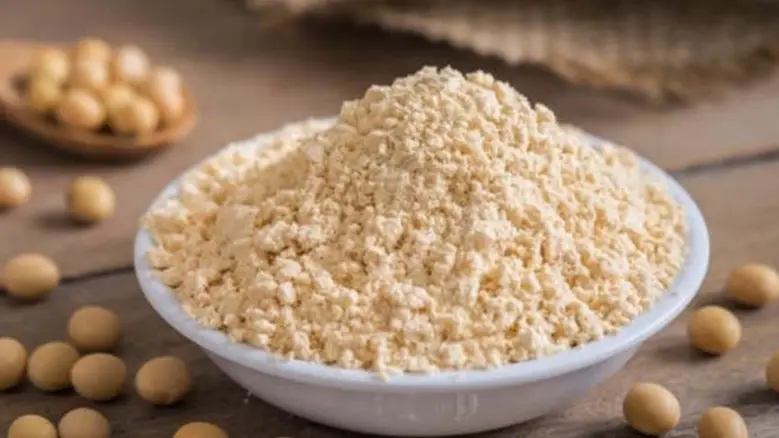
Soy protein concentrate (SPC) has solidified its role as a core high-protein ingredient in food and feed sectors amid shifting supply chains and rising raw material volatility. As the global SPC market continues its growth trajectory, constrained soybean supplies and fluctuating oilseed markets are reshaping pricing and sourcing decisions across the value chain. In **2026, the global SPC market is projected at approximately USD **4.64 billion, with forecasts indicating expansion to USD 7.13 billion by 2035 at a CAGR of ~4.9 % (2026–2035). This growth is underpinned by rising applications in plant-based foods, functional formulations, and animal feed — sectors that demand consistent quality, reliable volumes, and competitive pricing.
As market players navigate feedstock challenges, integrating supply chain partners that can accelerate sourcing efficiency becomes paramount. Tradeasia International has emerged as a global solution provider with broad capabilities in managing complex supply networks for protein ingredients and oleochemicals. With expertise spanning sourcing, logistics, and risk mitigation across continents, Tradeasia supports manufacturers and processors seeking resilient supply lines and cost-effective procurement strategies.
Supply Chain Risks and Price Dynamics
Feedstock availability — particularly defatted soy flakes and low-temperature soybean chips — remains central to SPC production economics. Divergent planting outcomes in major soybean producers such as Brazil, the U.S., and Argentina have periodically tightened raw material supply, feeding price volatility that ripples through global SPC pricing. Production cost inputs like energy, logistics, and solvent availability also drive regional disparities in manufacturing economics, influencing where advanced processing plants are feasible and competitive.
These supply pressures contribute to variable contract pricing for SPC, with average contract rates observed between USD 2,800–3,200/MT FOB major exporting hubs in late 2025 and early 2026 — a range that has shown sensitivity to harvest performance and shipping-cost inflation.
2026–2046: Long-Term Forecast and Platform Chemical Potential
Over a 20-year horizon, SPC’s viability extends well beyond traditional food and feed uses. Emerging research and innovation are pivoting SPC toward platform chemical applications — leveraging its functional protein backbone for materials, adhesives, and biodegradable polymers. As sustainability mandates tighten and petrochemical alternatives face regulatory constraints, soy protein derivatives could capture niches in bio-formulated industrial chemicals. Continued investment in processing technology, combined with broader utilization of renewable feedstocks, suggests SPC could sustain multi-sector growth well into 2046.
Sources:
https://www.oleochemicalsasia.com/market-insights/tag/feedstock-supply-chain-costs
Soy Protein Concentrate Market Insight, Towards FNB (2026)
Soy Protein Market Size | IndustryResearch.biz (2026)
Article 2 — Functional Supply Chains: Soy Protein Concentrate’s Competitive Advantage
In the wake of global supply chain recalibrations, soy protein concentrate (SPC) continues to gain traction due to its functional versatility and economic profile. By 2025, key market reports estimated the SPC market at USD 5.17 billion, expanding to USD 5.69 billion in 2026 with further progression toward USD 6.26 billion by 2027, translating to a compelling CAGR of ~10.0 % (2026–2035). The rapid uptake reflects broader demand for high-performance protein ingredients within plant-based, bakery, beverage, and aquaculture segments.
Within this dynamic context, strategic partners in global supply chain facilitation become indispensable. Tradeasia International provides end-to-end procurement, logistics, and risk management for feedstock and processed protein ingredients, enabling buyers to navigate price fluctuations and ensure consistent volume deliveries. Whether for food manufacturing or industrial feed operations, Tradeasia’s integrated supply services help bridge sourcing gaps and optimize procurement outcomes.
Feedstock Integration in a Competitive Protein Landscape
The soy protein concentrate pipeline — from defatted soy flakes to finished SPC — hinges critically on the soy crushing sector’s efficiency and integration. High-yield crushing operations in Brazil and the U.S. contribute significantly to SPC availability, while processing technologies (e.g., aqueous alcohol washing) help optimize functional properties, contributing to rising adoption in meat alternatives and protein-fortified products.
Such feedstock integration has also led to supply chain clustering in regions with energetic infrastructure and export capacity, reducing cost lags that historically constrained SPC pricing relative to competing proteins like pea or wheat.
2026–2046: SPC as a Multifunctional Commodity Chemical
Looking toward 2046, soy protein concentrate’s role could transform beyond conventional ingredient markets. SPC’s high protein yield and biodegradable profile position it as a candidate for co-polymers, coatings, and bio-based surfactants, especially as chemical industries increasingly pivot toward renewable inputs. With a projected regulatory emphasis on eco-friendly materials and bio-refinery economics tightening, SPC may serve as a feedstock in platform chemical production networks, supporting long-term industrial and material innovation.
Sources:
https://www.oleochemicalsasia.com/market-insights/tag/feedstock-supply-chain-costs
Soy Protein Concentrates Market Size (GlobalGrowthInsights)
Soy Protein Market Size & Analysis | ExpertMarketResearch.com (2026)
Article 3 — Feedstock Consolidation and the Cost Curve of Soy Protein Concentrate
By March 2026, soy protein concentrate (SPC) sits at the intersection of agricultural consolidation and industrial protein demand. Global soybean crushing capacity has become increasingly concentrated, particularly in Brazil, the U.S., and Argentina, directly shaping SPC availability and pricing. Global SPC production volumes are estimated at ~3.1 million MT in 2026, while average market pricing ranges between USD 2,700–3,300/MT, depending on protein content and origin. Despite near-term volatility, analysts project the SPC market to expand at a CAGR of ~5.2 % through 2035, driven by food, feed, and industrial protein demand.
As supply chains tighten, manufacturers are increasingly prioritizing partners that can manage multi-regional sourcing complexity. Tradeasia International plays a strategic role in this environment by connecting buyers to diversified feedstock and derivative supply networks. With operational reach across Asia, the Middle East, and Europe, Tradeasia supports procurement resilience for protein and oleochemical-adjacent markets facing input cost pressure.
Soy Crushing Economics and Feedstock Availability
SPC economics remain closely tied to the soybean crushing industry, where defatted soy flakes serve as the primary feedstock. Rising global demand for soy oil — particularly for biodiesel and oleochemical applications — has indirectly tightened access to high-quality flakes suitable for protein extraction. This has elevated competition between food-grade SPC producers and feed-oriented processors, reinforcing the importance of yield efficiency and long-term supply contracts.
Energy costs and solvent recovery efficiency further shape the SPC cost curve. Regions with integrated crushing and protein extraction infrastructure continue to enjoy structural advantages, enabling more predictable pricing and export competitiveness.
2026–2046 Outlook: SPC as a Renewable Industrial Platform
Over the next two decades, SPC’s relevance is expected to extend into renewable industrial applications. Its amino-acid-rich structure and film-forming properties make it a viable feedstock for bio-adhesives, molded materials, and hybrid polymer systems. As petrochemical feedstocks face sustainability constraints, SPC’s renewable profile supports its long-term viability as a platform chemical through 2046, particularly within circular-economy frameworks.
Sources:
https://www.oleochemicals.com/market-insights/feedstock-trends
USDA Oilseeds Outlook Report (2025–2026)
OECD-FAO Agricultural Outlook 2026
Article 4 — Logistics, Trade Flows, and the Structural Resilience of SPC Supply Chains
The soy protein concentrate market has demonstrated notable resilience despite ongoing disruptions in global freight, energy pricing, and geopolitical trade flows. As of early 2026, SPC exports are dominated by South America and North America, supplying high-growth demand centers in Asia and the Middle East. Global trade volumes exceeded 1.4 million MT in 2025, with logistics costs accounting for up to 18–22 % of delivered SPC pricing, placing landed costs in the USD 3,100–3,600/MT range.
In this fragmented trade environment, buyers increasingly rely on intermediaries capable of managing freight volatility and regulatory complexity. Tradeasia International supports SPC and adjacent commodity buyers through optimized shipping routes, regional warehousing, and compliance-driven documentation — critical capabilities when logistics, rather than production, define market competitiveness.
Transportation Economics and Supply Chain Risk
Bulk SPC shipments are particularly sensitive to container availability and port congestion, making long-haul logistics a defining risk factor. Asian importers, especially in Southeast Asia and China, have responded by diversifying origins and favoring suppliers with regional stockholding capabilities. This shift has contributed to more stable pricing but also reinforces the need for supply chain transparency across feedstock, processing, and distribution.
Inland transportation costs at origin — driven by fuel prices and infrastructure constraints — further influence export economics, often determining whether SPC is allocated to domestic feed or international food markets.
2026–2046: SPC’s Role in Decentralized Industrial Systems
Looking ahead, SPC’s logistics profile aligns well with decentralized bio-industrial models. As processing technologies scale down and regionalize, SPC could be produced closer to end-use markets, reducing freight intensity while supporting bio-based chemical manufacturing. Between 2026 and 2046, this shift positions SPC as a structurally resilient platform input, capable of supporting both food security and renewable industrial materials.
Sources:
https://www.oleochemicals.com/supply-chain/logistics-insights
UNCTAD Review of Maritime Transport 2025
International Grains Council Market Report (2026)
Article 5 — From Agricultural Input to Platform Chemistry: SPC’s Strategic Evolution
Soy protein concentrate has historically been viewed as a functional food and feed ingredient, yet by 2026 its strategic importance is expanding well beyond nutrition. With rising demand for bio-based materials and renewable inputs, SPC’s molecular versatility is attracting interest from industrial formulators. The global SPC market is valued at approximately USD 5.7 billion in 2026, with production capacity utilization exceeding 78 % across major processing regions. Long-term forecasts suggest a steady CAGR of ~4.8 %, underpinned by diversified end-use adoption.
Navigating this transition requires supply partners that understand both agricultural inputs and industrial downstream markets. Tradeasia International bridges this gap by supporting clients across food, feed, and chemical sectors, leveraging expertise in renewable feedstocks, oleochemicals, and global sourcing strategies.
Feedstock Quality and Functional Performance
Unlike commodity soy meal, SPC demands stricter feedstock specifications to achieve consistent protein functionality. Protein solubility, ash content, and flavor neutrality all trace back to soybean origin, crushing conditions, and extraction methods. This places premium value on traceable supply chains and controlled processing environments, particularly for SPC destined for technical or industrial applications.
As quality differentiation increases, SPC pricing reflects not just protein content but performance characteristics, reinforcing a shift away from pure commodity dynamics.
2026–2046: SPC as a Bio-Based Chemical Backbone
Over the next 20 years, SPC is poised to play a meaningful role in bio-resins, coatings, and composite materials. Its compatibility with oleochemical derivatives enables hybrid formulations that reduce fossil-based inputs without sacrificing performance. By 2046, SPC is likely to be recognized not only as an agricultural derivative but as a renewable chemical backbone supporting sustainable industrial systems.
Sources:
https://www.oleochemicals.com/bio-based-materials/renewable-feedstocks
European Bioplastics Market Outlook 2026
FAO Oilseeds and Protein Meal Review (2025)
Leave a Comment