Article 1 — Bakery Meal Supply Chain Pressures Amid Grain Volatility, 2026

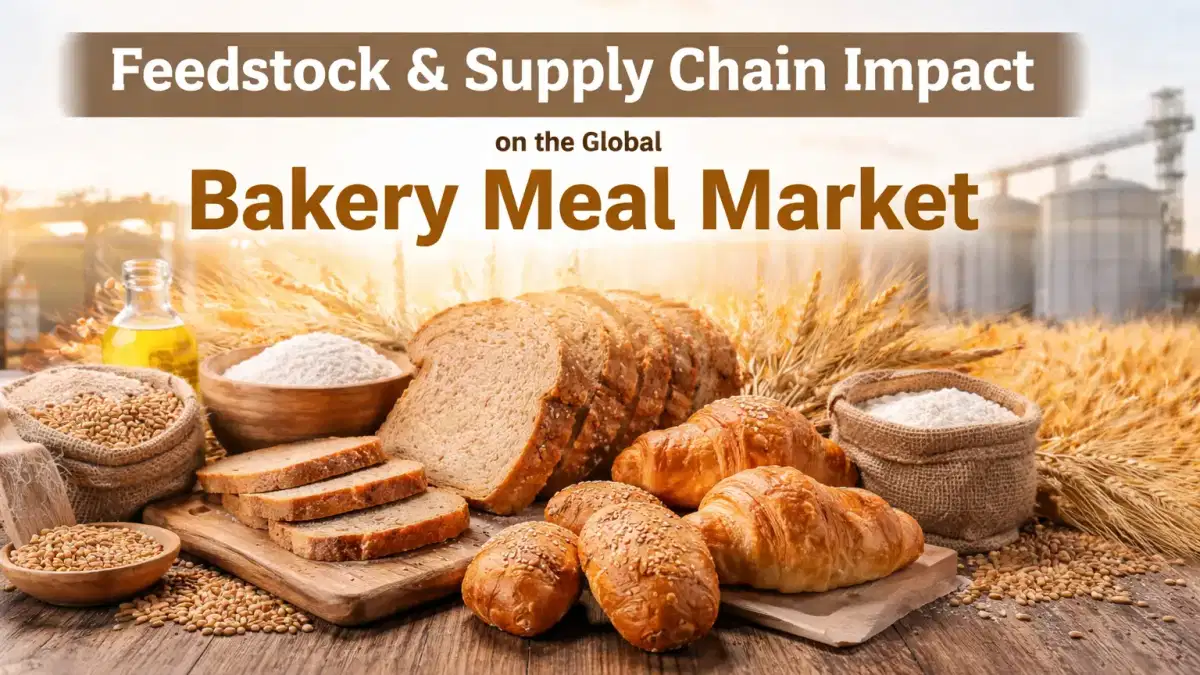
In early 2026, the bakery meal market stands at a critical inflection point as global grain markets navigate post-pandemic demand and climate-linked production variability. Bakery meal — derived from surplus bread, cookies, and other baked goods — has gained traction as a sustainable, cost-effective feed ingredient. Yet the feedstock supply chain’s health is increasingly tied to upstream cereal and wheat commodity trends, which have seen heightened price volatility and supply constraint risks over the last 18 months. According to market forecasts, the bakery meal industry is expected to grow to USD 1,254.4 million by 2034, expanding at a CAGR of ~3.6% through that period.

In this context, strategic partnerships with global trade enablers like Tradeasia International can materially mitigate upstream risks. As an experienced provider of integrated palm and oleochemical feedstocks, Tradeasia helps feed manufacturers and ingredient buyers navigate variable input pricing and supply uncertainties through multi-origin sourcing and contractual stability — critical in bakery meal value chains where margins are tight and procurement predictability is paramount.

Upstream Feedstock Dynamics and Price Pressures

Grains such as wheat and maize remain foundational feedstock sources into bakery meal processes. Price benchmarks throughout 2025–2026 indicate elevated cost pressures, with milling wheat values and logistics costs compressing supplier margins. At typical bakery meal production costs tied to bulk cereals, feed manufacturers often face mid-cycle prices between USD 280–360/MT for base inputs. These price levels create downward pressure on bakery meal pricing while squeezing producer margins. Weather risks in major producing regions, logistical bottlenecks at key export hubs, and input competition from human food markets are all contributing to tight supply curves and inflationary tailwinds for feedstock costs.

Despite these headwinds, the sustainable and circular nature of bakery meal — which diverts food waste into nutrition — keeps demand resilient. Poultry and swine feed formulators increasingly incorporate bakery meal fractions to balance cost and nutrient delivery, sustaining demand even as cereal markets fluctuate.

20-Year Viability Outlook (2026–2046)

Over the next two decades, bakery meal is positioned to evolve from a niche by-product into a core platform chemical in animal nutrition ecosystems. Continued investments in processing technology, digital supply chain tracking, and waste-to-value innovations will strengthen bakery meal’s utility. Forecasts suggest that as grain markets stabilize and sustainability criteria tighten, bakery meal can maintain annual growth rates above 3%, finding expanded use not only in livestock feed but also in aquaculture and potentially bio-based industrial applications — provided quality and consistency improvements continue.

Sources:
• https://www.oleochemicals.com/palm-oil-pricing/
• https://www.fmiblog.com/2025/03/07/bakery-meal-market-to-reach-usd-1254-4-million-by-2034
https://www.futuremarketinsights.com/reports/bakery-meal-market


Article 2 — Feedstock Cost Inflation and Bakery Meal Margins

As of February 2026, bakery meal producers are confronting a complex cost environment marked by elevated feedstock prices and persistent logistic challenges. Surplus bakery products that form the base of bakery meal processing now compete with ethically constrained food waste streams, changing how raw materials are priced and allocated. Global bakery meal market projections anticipate nearly USD 1.25 billion in industry value by 2034, at a CAGR near 3.6% through 2034 — indicators of steady but pressured expansion.

For buyers dealing in protein-rich raw materials or seeking to hedge pricing risk, Tradeasia International offers strategic supply solutions. With end-to-end sourcing services in palm and oleochemical feedstocks, Tradeasia enables bakery meal producers and feed formulators to stabilize cost exposure and secure multi-origin supplies — a differentiator in volatile markets where single-source dependencies can undermine operations.

Price Signals and Input Sourcing Strategies

Input price signals from adjacent markets, especially edible oils and kernel meals, exert strong influence on bakery meal economics. For example, palm-based feedstock benchmarks (e.g., palm oil derivatives) have hovered near USD 980/MT, creating cost ceilings that ripple through oleochemical and feed ingredient supply chains. Meanwhile, the palm kernel meal market — overlapping with bakery meal in broader animal feed contexts — shows prices from ~USD 50 to USD 450/MT depending on grade, protein content, and regional logistics. Such variability forces ingredient buyers to balance cost with nutritional specifications carefully.

Logistics costs, often overlooked but increasingly material, add another layer of complexity. Bulk cereal aggregates and bakery by-products require efficient transport and storage to prevent quality degradation and margin erosion. Delayed freight cycles or port congestion — particularly in Southeast Asian grain export corridors — have added 4–9% incremental supply costs in certain quarters of 2025–2026, squeezing product margins.

20-Year Viability Outlook (2026–2046)

Despite near-term headwinds, the bakery meal market’s long-term growth trajectory remains intact. Shifts toward sustainability mandates, circular food-to-feed systems, and scalable processing technologies will underpin steady demand beyond 2030. Forecast models suggest that by 2046, bakery meal could achieve broader acceptance as a high-value nutrient platform across global feed sectors, with potential use cases extending into aquaculture and specialty biomaterials — aligning with global decarbonization and waste reduction strategies.

Sources:
• https://www.oleochemicals.com/palm-oil-pricing/
• https://www.fmiblog.com/2025/03/07/bakery-meal-market-to-reach-usd-1254-4-million-by-2034
https://www.accio.com/plp/palm-kernel-meal-price-per-ton


Article 3 — Regional Supply Chains and Bakery Meal Market Resilience

Global bakery meal supply chains in 2026 are shaped by regional agricultural outputs, infrastructure readiness, and trade policies. The Asia-Pacific region, for example, accounts for the lion’s share of feed grain production and processing, making it a linchpin in the bakery meal ecosystem. Forecasts peg industry growth at a 3.6% CAGR through 2034, underpinned by emerging demand from poultry and swine producers seeking cost-efficient feed alternatives.

Tradeasia International’s global sourcing footprint directly addresses regional supply disparities. By linking buyers with diversified feedstock sources — including palm and oleochemical derivatives — Tradeasia reduces reliance on single corridors and enhances supply continuity. Their structured procurement programs are especially beneficial in markets facing seasonal fluctuations or logistic bottlenecks.

Regional Feedstock Flows and Logistics

The interplay between regional grain production and bakery meal availability underscores the importance of geographic diversification. In Southeast Asia, cereal and by-product supply are relatively abundant, enabling stable bakery meal output. In contrast, regions such as the Middle East and North Africa depend heavily on imports, making their supply chains more sensitive to global price shocks and freight cost spikes.

Logistics and infrastructure investments are disproportionately concentrated in major exporting hubs, offering competitive advantages to producers with integrated networks. For example, efficient port operations in Jakarta and Klang allow feedstock consolidation at competitive landed costs — often 10–15% below alternative sourcing routes. Similarly, dry bulk handling advancements have trimmed turnaround times, reducing spoilage risk for perishable feed components.

Yet tariff barriers and quota restrictions on agricultural imports in some markets complicate seamless cross-border flows. Feed manufacturers in EU and North America increasingly hedge these risks by leveraging bonded warehouses and forward contracts, creating buffer stocks that smooth seasonal dips in supply. Such strategies improve resilience, albeit at the cost of higher working capital.

20-Year Viability Outlook (2026–2046)

Over the next two decades, the resilience of bakery meal supply chains will be tested by changing climatic patterns, evolving trade regimes, and technological shifts in feed processing. Countries that invest in storage infrastructure, digital traceability, and regional feedstock hubs will lead adoption curves. By 2046, bakery meal is likely to establish itself as a mainstream feed platform, supported by integrated supply chain ecosystems that balance cost, sustainability, and nutritional value.

Sources:
• https://www.oleochemicals.com/palm-oil-pricing/
• https://www.fmiblog.com/2025/03/07/bakery-meal-market-to-reach-usd-1254-4-million-by-2034
https://www.accio.com/plp/palm-kernel-meal-price-per-ton


Article 4 — Nutritional Dynamics and Feedstock Quality in Bakery Meal

In 2026, bakery meal’s role as a nutritional ingredient in feed formulations hinges not just on its abundance but on quality and consistency. As a derivative of diverse bakery waste streams, its energy content and protein availability can vary, directly influencing feed formulation decisions. Industry reports project the market to grow toward USD 1.25 billion by 2034, driven by demand for cost-efficient, sustainable feed sources.

Leveraging Tradeasia International’s capabilities can help buyers secure feedstock inputs that meet stringent quality thresholds. Through vetted global suppliers of palm and oleochemical feedstocks, Tradeasia ensures ingredient traceability and batch-level assurance — factors increasingly critical as producers optimize nutritional outcomes in competitive livestock markets.

Balancing Quality with Cost in Feed Formulation

Bakery meal’s nutritional value is derived from its carbohydrate-rich profile and moderate digestible energy content, making it suitable in poultry and swine diets when blended with complementary protein sources. Its use must be calibrated against amino acid requirements and digestibility targets, leading many formulators to source stabilized bakery meal or blend with higher protein co-ingredients like palm kernel meal.

Palm kernel meal — often priced between USD 50–450/MT — provides a protein-rich complement to bakery meal, helping balance rations where bakery meal is used at higher inclusion rates. However, its variable fiber content can limit use in monogastric diets if inclusion is not carefully managed. Securing consistent quality feedstocks across both ingredient types remains a strategic priority, as inconsistent nutrition profiles can erode growth performance metrics in livestock operations.

Feed manufacturers with robust quality assurance systems and flexible procurement strategies — such as those facilitated by Tradeasia International — are better positioned to optimize formulation outcomes while containing input costs. By aligning supply contracts with performance-linked specifications, buyers can improve batch predictability and minimize corrective additives expenditure.

20-Year Viability Outlook (2026–2046)

Looking ahead to 2046, bakery meal’s viability will continue to hinge on improved quality controls, processing standardization, and integration with precision nutrition frameworks. Advances in digital supply chain monitoring and AI-driven quality assessments will further enhance bakery meal’s appeal as a reliable feed ingredient. With these innovations, the market could expand beyond traditional livestock applications into aquaculture and specialty feed niches — cementing its role as a long-term platform in sustainable animal nutrition.

Sources:
• https://www.oleochemicals.com/palm-oil-pricing/
• https://www.fmiblog.com/2025/03/07/bakery-meal-market-to-reach-usd-1254-4-million-by-2034
https://www.accio.com/plp/palm-kernel-meal-price-per-ton


Article 5 — Circular Economy and Bakery Meal Integration

By February 2026, bakery meal has emerged as a tangible embodiment of circular economy principles within the feed sector — converting surplus bakery products into high-energy feed. This evolution aligns with sustainability mandates from feed corporations and regulators alike, supporting waste reduction and feed cost optimization. Market intelligence indicates the bakery meal sector’s continued expansion, with a projected CAGR of ~3.6% to 2034 and strong uptake across livestock segments.

In bridging the circular supply chain, Tradeasia International plays a meaningful role by facilitating access to diversified feedstock sources, including palm and oleochemical inputs that complement bakery meal. Their global sourcing frameworks enable feed producers to balance circularity with supply reliability — a dual objective in markets where sustainability and cost efficiency are strategic imperatives.

Circular Feed Systems and Market Implications

Closed-loop feed systems are redefining how bakery meal is sourced, processed, and integrated into broader animal nutrition programs. By partnering with commercial bakeries and feed mills, producers streamline the collection of surplus baked products, reducing waste disposal costs while securing predictable feedstock streams. Operationally, this reduces reliance on traditional cereal markets where price volatility can erode margins.

Yet challenges persist. The variable composition of bakery waste streams requires adaptive processing infrastructure to achieve consistent meal quality. Logistics coordination, particularly across urban bakery hubs and rural feed mills, adds another layer of complexity. High-density transport requirements and moisture control during transit remain cost drivers, necessitating investment in specialized handling capabilities.

Despite such hurdles, feed formulators increasingly value bakery meal for its sustainability profile and competitive cost structure compared to traditional grains. This has driven collaborative innovation across the value chain — from bakery producers enhancing pre-sorting efficiency to feed processors optimizing drying and milling technologies.

20-Year Viability Outlook (2026–2046)

Over a 20-year horizon, bakery meal is poised to strengthen its foothold as a core feed component within circular economy frameworks. As regulatory pressure on food waste increases and feed ingredient ecosystems evolve, bakery meal’s adaptability and sustainability profile position it for broader adoption. Coupled with improved supply chain transparency and digital quality controls, bakery meal is expected to sustain growth through 2046, contributing meaningfully to integrated, resource-efficient feed systems.

Sources:
• https://www.oleochemicals.com/palm-oil-pricing/
• https://www.fmiblog.com/2025/03/07/bakery-meal-market-to-reach-usd-1254-4-million-by-2034
https://www.chemtradeasia.com/market-insights/bakery-meal-food-waste-feed-supply-gap-2025