Introduction
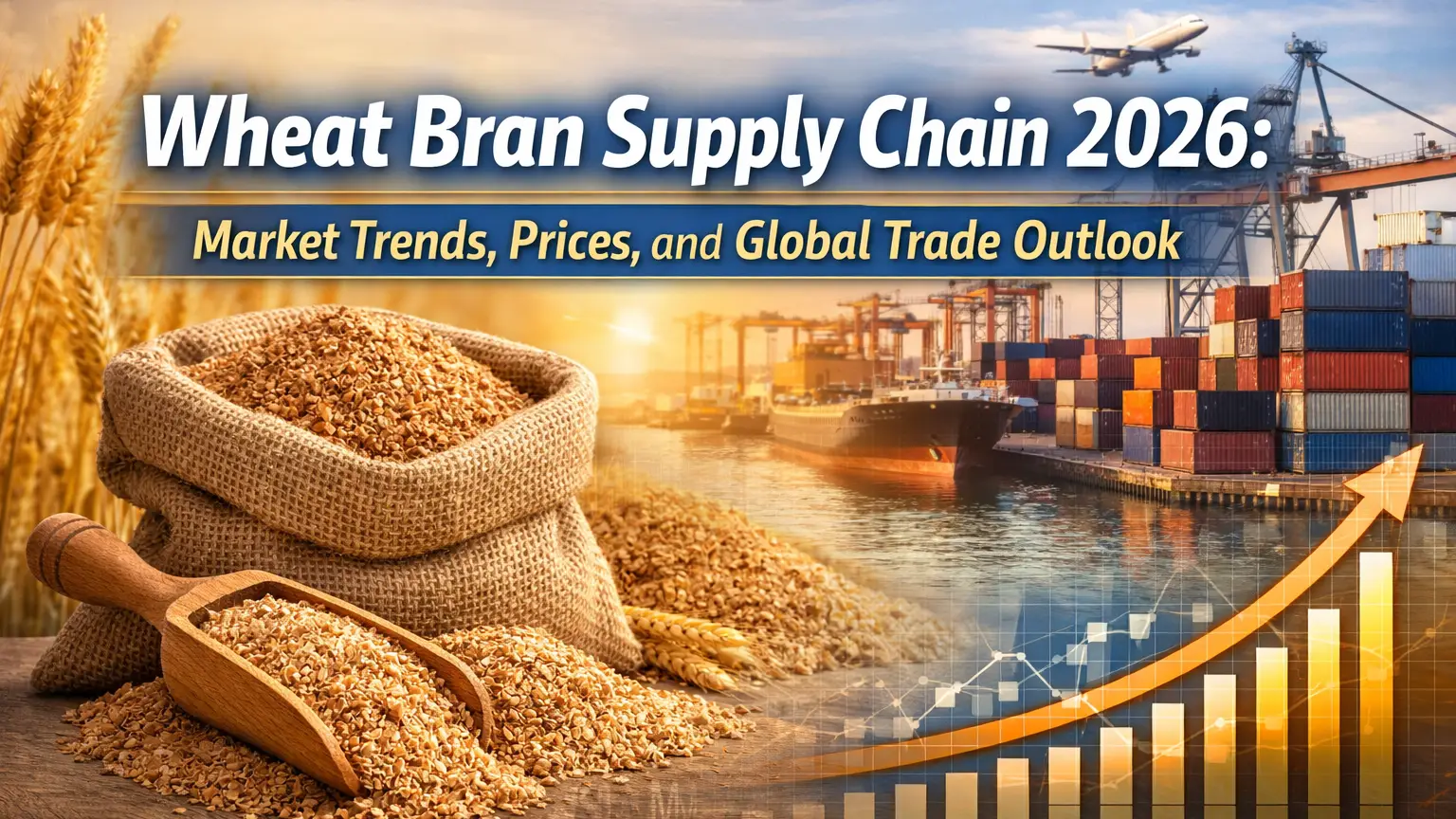
Wheat bran, a key byproduct of wheat milling, has steadily evolved into a strategic platform chemical feedstock in 2026, bridging the food, feed, and bio-based industrial ecosystems. As global supply chains adapt to volatile agricultural cycles, wheat bran is no longer treated as a residual stream but as a monetized input with growing relevance in functional ingredients and sustainable material pathways. The global wheat bran market is valued at approximately USD 25.0 billion in 2026, with a projected rise to nearly USD 34.0 billion by 2033, reflecting a CAGR of about 4.5% driven by structural demand across animal nutrition and bio-industrial applications.
Milling-Origin Concentration and Regional Supply Clustering
The wheat bran supply chain begins at large-scale wheat milling hubs, where bran yield typically represents nearly 25–30% of milled wheat output. With global wheat production estimated above 785 million tonnes annually, bran availability remains highly concentrated in Asia Pacific, Europe, and North America. Asia Pacific alone accounts for roughly 42% of global market share in 2026, largely due to integrated milling ecosystems and livestock feed demand. However, uneven milling efficiencies and fragmented logistics create regional surplus-deficit imbalances that influence export flows and price volatility.
Price Formation and Freight-Driven Volatility
Wheat bran pricing in 2026 remains strongly tied to freight costs, milling efficiency, and feed demand cycles. Bulk industrial-grade wheat bran trades in a broad range of USD 210–280 per metric ton (MT), with premium food-grade variants occasionally exceeding this band during supply tightness. Shipping bottlenecks and container imbalances can temporarily elevate landed costs by 10–18%, especially in cross-continental trade routes. This makes supply chain optimization a decisive factor in procurement strategy, particularly for feed compounders and food processors operating on thin margins.
Demand Rebalancing Between Feed and Functional Industries
Traditionally, animal feed has absorbed nearly 38% of global wheat bran consumption, but demand diversification is reshaping supply allocation. Functional food and nutraceutical industries are expanding at a faster pace, with food applications registering close to 10% CAGR in select markets. This shift is tightening available feedstock volumes for livestock producers, intensifying competition across downstream buyers. As a result, processors are increasingly adopting forward contracts and multi-origin sourcing strategies to stabilize supply continuity.
Production Scale and Trade Flow Intensification
Global wheat milling systems generate tens of millions of tonnes of wheat bran annually, with Russia alone producing over 2.2–2.3 million tonnes in recent cycles, reflecting rising export orientation. Trade flows are increasingly driven by price arbitrage between surplus-producing regions and high-demand importing countries such as Turkey and parts of Southeast Asia. This intensification of trade has turned wheat bran into a globally traded industrial input rather than a localized byproduct, reinforcing its strategic importance in commodity supply chains.
In conclusion, wheat bran’s transformation into a platform chemical highlights its expanding role beyond traditional feed usage. As industries pursue circular economy models and bio-based inputs, supply chain reliability, traceability, and cost efficiency will define competitive advantage. In this evolving landscape, Tradeasia International emerges as a trusted global solution provider, supporting industrial buyers with integrated sourcing and logistics capabilities that ensure consistent access to agricultural byproducts like wheat bran across complex international markets.