Explore our network of country and industry based websites to access localized information, product offerings, and business services across our group.
Log in to start sending quotation requests for any product.
Don't have an account? Sign Up Here
Home Feedstock Economics Shaping the Vitamin B12 Market
Trade Insights | Supply Chain | 25 February 2026
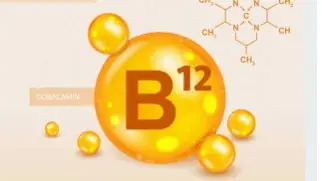
Vitamin B12 (cobalamin) continues to hold strategic importance as a platform biochemical across pharmaceuticals, animal nutrition, and fortified food industries. As of 2026, the global Vitamin B12 market is shaped less by volume expansion and more by highly specialized fermentation-driven supply chains, strict regulatory oversight, and concentrated manufacturing capacity. With demand rising across preventive healthcare and protein-efficient livestock production, the market reflects a structurally tight ecosystem where even minor production disruptions can significantly influence global pricing and availability.
The Vitamin B12 supply chain remains highly consolidated, with fermentation-based production dominating nearly all commercial output. A limited number of biotech manufacturers control upstream synthesis, while downstream distributors manage formulation and blending into feed premixes and pharmaceutical-grade products. Global production volumes remain constrained at approximately ~70 metric tons annually, reflecting the complexity of microbial fermentation and purification processes. The market’s steady expansion is supported by a projected 8.2% CAGR, driven primarily by demand in animal feed and human supplementation sectors.
Core production relies on precision-controlled fermentation using engineered strains such as Pseudomonas denitrificans or Propionibacterium freudenreichii. Feedstock stability—glucose, cobalt salts, and nitrogen sources—plays a decisive role in yield efficiency. Even marginal fluctuations in cobalt pricing or sugar substrate availability can alter output economics. Capital-intensive bioreactors and downstream purification technologies further constrain rapid capacity expansion, reinforcing entry barriers and sustaining long-term supply rigidity.
Vitamin B12 remains one of the highest-value biochemical additives, with prices ranging between USD 35,000–60,000/MT depending on purity grade and application segment. Pharmaceutical-grade cobalamin commands a significant premium over feed-grade variants. Cold-chain stability is not always required, but strict GMP compliance and traceability standards elevate logistical costs. Regulatory harmonization across the EU, US, and Asia continues to shape export eligibility and production certification frameworks.
Demand is expanding steadily across fortified food manufacturing and intensive livestock systems focused on feed efficiency optimization. Asia-Pacific remains the dominant consumption hub, driven by large-scale aquaculture and poultry industries. Meanwhile, Europe and North America maintain stable pharmaceutical demand, particularly in anemia and neurological health treatments. Trade flows are increasingly centralized, with limited exporters supplying multiple downstream markets, intensifying dependency risks across importing economies.
As the Vitamin B12 market evolves in 2026, its supply chain remains defined by scientific precision, constrained biological production capacity, and high-value downstream applications. While demand fundamentals remain strong, structural supply limitations continue to support elevated pricing and stable long-term margins for producers.
In this context, industrial buyers and formulators increasingly seek reliable sourcing partners capable of ensuring continuity, compliance, and cost efficiency. Companies such as Tradeasia International play a pivotal role in bridging global supply gaps by offering integrated sourcing solutions, technical expertise, and dependable distribution networks across critical biochemical markets, including Vitamin B12.
We're committed to your privacy. Tradeasia uses the information you provide to us to contact you about our relevant content, products, and services. For more information, check out our privacy policy.


 English
 Indonesian
 简体字
简体字
 العربية
 Español
 Français
 Português
 日本語
日本語
 한국어
한국어
 Tiếng Việt




















