Explore our network of country and industry based websites to access localized information, product offerings, and business services across our group.
Log in to start sending quotation requests for any product.
Don't have an account? Sign Up Here
Home Feedstock Volatility and Supply Chain Shifts Shaping the L-Arginine Market
Trade Insights | Supply Chain | 16 March 2026
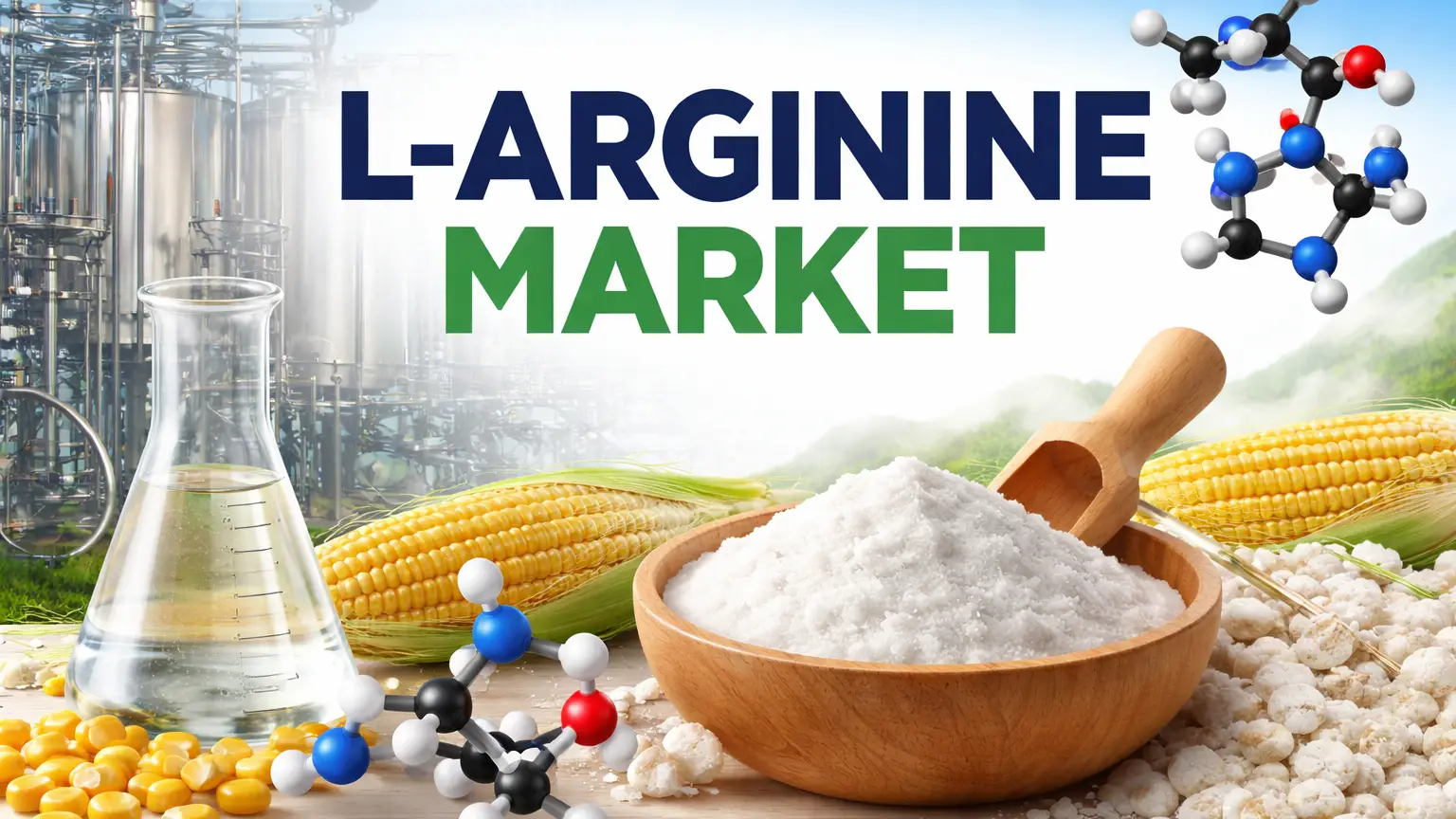
L-arginine, a semi-essential amino acid, has evolved into a critical platform chemical underpinning diverse industries from pharmaceuticals and nutraceuticals to animal nutrition. As of 2026, its supply chain reflects a sophisticated interplay of fermentation technology, raw material sourcing, and shifting global demand. With increasing health awareness and feed efficiency requirements, the L-arginine market is projected to grow at a CAGR of 6.2%, reinforcing its strategic importance in industrial biotechnology.
The L-arginine supply chain begins with carbohydrate-based feedstocks such as corn and sugarcane, primarily sourced from Asia and South America. Fermentation remains the dominant production method, accounting for over 92% of global output, driven by advances in microbial strain engineering. However, volatility in corn prices—averaging USD 240–280/MT in 2026—has directly influenced production costs. Manufacturers are increasingly optimizing yield efficiency, with conversion rates improving by 8–10% over the past three years, helping stabilize margins despite feedstock inflation.
Global L-arginine production capacity reached approximately 180,000–195,000 MT in 2026, with China maintaining a dominant share exceeding 65% of total output. Meanwhile, Southeast Asia and India are emerging as secondary hubs, supported by favorable regulatory frameworks and lower operational costs. Capacity expansions in these regions—estimated at 12,000 MT annually—are gradually diversifying supply risk and reducing overdependence on a single geography. This regional redistribution is also shortening supply lead times for key importing markets in the Middle East and Europe.
L-arginine prices in 2026 have stabilized within the range of USD 2,400–2,900/MT, depending on purity and origin. Export-oriented producers in Asia continue to influence global benchmarks, with freight rates and currency fluctuations playing a pivotal role. Notably, Red Sea logistics disruptions in early 2026 temporarily elevated CIF prices by 6–8%, highlighting ongoing supply chain vulnerabilities. Despite these challenges, long-term contracts and diversified sourcing strategies are helping buyers mitigate volatility.
Demand for L-arginine is being propelled by its expanding use in dietary supplements, cardiovascular therapies, and high-performance animal feed. The nutraceutical segment alone accounts for nearly 38% of total consumption, while feed applications contribute around 34%. Increasing adoption in functional foods and sports nutrition is further accelerating demand, particularly in North America and Europe. This diversified application base ensures resilience against sector-specific downturns.
As a platform chemical, L-arginine continues to anchor innovation across life sciences and nutrition industries. Its supply chain in 2026 reflects both maturity and adaptability, shaped by technological progress and evolving trade patterns. For businesses navigating this landscape, aligning with reliable sourcing partners is critical. Tradeasia International stands as a global solution provider, offering consistent quality, competitive pricing, and supply chain expertise to support long-term growth in the L-arginine market.
Sources
We're committed to your privacy. Tradeasia uses the information you provide to us to contact you about our relevant content, products, and services. For more information, check out our privacy policy.


 English
 Indonesian
 简体字
简体字
 العربية
 Español
 Français
 Português
 日本語
日本語
 한국어
한국어
 Tiếng Việt




















