Explore our network of country and industry based websites to access localized information, product offerings, and business services across our group.
Log in to start sending quotation requests for any product.
Don't have an account? Sign Up Here
Home Feedstock Shifts and Supply Chains Reshape the Formic Acid Feed Grade Market
Trade Insights | Supply Chain | 10 March 2026
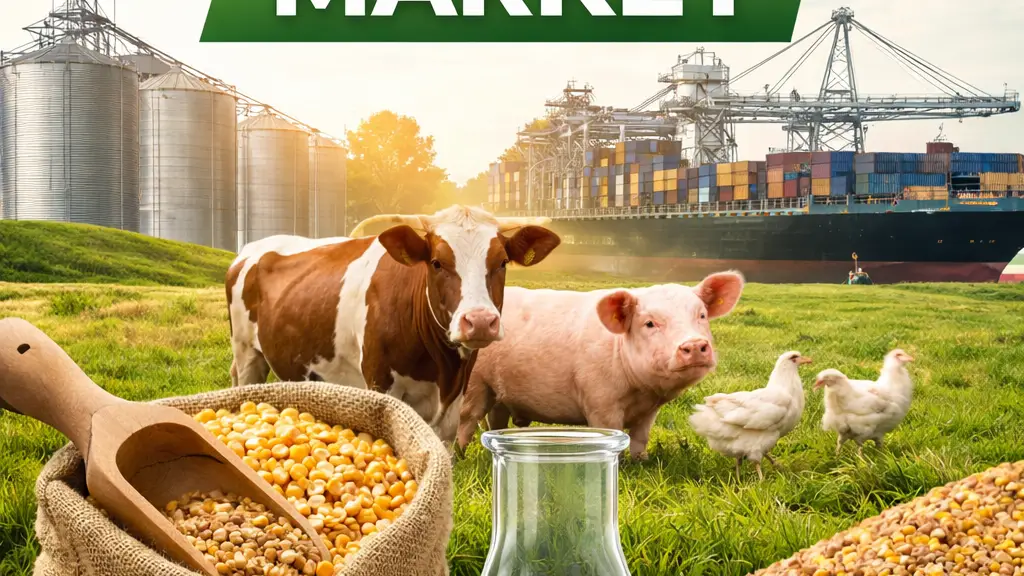
Formic acid (feed grade) continues to strengthen its position as a versatile platform chemical in global animal nutrition and preservation systems in 2026. Demand is driven by livestock feed efficiency, silage preservation, and antimicrobial applications across Asia and Europe. As supply chains recalibrate around sustainability and cost efficiency, producers are balancing capacity expansions with tightening raw material integration across methanol-based production routes worldwide in scope.
Upstream supply chains remain heavily dependent on methanol oxidation routes, with global formic acid feed grade output estimated at 1.2 million MT in 2026. Producers in China and Europe continue to dominate, though energy volatility and carbon pricing are reshaping cost structures. Integration with methanol and carbon monoxide sourcing is increasingly vertical, improving resilience but tightening margins for independent processors in export-dependent regions across emerging markets in Southeast Asia and Latin American demand hubs expansion.
Spot pricing for feed-grade formic acid in 2026 ranges between USD 620–780/MT, reflecting feedstock methanol fluctuations and regional energy disparities. Asia-Pacific remains the most competitive export hub, while European pricing stays elevated due to carbon compliance costs. Contract structures are shifting toward indexed pricing mechanisms tied to methanol benchmarks, reducing volatility exposure for downstream feed manufacturers. Trade flows are increasingly routed through Singapore and Middle East trading hubs for efficiency and faster delivery cycles optimization.
Global production capacity is expanding at a moderate CAGR of 4.8%, driven by demand from feed preservation and silage enhancement industries. China maintains dominant capacity share exceeding 55%, while Europe focuses on high-purity, low-emission production routes. New capacity additions in India and Southeast Asia are gradually diversifying the supply base, reducing reliance on a single export corridor and improving supply chain redundancy particularly in response to tightening environmental regulations and feed safety standards globally enforced.
Downstream demand for formic acid feed grade is primarily anchored in livestock nutrition, where it enhances gut health and feed preservation efficiency. Adoption in poultry and swine sectors continues to accelerate across Asia and Latin America, supporting stable consumption growth. Feed additive formulators are increasingly prioritizing acid-based preservation systems over antibiotic alternatives, aligning with regulatory shifts and consumer safety expectations. This transition supports long-term sustainability and improved global feed supply resilience across value chains worldwide.
Formic acid feed grade continues to demonstrate its strategic importance as a platform chemical bridging agricultural efficiency and industrial chemical integration. With evolving supply chain complexity and regional trade realignments, reliable sourcing and distribution partners are becoming critical for manufacturers seeking consistency in quality and pricing stability. Tradeasia International serves as a global solution provider, ensuring streamlined procurement, logistics, and market access for industrial chemical buyers worldwide at scale globally.
Sources
https://www.fortunebusinessinsights.com/formic-acid-market-104888
https://www.researchandmarkets.com/reports/5939840/formic-acid-market-report
We're committed to your privacy. Tradeasia uses the information you provide to us to contact you about our relevant content, products, and services. For more information, check out our privacy policy.


 English
 Indonesian
 简体字
简体字
 العربية
 Español
 Français
 Português
 日本語
日本語
 한국어
한국어
 Tiếng Việt