Explore our network of country and industry based websites to access localized information, product offerings, and business services across our group.
Log in to start sending quotation requests for any product.
Don't have an account? Sign Up Here
Home Feed Emergency: How Fertilizer Price Surges Affect Corn Gluten Meal Markets
Trade Insights | Supply Chain | 16 March 2026
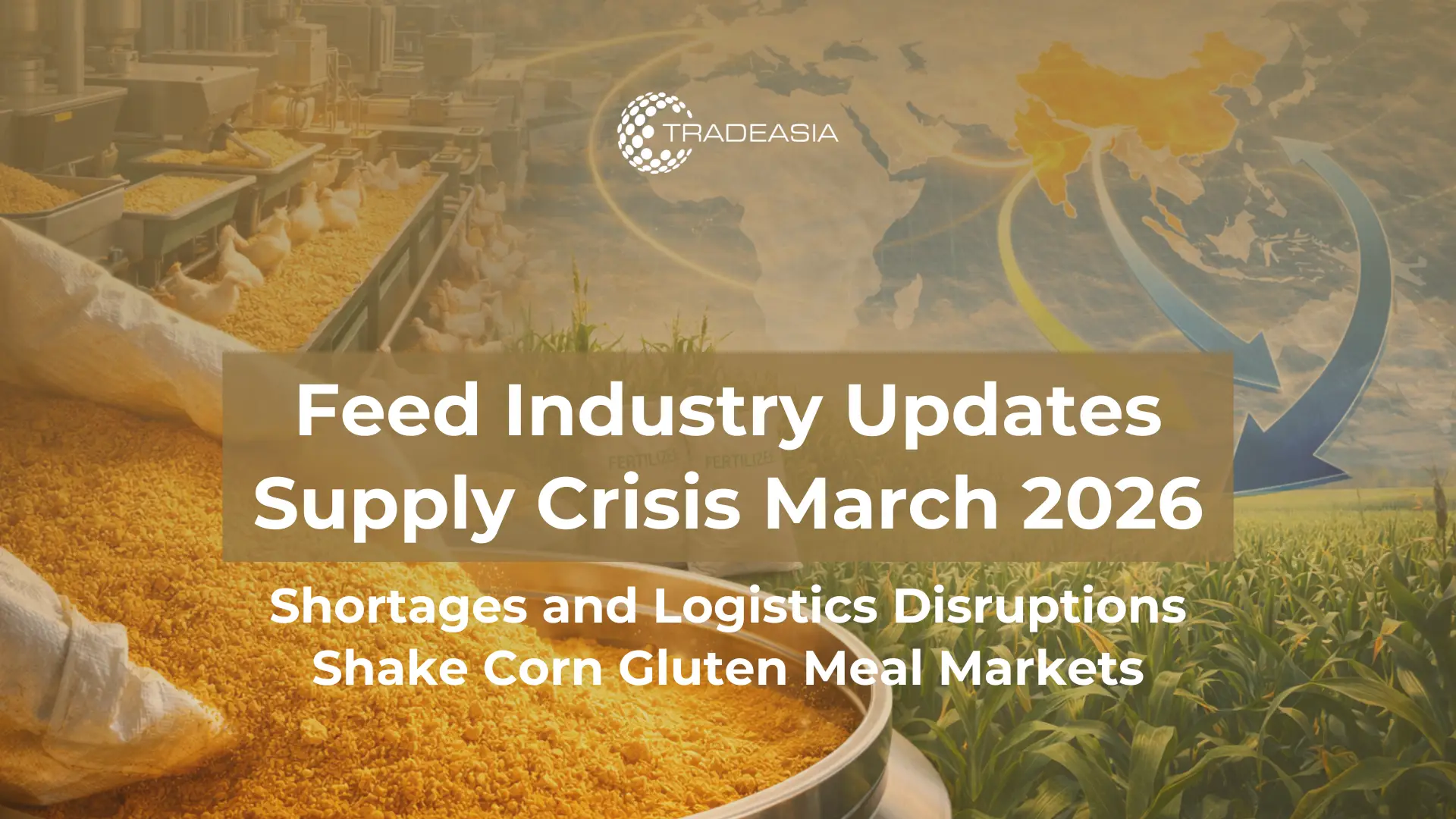
Global Feed Industry Supply Chain Pressures
Fertilizer Shortages and Agricultural Production Costs
Impact of Energy Prices on Feed Ingredient Markets
Logistics Disruptions in Global Feed Commodity Trade
Corn Gluten Meal Demand in Animal Feed Industries
Procurement Strategies for Feed Ingredient Buyers
Conclusion
The global feed industry is experiencing a period of significant volatility as agricultural supply chains face simultaneous pressure from rising fertilizer costs, geopolitical disruptions, and energy price spikes. These factors are affecting the production and distribution of key feed ingredients, including corn gluten meal, which plays an important role in livestock nutrition and aquaculture feed formulations. As a result, the corn gluten meal market 2026 is entering a period of heightened uncertainty.
According to research from the Food and Agriculture Organization (FAO), global feed production continues to grow in response to rising demand for meat, dairy, and aquaculture products. However, disruptions in agricultural input markets are increasing the cost structure for farmers and feed manufacturers.
Feed supply chain disruption has become a major concern for livestock producers and feed mills worldwide. Rising input costs and longer logistics timelines are affecting the availability and pricing of feed commodities.
Market analysis from Rabobank highlights that global feed markets are becoming more sensitive to geopolitical disruptions and agricultural input shortages. These pressures are contributing to increased volatility in the corn gluten meal price trend across international markets.
One of the most important drivers affecting feed ingredient markets is the global fertilizer shortage feed industry challenge. Fertilizers such as urea and ammonia are essential for crop production, particularly for corn and soybean farming.
According to data from the International Fertilizer Association, fertilizer markets have experienced significant supply constraints due to geopolitical tensions, energy price increases, and export restrictions in major producing regions.
Higher fertilizer prices directly affect crop production costs, particularly for corn, which is the primary raw material used to produce corn gluten meal. When farming input costs increase, the price of downstream feed ingredients often rises as well.
Agricultural economists from the World Bank have noted that fertilizer supply disruptions can significantly influence crop output and commodity pricing, which in turn affects the availability and cost of feed ingredients used in livestock production.
Energy prices are another major factor influencing agricultural commodity markets. The production, processing, and transportation of feed ingredients require substantial energy inputs, including fuel, electricity, and industrial heat.
According to reports published by the International Energy Agency, global oil prices approaching $120 per barrel have increased production and logistics costs across multiple commodity sectors, including agricultural products.
Corn processing facilities require energy-intensive equipment to convert corn into starch, sweeteners, and feed by-products such as corn gluten meal. Rising fuel and electricity costs therefore contribute to higher processing expenses.
These cost pressures can influence the corn gluten meal price trend as processors adjust pricing to reflect higher operational costs within the supply chain.
Global logistics networks are currently experiencing disruptions that are affecting the movement of agricultural commodities and feed ingredients. Shipping companies have modified maritime routes due to security risks and operational challenges.
According to analysis published in Shipping Concerns Grow as Maersk and Hapag-Lloyd Suspend Routes (https://maritime-executive.com/article/shipping-concerns-grow-as-maersk-and-hapag-lloyd-suspend-routes), several major shipping companies have suspended certain Gulf shipping routes, forcing vessels to reroute around alternative maritime corridors.
These rerouting measures can extend shipping timelines by 10 to 14 days and increase freight surcharges for bulk cargo shipments. Longer routes also reduce available shipping capacity in global trade networks.
For feed commodities such as corn gluten meal, these logistics disruptions may increase transportation costs and contribute to further feed supply chain disruption.
Despite supply challenges, global corn gluten meal demand remains strong because it is an important protein ingredient used in livestock and aquaculture feed formulations. It is particularly valued for its high protein content and digestibility.
According to research published in the Journal of Animal Science, corn gluten meal animal feed applications are widely used in poultry diets as a poultry feed protein ingredient due to its favorable amino acid profile.
Global trade in corn gluten meal is supported by several major producing countries, including China and the United States. These regions supply feed ingredient markets across Asia, Europe, and the Middle East.
Industrial buyers exploring supply availability can review product information through the Corn Gluten Meal China Supply Page (https://www.feedingredientsasia.com/en/corn-gluten-meal-china), Corn Gluten Meal Indonesia Supply Page (https://www.feedingredientsasia.com/en/corn-gluten-meal-indonesia), and Corn Gluten Meal United States Supply Page (https://www.feedingredientsasia.com/en/corn-gluten-meal-united-states).
As agricultural markets become more volatile, procurement strategies for feed ingredients must adapt to changing supply conditions. Buyers are increasingly evaluating multiple sourcing regions and long-term supply agreements to ensure reliable access to feed commodities.
According to global supply chain research published by McKinsey & Company, companies that diversify sourcing channels and maintain strong supplier relationships are more resilient to supply chain disruptions.
Feed manufacturers often review technical documentation and quality specifications before confirming purchases. This process helps ensure compliance with feed safety standards and regulatory requirements.
Documentation related to feed ingredient sourcing can be reviewed through the Feed Ingredients Asia Download Center (https://www.feedingredientsasia.com/en/download-center), while procurement discussions and supply inquiries can be coordinated through the Feed Ingredients Asia Contact Page (https://www.feedingredientsasia.com/en/contact-us).
The global feed industry is facing a complex set of challenges as fertilizer shortages, energy price increases, and logistics disruptions affect agricultural supply chains. These pressures are raising production costs for key feed commodities and influencing the corn gluten meal market 2026.
As farming inputs become more expensive and shipping routes grow less predictable, feed ingredient markets are likely to experience continued volatility. Buyers monitoring supply conditions through the Corn Gluten Meal China Supply Page, Corn Gluten Meal Indonesia Supply Page, and Corn Gluten Meal United States Supply Page, reviewing technical documentation in the Feed Ingredients Asia Download Center, following maritime logistics updates from the shipping disruption report, and coordinating procurement through the Feed Ingredients Asia Contact Page can better navigate changing market conditions and secure stable bulk corn gluten meal export supply.
We're committed to your privacy. Tradeasia uses the information you provide to us to contact you about our relevant content, products, and services. For more information, check out our privacy policy.


 English
 Indonesian
 简体字
简体字
 العربية
 Español
 Français
 Português
 日本語
日本語
 한국어
한국어
 Tiếng Việt




















