Explore our network of country and industry based websites to access localized information, product offerings, and business services across our group.
Log in to start sending quotation requests for any product.
Don't have an account? Sign Up Here
Home Feedstock Volatility and Supply Chain Forces Reshaping the Bakery Meal Market
Trade Insights | Supply Chain | 03 March 2026
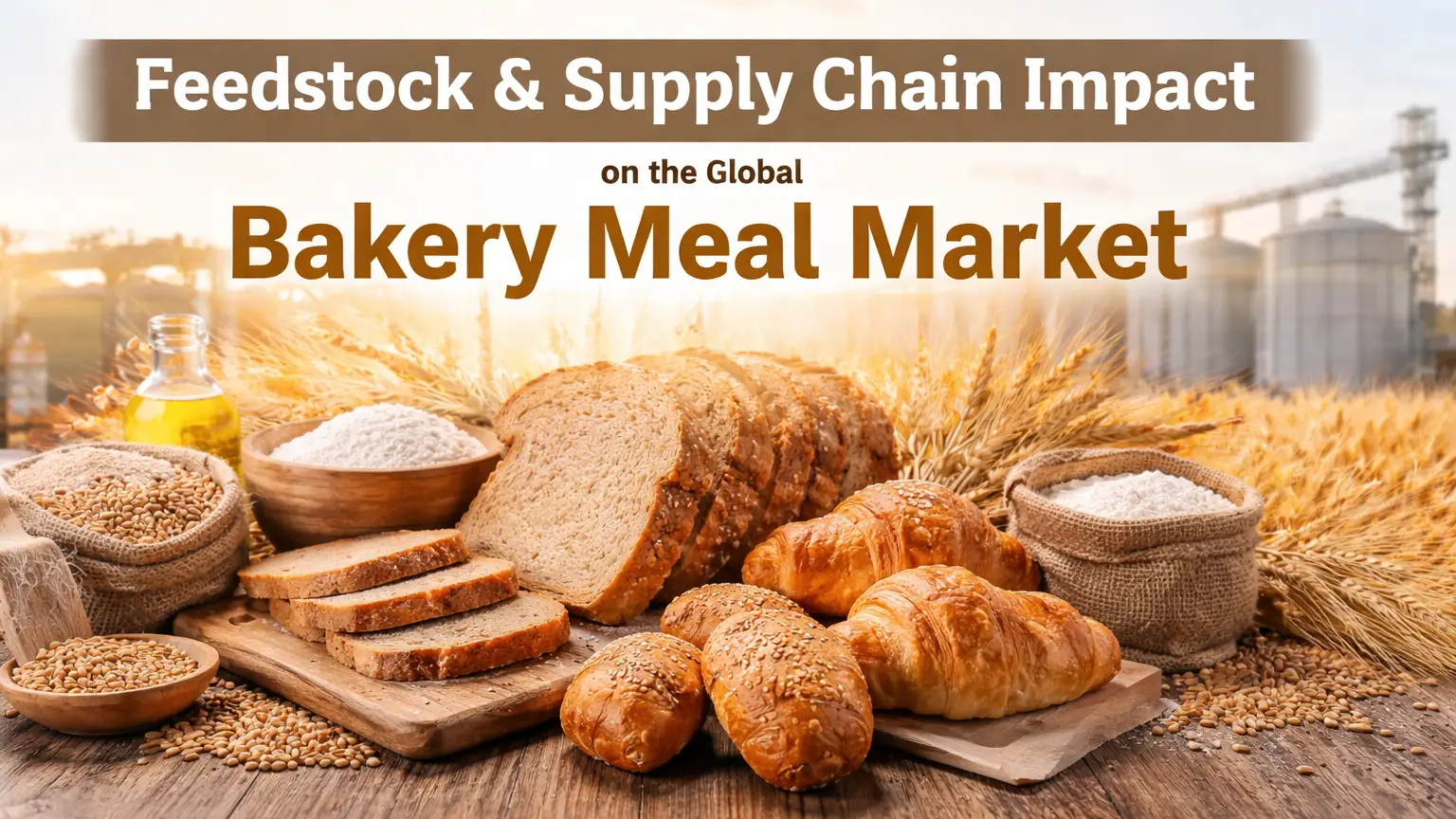
The bakery meal market in 2026 continues to evolve as a strategic component within circular bio-based supply chains, transforming surplus baked goods and production waste into a high-energy feed ingredient. Increasingly recognized as a platform material within sustainable feed ecosystems, bakery meal bridges food manufacturing inefficiencies with livestock nutrition demand. The market is projected to expand at a steady CAGR of 6.8%, supported by tightening waste regulations and rising demand for cost-efficient feed alternatives. With global production volumes reaching approximately 4.2 million MT, bakery meal is becoming a key traded commodity, typically priced between USD 120–260/MT, depending on protein content and moisture levels.
Bakery meal supply chains begin with diversified sourcing from industrial bakeries, retail surplus recovery systems, and food processing by-products. In 2026, Europe and North America dominate structured collection networks, contributing over 60% of recoverable inputs. The push for zero-waste food policies has strengthened contractual agreements between food manufacturers and feed processors. However, variability in input quality remains a challenge, particularly moisture content fluctuations, which directly affect nutritional consistency and storage stability.
Modern processing facilities increasingly rely on energy-efficient drying and sterilization systems to stabilize organic residues. Yield optimization has improved by nearly 18% over the past five years, driven by automated sorting and contaminant removal technologies. The transformation process also enhances digestibility, making bakery meal a competitive alternative to conventional cereals in feed formulations. However, energy input costs remain a key constraint, influencing operational margins across mid-scale processors.
International trade of bakery meal is expanding, particularly across Asia-Pacific, where demand growth is strongest. Price volatility persists due to seasonal bakery output fluctuations and transportation constraints, with FOB prices ranging between USD 120–260/MT. Export hubs in Europe are increasingly dependent on integrated logistics corridors to stabilize supply consistency. Meanwhile, emerging markets are gradually formalizing import standards, improving trade transparency and reducing contamination risks in cross-border shipments.
The primary demand driver remains livestock feed, particularly poultry and swine, where bakery meal replaces a portion of corn and wheat inputs. Aquaculture applications are also expanding, supported by its high-energy digestibility profile. Feed formulators report cost savings of up to 12% when integrating bakery meal into balanced rations. As protein efficiency pressures increase globally, demand is expected to sustain upward momentum across both developed and emerging feed markets.
As global feed systems transition toward resource-efficient models, bakery meal is emerging as a structurally important platform within circular agriculture and industrial symbiosis. Its role in stabilizing feed costs while reducing food waste positions it as a long-term strategic commodity in global supply chains. However, success in this market increasingly depends on reliable sourcing networks, quality standardization, and scalable logistics integration. In this evolving environment, companies seeking consistent access to feed-grade intermediates and optimized supply chain solutions can benefit from partnering with established global distributors such as Tradeasia International, which continues to support industrial buyers with integrated sourcing, trading, and logistics capabilities across emerging and established markets.
Sources
We're committed to your privacy. Tradeasia uses the information you provide to us to contact you about our relevant content, products, and services. For more information, check out our privacy policy.


 English
 Indonesian
 简体字
简体字
 العربية
 Español
 Français
 Português
 日本語
日本語
 한국어
한국어
 Tiếng Việt