Explore our network of country and industry based websites to access localized information, product offerings, and business services across our group.
Log in to start sending quotation requests for any product.
Don't have an account? Sign Up Here
Home Supply Chain Pressures and Canola Meal’s Competitive Edge in the Feed Market
Trade Insights | Supply Chain | 27 February 2026
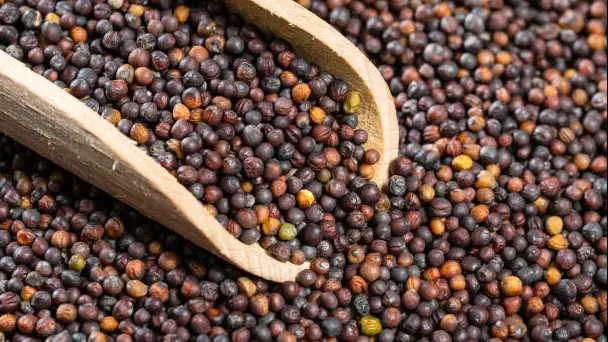
Canola meal remains a vital protein co-product in global feed and agri-industrial supply chains in 2026. Driven by rising demand from livestock and aquaculture, alongside rapeseed oil expansion for biofuels, the market is experiencing steady structural growth. Global output exceeds 44 million MT, while a CAGR of 4.8% through 2030 supports long-term stability. Positioned as a cost-effective alternative to soybean meal, canola meal plays an increasingly strategic role in balancing feed affordability and supply chain resilience.
Global production is concentrated in Canada, EU, China, and Australia, with Canada contributing about 9.5 million MT in 2026. Output is supported by biodiesel-driven rapeseed crushing demand. However, aging European facilities limit efficiency, prompting upgrades. Average production costs range between USD 210–260/MT, influenced by energy and seed prices. This uneven capacity distribution continues to shape global supply reliability and regional competitiveness.
Asia remains the fastest-growing import hub, led by Vietnam, South Korea, and the Middle East. Export prices range from USD 250–380/MT, shaped by freight and currency shifts. Canada dominates exports, while Australia provides seasonal supply. Logistics disruptions, including Red Sea risks, have raised shipping costs by 8–12%, accelerating regional sourcing strategies and reshaping long-haul trade economics across feed supply chains.
Demand is rising as livestock producers substitute soybean meal with canola meal due to stable pricing and protein content. Poultry and dairy account for over 60% of consumption, while aquaculture grows at a 5.2% CAGR. GMO-free demand in Europe further strengthens uptake. However, inclusion rates remain partially constrained by anti-nutritional factors, pushing innovation in enzymatic processing and feed formulation efficiency.
Prices remain volatile, ranging USD 240–400/MT in 2026, influenced by rapeseed yields, biofuel demand, and input inflation. North American supply tightness and European weather risks intensify fluctuations. Currency depreciation in importing countries further impacts landed costs, increasing reliance on hedging strategies and forward contracts to stabilize procurement and maintain supply chain predictability.
In conclusion, canola meal is evolving into a strategic bio-based feedstock within global agricultural supply chains, supported by resilient demand and biofuel-linked production stability. Its role in cost optimization and protein supply security continues to strengthen in 2026. In this evolving market landscape, Tradeasia International serves as a reliable global partner, enabling efficient sourcing, supply continuity, and risk-managed procurement solutions across key international feed and agricultural commodity markets.
Sources
https://www.fas.usda.gov/data/oilseeds-world-markets-and-trade(
https://www.fao.org/faostat/
https://www.oilworld.de/
We're committed to your privacy. Tradeasia uses the information you provide to us to contact you about our relevant content, products, and services. For more information, check out our privacy policy.


 English
 Indonesian
 简体字
简体字
 العربية
 Español
 Français
 Português
 日本語
日本語
 한국어
한국어
 Tiếng Việt