Introduction to Sodium Bicarbonate in B2B Markets
A versatile platform chemical
Sodium bicarbonate, commonly known as baking soda or bicarbonate of soda, is an inorganic compound with the chemical formula NaHCO₃ and CAS No. 144-55-8. Its combination of alkalinity, buffering capacity and controlled carbon dioxide release makes it relevant across multiple commercial industries. The FAO/WHO JECFA specification identifies sodium hydrogen carbonate as sodium bicarbonate and lists it under Codex INS 500(ii).
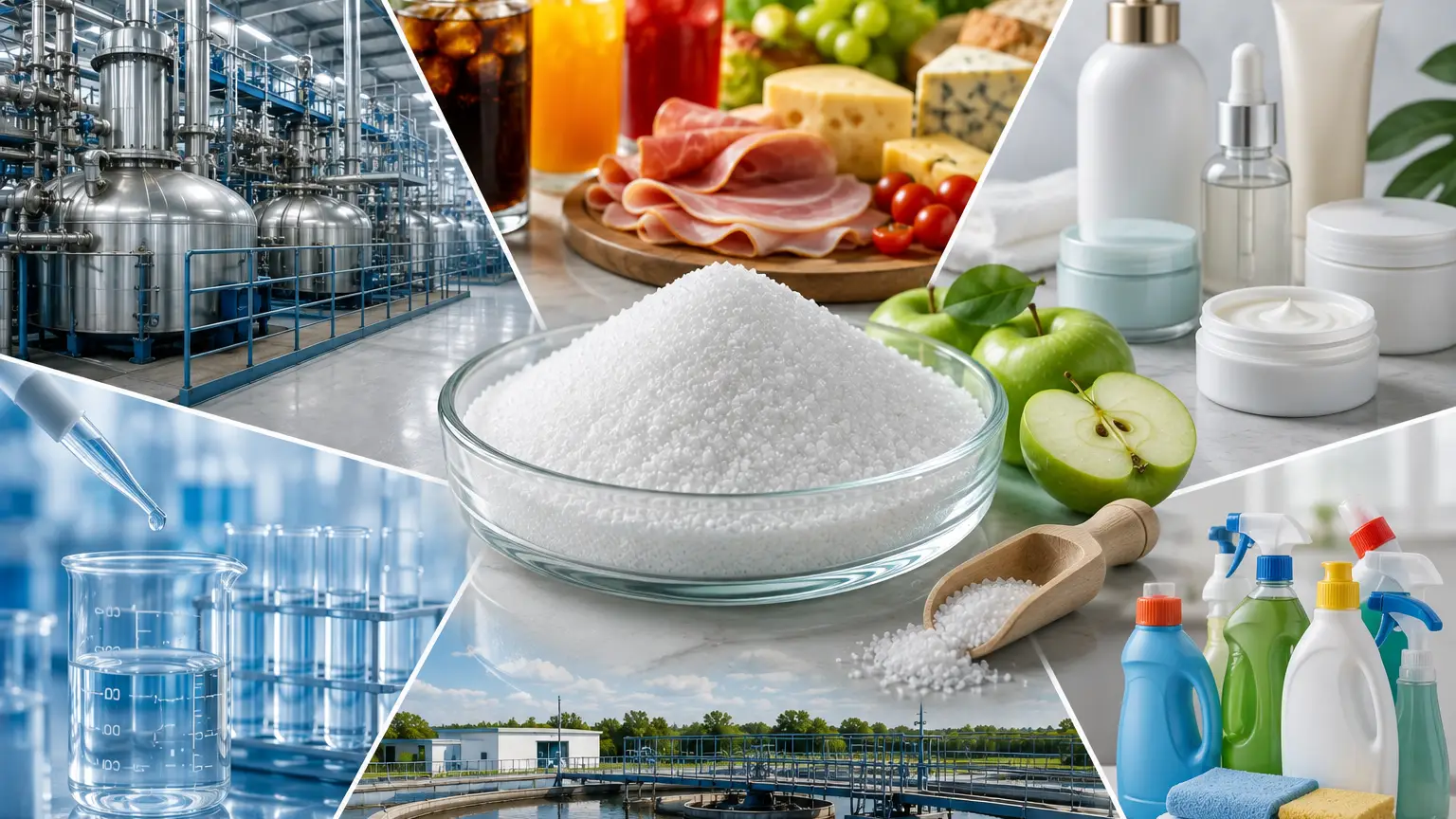
For B2B buyers, sodium bicarbonate is therefore more than a familiar household material. It functions as a formulation ingredient, processing aid, acidity regulator, raising agent, buffering material and industrial input depending on grade and end use. This broad application profile creates demand from food manufacturers, feed producers, pharmaceutical companies, chemical processors, cleaning-product manufacturers and other industrial users.
The commercial value of sodium bicarbonate is strongly influenced by application-specific quality requirements. A food processor may prioritize food-grade conformity and consistent particle characteristics, while an industrial buyer may focus more heavily on technical specifications, packaging efficiency, delivery reliability and total landed cost. Procurement teams must therefore match the material grade to the intended process rather than treating all sodium bicarbonate as interchangeable.
From a sourcing perspective, dependable supply is particularly important for manufacturers operating continuous production lines or standardized formulations. A qualified B2B supplier should be able to provide consistent product specifications, appropriate documentation, suitable packaging and dependable logistics. This makes supplier qualification and application-specific purchasing central to sodium bicarbonate procurement.
Sodium Bicarbonate Applications in Food and Beverage
Food additive and processing functions
Food and beverage manufacturing represents one of the most established commercial applications for sodium bicarbonate. Codex identifies sodium hydrogen carbonate, INS 500(ii), within its food-additive framework, while Codex materials identify functional roles including acidity regulation, raising and anticaking functions. For manufacturers, these functions make the ingredient useful across formulations where controlled chemical reaction or pH management is required.
One of its best-known uses is as a leavening component in bakery products. When sodium bicarbonate reacts with suitable acidic ingredients, carbon dioxide is generated, helping create the desired structure and texture in baked products. It can therefore be incorporated into baking powders, bakery mixes and other formulated food systems. Food standards also describe baking powder as a preparation containing sodium bicarbonate together with acid-reacting materials and other components.
Beyond bakery applications, buyers may evaluate sodium bicarbonate for formulated foods where buffering, acidity control or processing performance is important. The precise application determines the appropriate grade, purity, particle profile and handling requirements. For large-scale food manufacturers, consistency between shipments can be as important as nominal price because formulation changes can affect production efficiency and finished-product quality.
For B2B procurement teams, food-grade sodium bicarbonate sourcing should therefore begin with the destination market and product application. Buyers should confirm applicable food-additive requirements, certificates and technical documentation before commercial purchasing. Codex's General Standard for Food Additives database provides an important international reference because it organizes provisions by additive, food category and functional class.
Animal Feed and Agricultural Applications
Feed formulation requirements
Sodium bicarbonate also has established relevance in animal nutrition and feed manufacturing. Industrial reference information identifies animal feed additives among its uses, demonstrating that demand extends beyond human food applications. For feed manufacturers, the commercial question is not simply whether sodium bicarbonate can be used, but whether the supplied material meets the specifications and regulatory expectations associated with the intended feed application.
Feed producers generally operate under strict formulation and quality-control systems because ingredient consistency can influence production performance and finished-feed uniformity. Sodium bicarbonate can be considered where buffering or mineral-related formulation functions are required, subject to the specific nutritional program and applicable regulations. This makes documentation and grade identification important purchasing criteria.
For distributors, the feed sector can also represent a substantial recurring B2B market because manufacturers may purchase sodium bicarbonate in bulk and on scheduled delivery programs. The purchasing model may involve annual contracts, recurring shipments or inventory-based procurement rather than occasional spot purchases. Suppliers capable of supporting predictable volumes and consistent specifications can therefore become strategically important to feed manufacturers.
Commercial buyers should distinguish between food-grade, feed-related and technical requirements rather than assuming that one specification is suitable for every end market. Before purchasing, procurement teams should establish the required grade, specification sheet, packaging format, minimum order quantity, delivery location and documentation. A structured sourcing process reduces the risk of buying material that does not fit the intended application.
Pharmaceutical and Personal Care Applications
High-value specification requirements
Sodium bicarbonate is also relevant to pharmaceutical manufacturing and selected healthcare-related formulations. PubChem records applications in pharmaceuticals and identifies sodium bicarbonate as a compound used in medicinal contexts, although pharmaceutical applications require appropriate regulatory controls and product specifications. For commercial suppliers, this means pharmaceutical buyers generally require a substantially more rigorous qualification process than buyers purchasing material for general industrial use.
In pharmaceutical production, purity, identity, consistency and documentation can be critical purchasing considerations. Depending on the intended application, buyers may require specific pharmacopeial compliance, analytical certificates, traceability and controlled manufacturing practices. Consequently, pharmaceutical procurement should be based on the exact required standard rather than simply purchasing a generic sodium bicarbonate grade.
Personal-care and oral-care manufacturers may also use sodium bicarbonate in selected formulations. Its functional properties can make it relevant to oral-care, deodorizing, abrasive and buffering applications. PubChem's compiled use information includes cosmetics and oral-care functions, illustrating the breadth of downstream applications associated with the compound.
For suppliers targeting pharmaceutical and personal-care customers, technical support and documentation can be decisive commercial differentiators. Buyers increasingly want transparency around specifications, batch consistency, certificates and supply continuity. A B2B marketplace can help connect these requirements with suppliers that understand the distinction between commodity technical material and application-specific grades.
Industrial and Chemical Processing Uses
Processing and chemical applications
Outside food and pharmaceuticals, sodium bicarbonate participates in numerous industrial and chemical applications. The U.S. Geological Survey notes applications involving animal feed, cleaning products, pharmaceuticals, fire extinguishers and other chemicals, while PubChem records uses spanning detergents, soaps, leather, paper and other industrial categories. This diversity makes sodium bicarbonate relevant to manufacturers with very different purchasing specifications.
Its buffering and neutralizing characteristics can make sodium bicarbonate useful in selected chemical and environmental processes. Depending on the process design, buyers may value controlled reactivity, particle characteristics, purity and handling performance. Industrial customers therefore tend to evaluate the product in relation to the specific process rather than relying solely on a generic product description.
Cleaning and household-product manufacturers represent another commercial segment. Sodium bicarbonate can serve as an ingredient or processing material in cleaning preparations, where its functional properties and physical form influence formulation and production requirements. Large-volume users may prioritize stable pricing, bulk packaging and reliable replenishment because raw-material availability can directly affect manufacturing schedules.
Industrial buyers should also evaluate whether a technical grade, food-grade or another specialized specification is appropriate for the intended application. Using a higher specification than necessary can increase procurement costs, while using an unsuitable specification can create quality or compliance problems. The most effective sourcing strategy is therefore based on clearly defined technical and commercial requirements.
What B2B Buyers Should Evaluate
Quality and specification
Sodium bicarbonate procurement should begin with a clear technical specification. Buyers commonly need to establish parameters such as purity, appearance, particle characteristics, moisture-related requirements, packaging configuration and applicable standards. For regulated applications, additional certificates or conformity documentation may be necessary. These requirements should be established before comparing supplier quotations.
The intended end use is particularly important because the same chemical can serve food, feed, pharmaceutical and industrial markets under different quality expectations. A food manufacturer purchasing sodium bicarbonate as INS 500(ii), for example, needs to consider food-additive requirements and permitted uses, while a general industrial manufacturer may have a different specification framework.
Commercial purchasing factors
Price is only one component of the purchasing decision. Procurement teams should also evaluate minimum order quantities, packaging, lead times, payment terms, documentation, shipping arrangements and supplier responsiveness. For imported material, freight, insurance, duties, port handling and inland transportation can materially change the final landed cost.
Reliable sourcing becomes especially important when sodium bicarbonate is a recurring production input. A low initial quotation may not provide the best commercial outcome if shipments are inconsistent or delivery schedules are unreliable. Buyers should instead assess the supplier's ability to maintain specification consistency and support planned replenishment over time.
Sourcing, Supply Chain and Procurement Strategy
Building a dependable supply program
A robust sodium bicarbonate sourcing strategy starts by defining the required product grade and destination application. Procurement teams should communicate technical specifications clearly and request appropriate documentation before confirming orders. This approach allows suppliers to quote comparable materials and reduces misunderstandings during order execution.
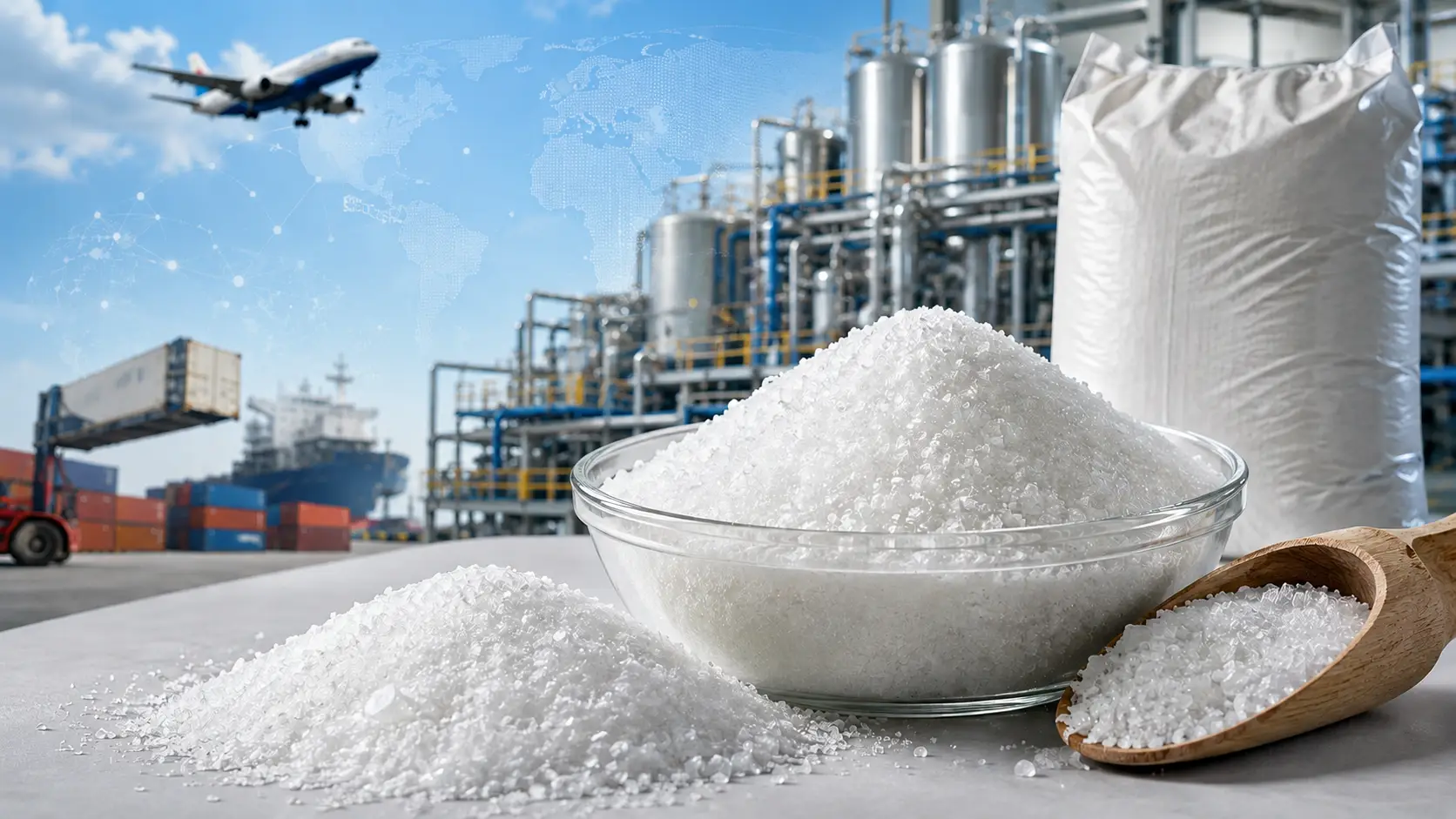
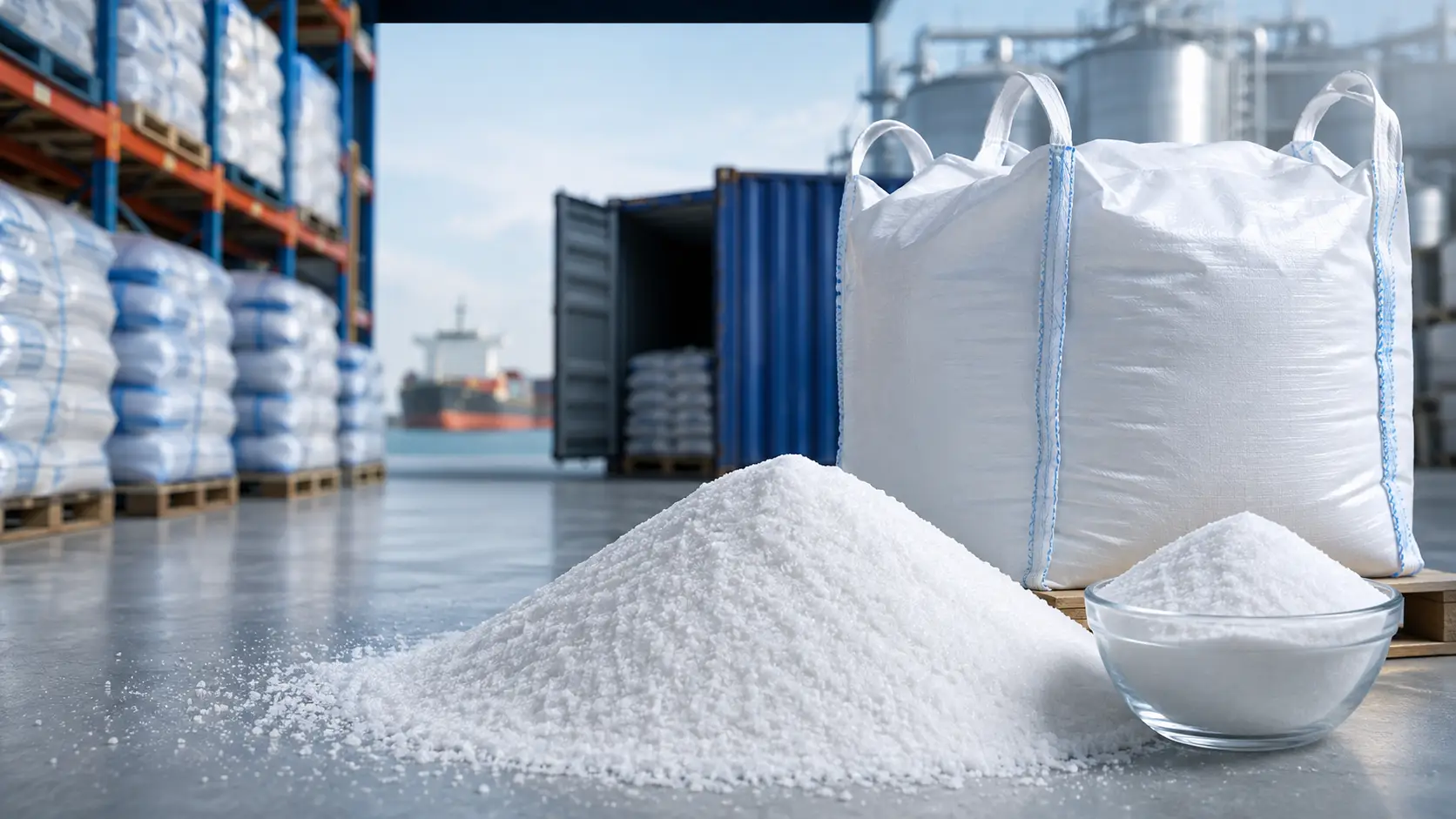
Supply-chain planning is also important because sodium bicarbonate can move through international manufacturing, distribution and logistics networks before reaching the final customer. Buyers purchasing in bulk should consider shipment frequency, warehouse capacity, safety stock and expected consumption. These factors help determine whether spot buying or a structured supply agreement is more appropriate.
For distributors and chemical traders, supplier diversification can help reduce dependence on a single source. However, alternative suppliers should be qualified against the same technical and commercial requirements so that substitutions do not compromise the downstream customer's formulation or process. Consistency should remain a central objective when developing a multi-source procurement strategy.
Tradeasia, Chemtradeasia and Tradechem Marketplace can support B2B buyers by connecting commercial demand with chemical sourcing opportunities across international markets. For procurement teams, the objective is not simply to locate sodium bicarbonate, but to identify a supply partner capable of aligning product specifications, documentation, logistics and commercial requirements with the buyer's application.
Conclusion: Building Reliable Sodium Bicarbonate Supply
Turning application knowledge into procurement value
Sodium bicarbonate demonstrates why application knowledge is essential in B2B chemical purchasing. Its role as a food additive, feed ingredient, pharmaceutical input, processing material and industrial chemical creates multiple demand channels, but each channel can impose different quality and documentation requirements.
For manufacturers, the most effective purchasing strategy is to begin with the final application and work backward toward the appropriate grade, specification and supply model. Food processors may prioritize additive compliance and consistent functionality, while industrial buyers may focus more strongly on technical performance, packaging, logistics and cost efficiency.
For suppliers and distributors, the opportunity lies in providing more than a commodity chemical. Consistent specifications, transparent documentation, responsive communication and reliable delivery can create stronger long-term relationships with procurement teams. These factors become particularly valuable when sodium bicarbonate is integrated into recurring production programs.
As a global B2B chemical sourcing platform, Tradeasia / Chemtradeasia / Tradechem Marketplace can serve as a commercial bridge between buyers seeking dependable sodium bicarbonate supply and qualified suppliers serving different application markets. By combining application understanding with disciplined sourcing, buyers can build a more resilient procurement strategy around this versatile chemical.
Sources
Sodium Bicarbonate Food Grade (E500(ii)) CAS: 144-55-8