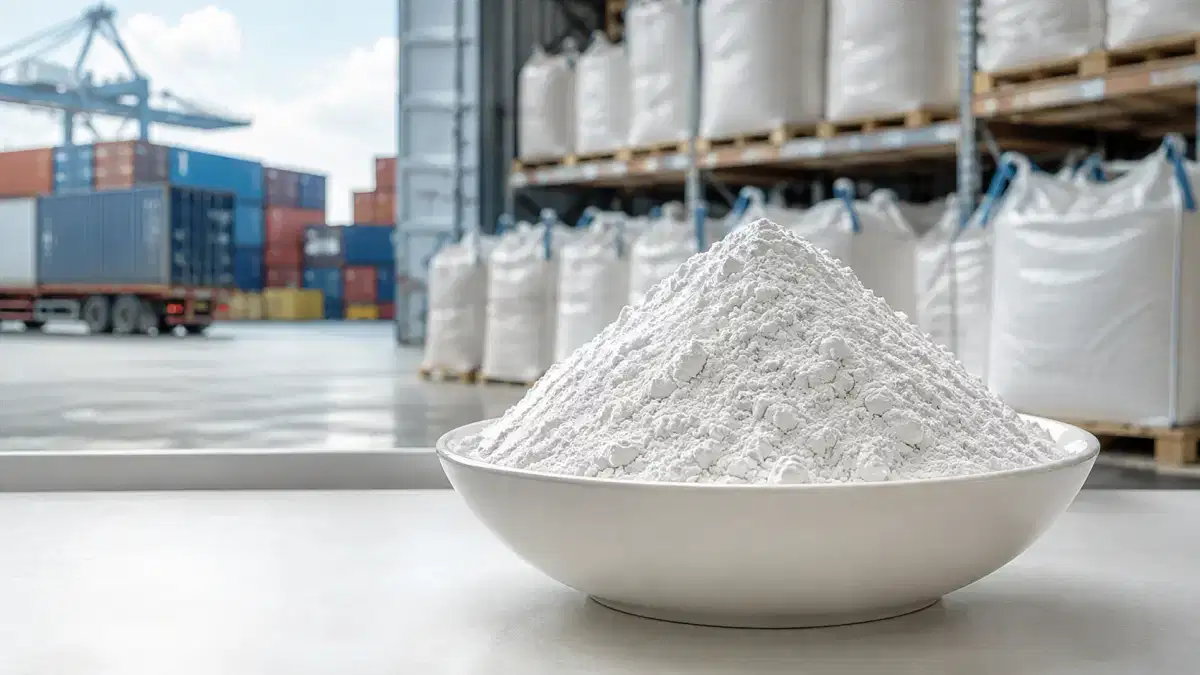

Sodium Malate and Its Commercial Role
Understanding Sodium Malate
Sodium Malate is a sodium salt of malic acid with relevance across food, formulation, and selected cosmetic applications. For B2B buyers, understanding the exact identity of the material is important because different malate forms can have different regulatory classifications and functional roles. The FAO/JECFA specification database identifies Sodium DL-Malate under CAS 676-46-0 and Codex INS 350(ii), providing an authoritative reference point for buyers evaluating food-grade material.
From a commercial perspective, Sodium Malate is best understood as a functional ingredient rather than simply a commodity chemical. Its value depends on how it performs within a customer's formulation, the applicable regulatory framework, and the consistency of the supplied material. This makes application knowledge particularly important for manufacturers, distributors, traders, and procurement professionals comparing potential suppliers.
Functional and Regulatory Context
The commercial distinction between Sodium Malate and other malate salts should not be overlooked. EFSA's re-evaluation program distinguishes sodium malate and sodium hydrogen malate as separate food-additive entries, illustrating why buyers should confirm the precise chemical identity, additive designation, and intended application before placing an order.
For international procurement, this distinction becomes even more important because the suitability of an ingredient can depend on the destination market and finished-product category. A buyer evaluating Sodium Malate for a food, beverage, cosmetic, or formulation project therefore needs more than a product name. Specification clarity, regulatory documentation, application suitability, and supply capability all contribute to a commercially sound sourcing decision.
Sodium Malate Applications Across Key Industries
Food and Beverage Applications
Food and beverage manufacturing represents an important application area for Sodium Malate. Codex GSFA identifies Sodium DL-Malate as an acidity regulator and humectant and lists provisions across food categories including certain fish products, fresh pasta and noodles, and beverage categories. These provisions demonstrate that application opportunities are tied to specific food categories and regulatory conditions rather than representing unrestricted use across every formulation.
For food manufacturers, Sodium Malate can therefore enter the procurement process when formulation teams require a malate-based ingredient with a defined technical and regulatory role. Buyers may include food processors, beverage manufacturers, ingredient blenders, contract manufacturers, and distributors serving downstream formulation customers. The commercial requirement is generally application-specific: the buyer needs the right material, specification, documentation, and supply format for the intended production process.
Cosmetics and Formulation Uses
Sodium Malate also has relevance in cosmetics and personal-care formulations. The 2022 Cosmetic Ingredient Review safety assessment reports Sodium Malate as functioning as a skin-conditioning agent and humectant in cosmetic applications and evaluated its safety as part of a broader review of malic acid and Sodium Malate.
This creates a separate buyer pathway from food applications. Cosmetic manufacturers and formulation companies may assess Sodium Malate according to ingredient functionality, formulation compatibility, regulatory status, quality documentation, and finished-product requirements. The same chemical name can therefore generate different procurement questions depending on whether the customer is developing a food product, personal-care formulation, or another industrial product.
Market Demand and Application Trends
Application-Led Demand
Sodium Malate demand should be viewed through the applications that consume the ingredient rather than through commodity volume alone. Food and beverage formulations remain a key commercial reference point, while documented cosmetic use provides another route to demand. PubChem's compiled information also connects malic acid and Sodium Malate with food-additive and cosmetic use classifications, reinforcing the importance of application diversity when assessing commercial relevance.
A notable procurement trend is the growing importance of specification-driven purchasing. Buyers increasingly need to match ingredients to a defined application, regulatory market, and quality system instead of relying only on the lowest quoted price. For Sodium Malate suppliers, this means that technical clarity and the ability to communicate application-relevant information can influence commercial competitiveness alongside price and availability.
Regulatory and Market Signals
Regulatory review is another important market signal. EFSA's public call for data on malic acid and malates, including Sodium Malate and Sodium Hydrogen Malate, demonstrates that these additives remain subject to scientific and regulatory evaluation in major markets. The process also highlights the importance of maintaining current technical and regulatory documentation throughout the procurement lifecycle.
For international buyers, these developments support a more cautious approach to market outlook analysis. Rather than assuming that a single global regulatory position applies everywhere, procurement teams should evaluate destination-market requirements, intended food or cosmetic applications, and the precise form of Sodium Malate being purchased. This creates opportunities for suppliers and distributors that can support customers with accurate product information and responsive documentation.
Sodium Malate Buyer Intent and Procurement Priorities
Who Buys Sodium Malate
The most relevant Sodium Malate buyers include food manufacturers, beverage producers, ingredient distributors, cosmetic manufacturers, formulation companies, chemical traders, and procurement organizations sourcing functional ingredients for industrial production. Each group can have different purchasing volumes and technical requirements, but all need confidence that the material offered is appropriate for its intended use.
Buyer intent is particularly strong when a company is moving from formulation research to commercial production, qualifying an alternative supplier, expanding production capacity, or looking for a more reliable international supply channel. At this stage, searches such as "Sodium Malate supplier," "Sodium Malate applications," and "buy Sodium Malate" represent more than informational interest; they indicate a potential procurement requirement.
What Procurement Teams Evaluate
Before purchasing Sodium Malate, procurement teams generally need to establish the exact product identity and required specification. Depending on the application, evaluation can include quality parameters, purity requirements, physical characteristics, technical documentation, regulatory support, packaging, minimum order quantities, lead times, and commercial terms. These criteria should be considered together rather than treating unit price as the only purchasing variable.
Supplier comparison is important because international chemical procurement involves both product and supply-chain risk. A buyer may compare multiple Sodium Malate suppliers to assess consistency, documentation, responsiveness, availability, logistics capabilities, and the ability to support recurring orders. The objective is usually to find the best overall supply fit for a defined application rather than simply the cheapest offer.
Supplier Evaluation and B2B Sourcing Strategy
Building a Supplier Shortlist
A practical Sodium Malate sourcing process starts by translating the application into a clear purchasing specification. Buyers should identify the intended industry, application, destination market, required grade, expected volume, packaging needs, and documentation requirements before requesting quotations. This enables suppliers to provide commercially comparable offers and reduces ambiguity during qualification.
For procurement teams, supplier evaluation should also distinguish between product suitability and supplier capability. A supplier may offer an apparently suitable Sodium Malate product, but the buyer still needs to determine whether specifications can be maintained across shipments, whether documentation is available when required, and whether the supplier can support the expected purchasing schedule. FAO/JECFA specifications provide a useful technical reference for food-additive evaluation, but destination-market requirements still need to be confirmed for the specific application.
Why Supply Reliability Matters
Supply continuity can become commercially significant when Sodium Malate is incorporated into recurring production. A disruption can affect formulation schedules, finished-product output, inventory planning, and customer commitments. Consequently, procurement teams may place substantial value on transparent lead times, communication, inventory visibility, packaging capability, and the supplier's ability to handle repeat orders.
This is particularly relevant for distributors and traders serving several downstream customers. Their purchasing decision must balance inventory cost with the ability to respond to customer requirements. An application-focused sourcing approach can help distributors understand which Sodium Malate specifications are most relevant to their customer base and avoid holding material that does not match downstream requirements.
Commercial Opportunities in the Sodium Malate Supply Chain
Opportunities for Manufacturers and Distributors
Sodium Malate presents commercial opportunities for manufacturers, exporters, distributors, and chemical traders that can connect supply with application-specific demand. Food and beverage manufacturers form a significant buyer audience, while cosmetic and formulation companies create additional demand pathways. The strongest commercial positioning is therefore based on solving a buyer's application and procurement requirement rather than promoting the product as a generic chemical.
For manufacturers and distributors, this application-led approach can improve the quality of commercial inquiries. A buyer looking for Sodium Malate for a defined food or cosmetic formulation is more likely to require technical and sourcing information than a visitor conducting general chemical research. Clear application descriptions, accurate specifications, and transparent commercial communication can help suppliers engage more effectively with these high-intent prospects.
Role of B2B Marketplaces
B2B chemical marketplaces can support this purchasing journey by bringing product discovery, supplier comparison, and commercial inquiry into a more accessible digital environment. For Sodium Malate, marketplace visibility can be especially useful because buyers may search by chemical name, application, industry, or sourcing requirement before contacting a supplier.
Tradeasia, Chemtradeasia, and Tradechem Marketplace can position Sodium Malate within this application-driven B2B purchasing journey by helping buyers move from initial product research toward supplier evaluation and commercial inquiry. The value of marketplace positioning should remain practical: accurate product information, clear application relevance, supplier accessibility, and an efficient path to quotation can help reduce friction in international sourcing.
Conclusion: Building a Reliable Sodium Malate Sourcing Strategy
From Application Research to Procurement
Sodium Malate has commercial relevance across food and beverage applications and documented use in cosmetics, while regulatory classifications demonstrate the importance of identifying the precise malate form required by the buyer. Codex and JECFA references provide important technical and regulatory foundations for food-related sourcing, while the Cosmetic Ingredient Review provides additional evidence for cosmetic applications.
For buyers, the most effective Sodium Malate sourcing strategy begins with application requirements and ends with a qualified supply relationship. Procurement teams should compare suppliers using consistent criteria covering product identity, specifications, regulatory documentation, commercial terms, logistics, and supply continuity. This approach can help manufacturers and distributors reduce procurement uncertainty while improving the quality of supplier comparisons.
Commercial Outlook for B2B Buyers
The broader market opportunity is application-led: where manufacturers need malate-based functionality and where regulations permit the relevant use, Sodium Malate can become part of an industrial ingredient procurement program. Regulatory review activity also means that buyers should maintain current documentation and verify requirements for their target markets rather than relying on outdated assumptions.
For Tradeasia, Chemtradeasia, and Tradechem Marketplace, the strongest SEO and commercial opportunity is to connect Sodium Malate product discovery with the questions that serious B2B buyers ask: where the product is used, which industries purchase it, what specifications matter, how suppliers are evaluated, and how international sourcing can be managed. This positions Sodium Malate not simply as a product listing, but as an entry point into a more informed and conversion-oriented chemical sourcing process.