Introduction
L-Arginine, a semi-essential amino acid widely recognized as a critical biochemical intermediate, continues to strengthen its position as a platform chemical in 2026. With expanding applications across pharmaceuticals, nutraceuticals, animal nutrition, and specialty chemicals, the global L-arginine market reflects steady industrial diversification. The market is valued within a price range of USD 3,200–4,800/MT, driven by purity grades and fermentation efficiency. Global demand is supported by a production base exceeding 120,000 MT annually, while the market is projected to expand at a 6.8% CAGR through the forecast period, reinforcing its relevance across high-value biological industries.
Pharmaceutical-Grade Demand Expansion
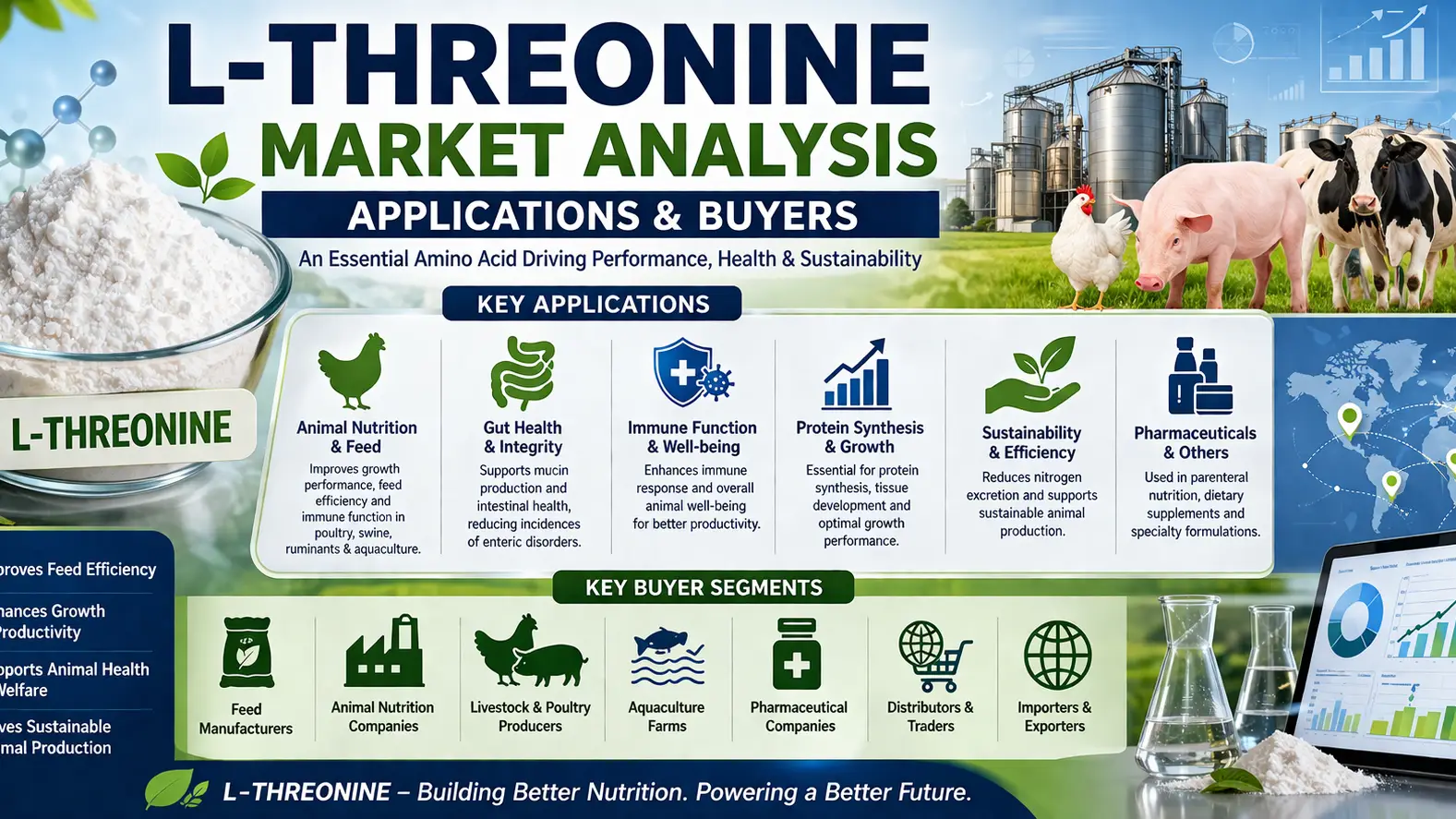
In pharmaceuticals, L-arginine remains essential for cardiovascular therapies, nitric oxide metabolism, and immune support formulations. Buyers primarily include pharmaceutical manufacturers in North America, Europe, and Japan, where stringent purity standards dominate procurement. High-purity grades account for nearly 35% of total consumption, with demand linked to growing hypertension and metabolic disorder treatments.
Nutraceutical & Functional Food Integration
The nutraceutical sector represents one of the fastest-growing buyers of L-arginine, integrating it into sports nutrition, energy supplements, and functional beverages. Rising health awareness has pushed consumption growth above 7% annually, particularly in Asia-Pacific markets. Food-grade L-arginine is increasingly utilized in protein enrichment systems, reinforcing its position in preventive healthcare formulations.
Animal Nutrition and Feed Optimization
Livestock and aquaculture industries are key volume buyers, leveraging L-arginine to enhance growth performance and protein synthesis in feed formulations. Feed-grade applications account for more than 40% of global demand, especially in poultry and swine production hubs across China, Brazil, and Southeast Asia. Cost-efficient fermentation-based production supports stable pricing despite volatile raw material inputs.
Industrial & Cosmetic Application Growth
Beyond nutrition, L-arginine is gaining traction in cosmetics and specialty chemical synthesis, particularly in skin-repair formulations and pH-balancing agents. Cosmetic-grade demand is expanding steadily at over 5% CAGR, driven by premium skincare markets in South Korea and Europe, where bio-based ingredients are increasingly prioritized.
Tradeasia International Role in Global Supply Networks
As global procurement strategies evolve, Tradeasia International continues to position itself as a reliable partner in sourcing and distribution of L-arginine across multiple purity grades. With integrated logistics and strong supplier networks, it enables manufacturers to stabilize supply chains and optimize cost efficiency in a highly competitive amino acid market landscape.
Conclusion
L-Arginine’s role as a platform chemical is expected to strengthen further as biotechnology, nutrition science, and industrial biochemistry converge. With sustained demand growth and diversified buyer segments, the market is set for resilient expansion beyond 2026, driven by innovation and health-oriented consumption trends.
Sources