Introduction
Formic acid, a fundamental platform chemical, continues to anchor multiple industrial value chains in 2026 due to its versatility, biodegradability, and cost efficiency. Produced globally at approximately 1.3–1.5 million metric tons annually, the compound is witnessing stable demand growth driven by agriculture, textiles, and chemical synthesis industries. With a projected CAGR of 4.2%, formic acid remains strategically important as industries shift toward cleaner processing aids and sustainable chemical alternatives. Average global pricing ranges between USD 550–850/MT, influenced by feedstock methanol costs and regional supply concentration, particularly in Asia.
Agrochemical and Silage Preservation Demand Drivers
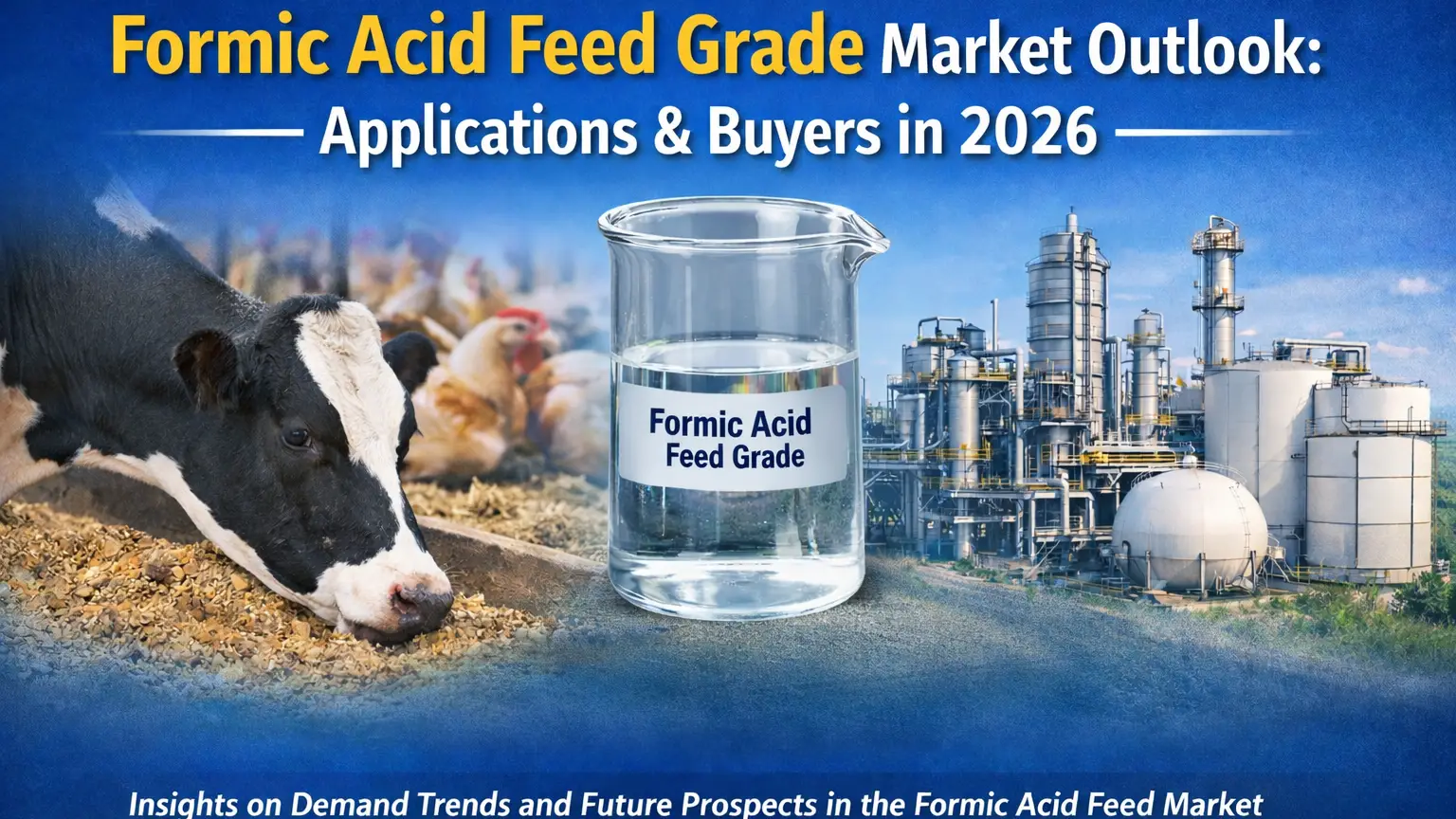
Agriculture remains the largest consumption segment, where formic acid is widely used in animal feed preservation and silage enhancement. Livestock producers and feed manufacturers represent core buyers, leveraging its antibacterial properties to improve feed stability and reduce spoilage losses. Rising global meat consumption and intensified livestock farming are pushing demand upward, particularly in Europe and Asia-Pacific. This segment alone accounts for nearly 38% of total global consumption, reinforcing its position as a foundational agricultural input.
Leather, Textile, and Industrial Processing Applications
The leather and textile industries rely heavily on formic acid for tanning, dyeing, and pH control processes. Major buyers include tanneries and textile processors seeking consistent quality and process efficiency. As environmental regulations tighten around chromium-based tanning agents, formic acid usage is expanding as a safer alternative processing aid. Industrial consumption in this segment contributes close to 25% of global demand, with steady uptake in India, Bangladesh, and China.
Emerging Chemical Intermediate and Energy Uses
Beyond traditional uses, formic acid is gaining traction as a chemical intermediate in pharmaceuticals, rubber chemicals, and hydrogen storage research. Chemical manufacturers and energy innovation firms are key buyers exploring its role in low-carbon hydrogen carriers. Although still niche, this segment is growing faster than average at a CAGR above 5.5%, reflecting increasing investment in green chemistry and energy transition technologies.
Regional Supply Chain and Key Industrial Buyers
Asia-Pacific dominates production, led by China, which accounts for over 65% of global output, benefiting from integrated methanol supply chains. Europe remains a strong demand center with strict environmental compliance driving steady imports. Key buyers include chemical distributors, agrochemical firms, and industrial processors who depend on stable bulk supply contracts. Logistics efficiency and pricing volatility continue to shape procurement strategies across regions.
Conclusion
As a platform chemical, formic acid is expected to maintain its structural importance across agriculture, manufacturing, and emerging energy applications. Its broad industrial adaptability ensures consistent demand from diversified buyer segments. Looking ahead, supply chain integration and sustainability-driven procurement will define market competitiveness. In this evolving landscape, Tradeasia International plays a vital role as a global solution provider, connecting suppliers and industrial buyers with reliable chemical sourcing, optimized logistics, and market intelligence support.
Sources