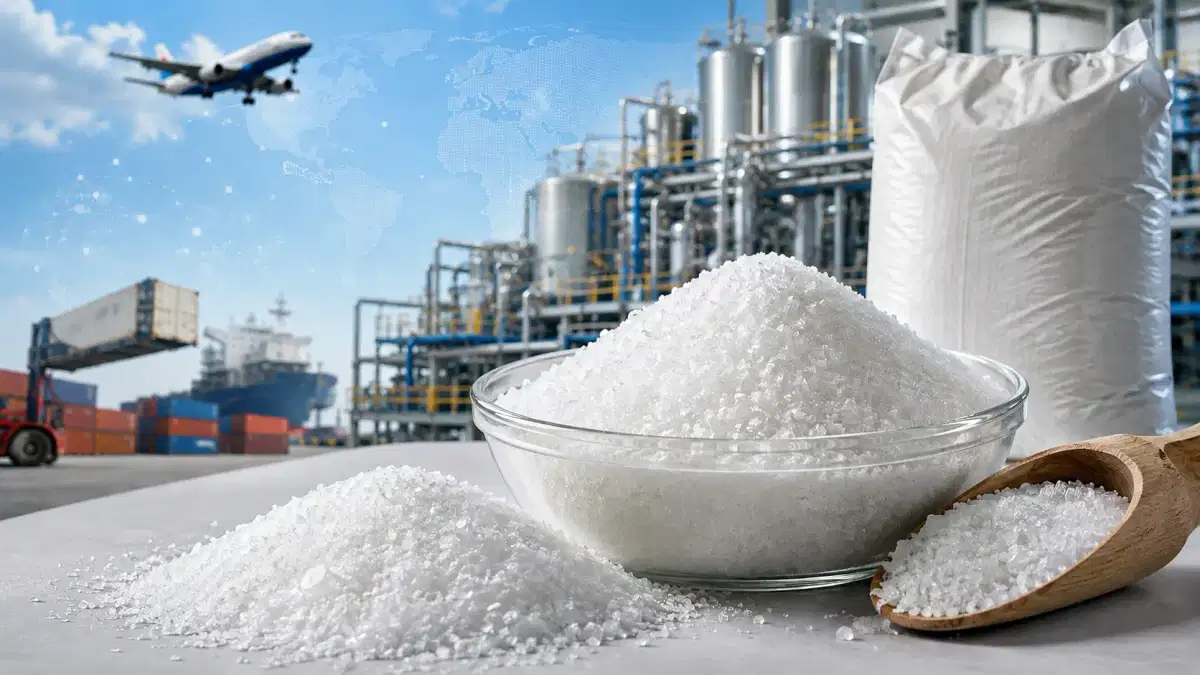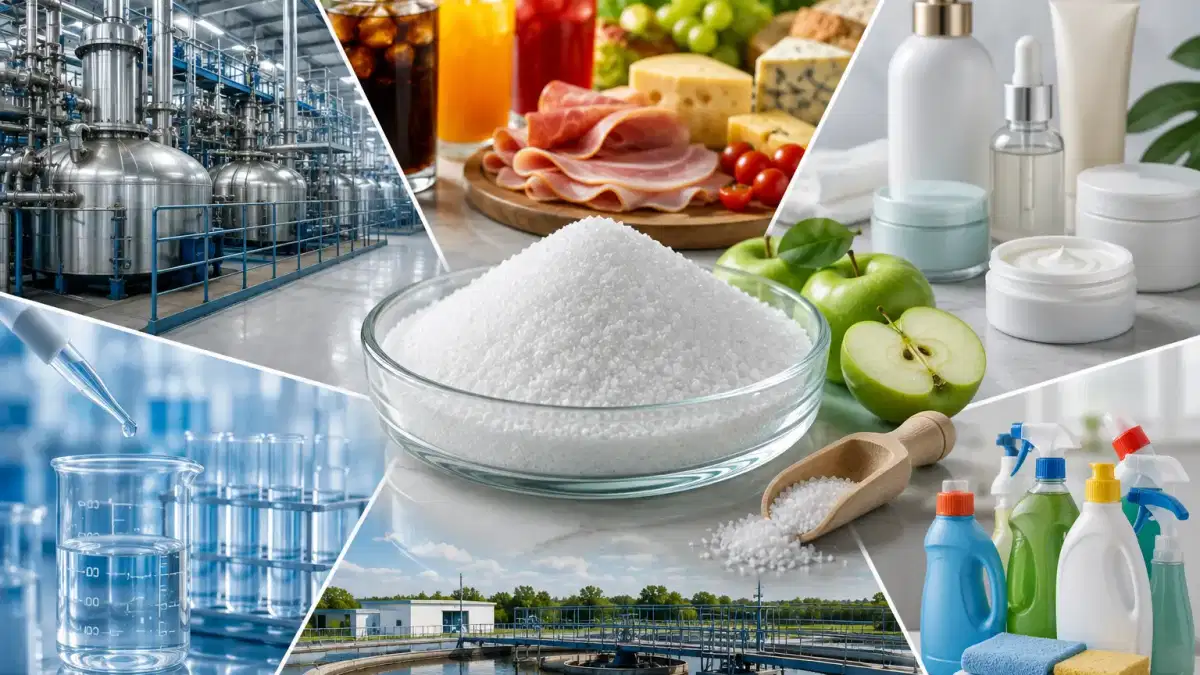

Diammonium phosphate, commonly known as DAP, remains one of the most important phosphate fertilizers traded internationally. The standard 18-46-0 grade supplies both nitrogen and phosphorus, making it a key procurement product for agricultural markets worldwide.
Global DAP sourcing depends on more than fertilizer demand. Phosphate rock, sulfur, ammonia, phosphoric acid capacity, export policies and ocean freight all influence availability and delivered costs. For chemical traders, importers and procurement managers, understanding these interconnected factors can help identify reliable origins and manage exposure to market volatility.
The global trade structure also remains concentrated, with Morocco, China and Saudi Arabia among the leading export origins. That concentration makes supplier diversification increasingly important for buyers planning annual or seasonal DAP procurement.
How the Diammonium Phosphate Supply Chain Works
DAP production starts with phosphate rock, which manufacturers process into phosphoric acid. Sulfuric acid plays a critical role in this process, while ammonia provides the nitrogen component needed to produce the finished fertilizer.
The typical supply chain follows several stages:
Raw material sourcing: Producers secure phosphate rock, sulfur and ammonia, with costs influenced by mining, energy and international commodity markets.
Phosphoric acid production: Phosphate rock reacts with sulfuric acid to produce phosphoric acid, the principal phosphate intermediate.
DAP manufacturing: Producers combine phosphoric acid with ammonia and granulate the resulting material into a marketable fertilizer.
Storage and export: Finished DAP moves into bulk storage facilities before shipment through major export terminals.
Import and distribution: Buyers receive cargo at destination ports before moving product to warehouses, distributors, blenders or agricultural customers.
Integrated producers can control more stages of this chain, which can improve supply reliability and cost competitiveness. Buyers should therefore assess the producer's upstream integration instead of comparing DAP quotations on price alone.
Global DAP Sourcing: Morocco, China and Saudi Arabia
The international DAP market relies heavily on a relatively small group of exporting countries. Morocco, China and Saudi Arabia represent particularly important sources for global buyers.
Morocco has a major strategic position because of its extensive phosphate resources and integrated fertilizer production capabilities. In 2024, Morocco exported approximately 7.83 million tonnes under HS code 310530, representing the largest volume among the major exporting origins referenced in the market data.
China exported approximately 4.56 million tonnes during the same year. Its large production base makes China an important source, although export availability can change when authorities introduce measures designed to support domestic fertilizer supply.
Saudi Arabia exported approximately 3.90 million tonnes in 2024. Its integrated phosphate operations have strengthened the country's role as a major supplier to international agricultural markets, particularly across Asia and other destinations connected through Indian Ocean trade routes.
Other origins, including Australia and the United States, contribute smaller export volumes. These suppliers can still provide useful diversification when freight economics, availability and destination requirements make them competitive.
DAP Demand and Major Import Markets
Agricultural production drives DAP consumption because the fertilizer provides concentrated phosphorus along with nitrogen. Demand tends to increase ahead of planting and fertilizer application periods, creating seasonal procurement cycles.
India represents one of the world's most significant DAP demand centers. In 2024, Morocco supplied India with approximately 2.26 million tonnes, while Saudi Arabia supplied about 1.87 million tonnes under HS 310530.
China supplied approximately 0.68 million tonnes to India during the same period, while Australia contributed around 0.20 million tonnes. These trade flows demonstrate how major agricultural markets depend on multiple international origins to maintain fertilizer availability.
Pakistan also maintains substantial import requirements. In 2024, China supplied approximately 505,000 tonnes of DAP to Pakistan, followed by Saudi Arabia at about 398,000 tonnes and Morocco at approximately 207,000 tonnes.
Brazil, the United States, Bangladesh, Southeast Asian markets and several African countries also contribute to international DAP demand. Import requirements vary according to domestic production, agricultural acreage, crop economics and government fertilizer policies.
What Drives DAP Prices in 2026?
DAP pricing reflects both fertilizer fundamentals and upstream commodity costs. A procurement team should monitor several variables simultaneously rather than relying only on published fertilizer quotations.
Phosphate rock costs influence the structural economics of phosphoric acid and finished phosphate fertilizers. Changes in mining costs, availability and producer operating rates can affect downstream pricing.
Sulfur prices also matter because sulfuric acid production forms a critical part of the phosphate manufacturing process. A significant increase in sulfur costs can place upward pressure on DAP production economics.
Ammonia prices provide another major pricing signal. Since ammonia supplies the nitrogen component of DAP, changes in natural gas markets and ammonia availability can affect production costs.
Ocean freight can change the economics between competing origins. A supplier with an attractive FOB quotation may not provide the lowest delivered cost once freight, insurance, port expenses and inland transportation enter the calculation.
Seasonal agricultural demand adds another layer of volatility. Importers that wait until peak demand periods may encounter tighter availability and higher freight costs.
Understanding DAP Delivered Cost
International buyers should evaluate DAP using a complete landed-cost model. The relevant calculation extends beyond the producer's FOB offer.
A practical procurement formula is:
Delivered DAP cost = FOB price + ocean freight + insurance + port charges + financing + duties and taxes + inland logistics + handling
Contract terms can also materially affect the final economics. Buyers should examine payment conditions, shipment windows, demurrage provisions, minimum order quantities and the flexibility available when market conditions change.
Currency exposure deserves attention as well. DAP generally trades internationally in US dollars, while importers often sell fertilizer in local currencies. Exchange-rate movements can therefore affect distributor margins even when the underlying DAP price remains stable.
Supply Chain Risks Facing DAP Buyers
DAP buyers face several risks because production and trade depend on interconnected commodity and logistics markets.
The most important risks include:
Export restrictions: Changes in Chinese export policy can reduce spot availability and quickly redirect international trade flows.
Geopolitical disruption: Conflicts or trade restrictions can affect production, shipping routes and access to specific origins.
Sulfur and ammonia volatility: Sharp movements in upstream input prices can raise DAP production costs.
Freight disruption: Port congestion, vessel shortages and shipping-route interruptions can increase delivered costs.
Supplier concentration: Dependence on one producer or country leaves buyers exposed to unexpected operational or policy changes.
Seasonal demand: Agricultural buying cycles can create short periods of intense competition for available cargoes.
Procurement teams can reduce these risks by qualifying several origins before they need replacement supply. A diversified supplier portfolio provides more flexibility when one market becomes unavailable.
How Procurement Teams Can Improve Global DAP Sourcing
Price remains important, but supply reliability should carry equal weight when selecting a DAP supplier. A low initial quotation has limited value if the supplier cannot meet the required shipment window or product specification.
Buyers should assess suppliers across five areas:
Commercial competitiveness: Compare FOB or CFR prices, payment terms, contract structure and minimum shipment quantities.
Product consistency: Confirm the 18-46 specification, moisture, granule size and other agreed quality parameters.
Logistics capability: Review loading ports, vessel availability, lead times, storage capacity and destination-port compatibility.
Counterparty strength: Evaluate production history, export experience and ability to support contracted volumes.
Supply resilience: Determine whether the supplier depends heavily on one production site, port or upstream raw material source.
Long-term contracts can provide volume security, while spot purchases can give buyers flexibility when international prices become more favorable. A balanced strategy can combine both approaches.
DAP Market Outlook for 2026 and 2027
The 2026 DAP market faces a relatively firm and volatile environment. Global fertilizer demand remains important while export policies, upstream raw material costs and logistics disruptions can constrain available supply.
The World Bank fertilizer outlook indicates that DAP prices could rise by approximately 6% in 2026. The same outlook anticipates an approximately 10% decline in 2027 as additional production capacity becomes available.
That potential shift creates different procurement priorities for each year. Buyers entering contracts for 2026 should focus on securing reliable physical supply, while procurement planning for 2027 can leave more room for market-based purchasing if expected capacity additions materialize.
The outlook does not remove supply-chain risk. New production capacity may take time to reach full operating rates, while geopolitical events or disruptions affecting major export routes can change market conditions rapidly.
Regional Sourcing Strategy for South Asia
South Asia remains one of the most important regions for DAP procurement because of its large agricultural base and substantial import requirements. India and Pakistan both rely on international suppliers to supplement domestic fertilizer availability.
Morocco offers buyers access to a major integrated phosphate supply chain, while Saudi Arabia provides another significant large-scale origin. China can provide substantial volumes when export conditions support international shipments.
For South Asian importers, origin diversification can improve purchasing resilience. Maintaining relationships with at least two major origins can reduce dependence on a single country's production or export policy.
Freight should also form part of the sourcing decision. Buyers should compare the complete CFR or CIF economics from each origin rather than selecting suppliers solely according to FOB prices.

Sustainability and Long-Term DAP Supply
Sustainability considerations increasingly influence fertilizer procurement, particularly for large agricultural supply chains and multinational buyers. DAP production requires energy-intensive processing and depends on mining, sulfuric acid and ammonia inputs.
Integrated producers can potentially improve supply-chain efficiency by controlling several upstream and downstream stages. Buyers may therefore increasingly evaluate not only product price and availability but also production efficiency, resource management and environmental performance.
For traders, sustainability can become a commercial differentiator when customers require more detailed information about product origin and supply-chain practices. Procurement teams should incorporate these requirements into supplier qualification processes rather than treating them as a separate consideration.
The Bottom Line for DAP Procurement Teams
The global DAP market offers substantial sourcing opportunities, but its concentrated supply base makes procurement strategy critical. Morocco, China and Saudi Arabia remain central to international trade, while demand from India, Pakistan and other agricultural markets continues to shape global purchasing patterns.
For 2026, buyers should prioritize supply security, origin diversification and close monitoring of phosphate rock, sulfur, ammonia and freight markets. A combination of strategic contracts and carefully timed spot purchases can provide a stronger balance between price competitiveness and availability.
The potential easing of prices in 2027 could create more favorable buying conditions, particularly if new capacity reaches the market as expected. Until then, procurement teams that understand the full DAP supply chain will be better positioned to manage volatility, negotiate competitive terms and maintain uninterrupted fertilizer supply
Diammonium Phosphate (Technical 18-46) - Morocco CAS: 7783-28-0