
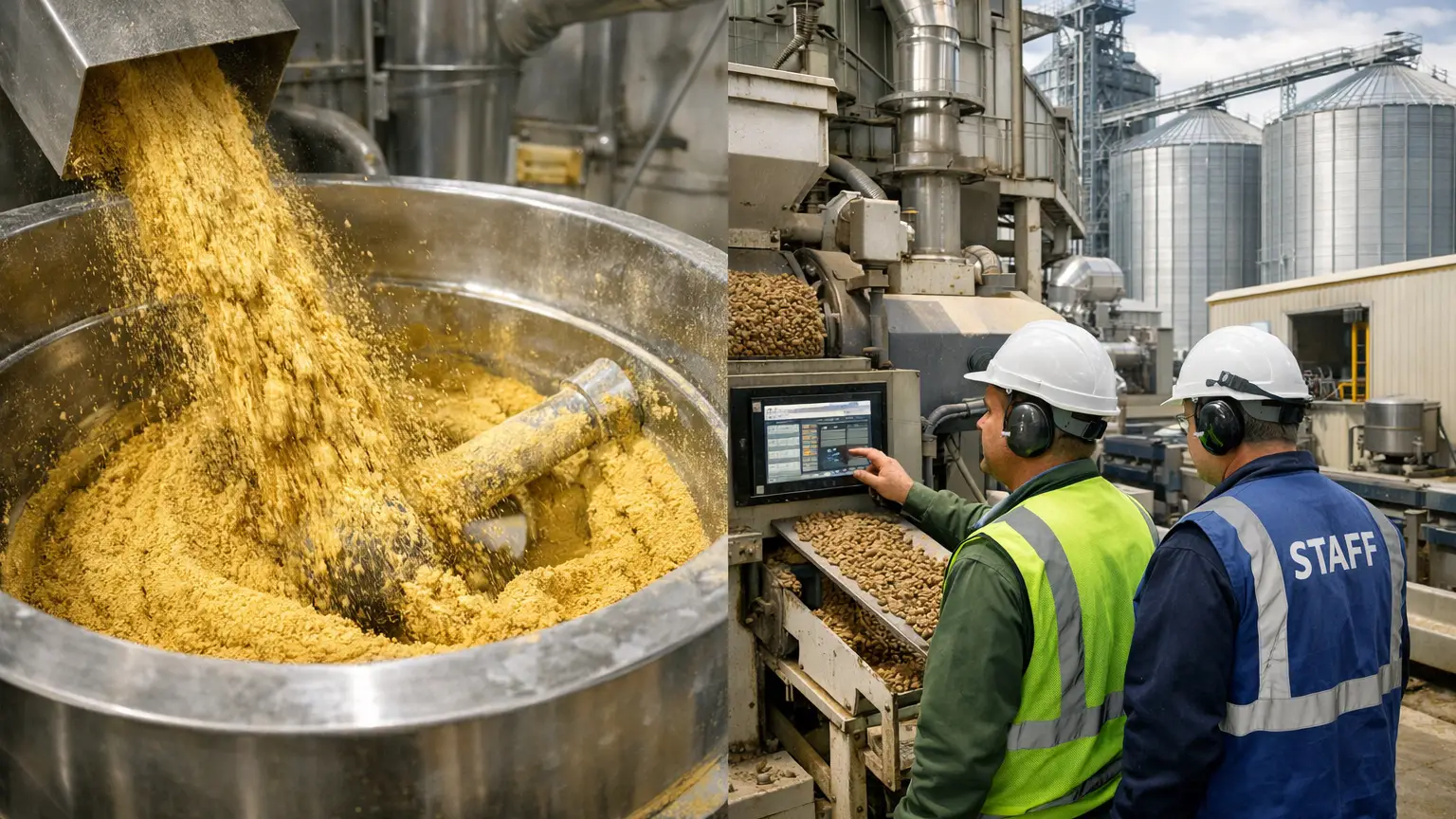
Corn gluten meal (CGM) is primarily used in animal feed formulations, particularly for poultry, aquaculture, and swine — and in organic herbicide and fertilizer applications. Key buyers include compound feed manufacturers, aquafeed producers, pet food formulators, and agricultural input distributors. Demand is driven by rising global meat consumption, the rapid expansion of aquaculture, and the need for cost-effective, sustainable protein alternatives to soybean meal and fishmeal.
The global corn gluten meal market is valued at approximately USD 8.58 billion in 2025 and is projected to reach USD 9.07 billion in 2026, expanding at a CAGR of approximately 5.7%. Demand is dominated by the animal feed industry, where CGM's concentrated protein profile (60-65% crude protein), high digestibility, and competitive cost make it a preferred formulation ingredient across poultry, swine, dairy, and aquaculture operations. The fastest-growing applications are aquafeed and premium pet food, driven by structural trends that will outlast short-term commodity cycles. The key commercial risk in 2026 is logistics-driven: Strait of Hormuz tensions and elevated maritime freight costs are introducing price volatility for import-dependent markets in Asia Pacific and the Middle East, despite physically stable global supply from the US and China.
Core Applications of Corn Gluten Meal
The table below maps CGM's primary established end-uses, their sectoral alignment, estimated demand shares, current trajectory, and the buyer type that drives purchasing in each segment.
|
Application |
Sector |
Demand Share |
Trend |
Buyer Type |
|
Poultry feed ingredient |
Animal Feed |
~48% of livestock use |
Stable → |
Compound feed manufacturer |
|
Cattle & dairy feed |
Animal Feed |
~20% of livestock use |
Stable → |
Integrated livestock producer |
|
Swine feed ingredient |
Animal Feed |
~15% of livestock use |
Stable → |
Feed formulator / integrator |
|
Aquaculture feed (fishmeal substitute) |
Aquafeed |
High-growth niche |
Growing ↑↑ |
Aquafeed manufacturer |
|
Premium pet food |
Pet Food |
Expanding share |
Growing ↑ |
Pet food brand / contract formulator |
|
Pre-emergent organic herbicide |
Agriculture |
~5-8% of market |
Growing ↑ |
Organic farm input distributor |
|
Slow-release nitrogen fertilizer |
Agriculture |
Niche / growing |
Growing ↑ |
Turf & horticulture distributor |
|
Food processing (texturizer / binder) |
Food Industry |
Small / emerging |
Growing ↑ |
Food ingredient manufacturer |
Emerging Applications
Aquaculture Feed: Fishmeal Displacement
This is the most commercially significant emerging application for CGM in 2026. Aquafeed manufacturers are under strong sustainability and cost pressure to reduce reliance on marine-derived proteins. CGM's high methionine content, digestibility for omnivorous and herbivorous fish species (carp, tilapia, pangasius), and cost advantage over fishmeal make it an ideal partial substitute. Aquaculture harvest volumes are expanding rapidly across Asia Pacific, Southeast Asia, and Latin America. Specialized low-fiber aquafeed grades are under active development by major processors. This application is already meaningful in volume terms and will likely be one of the two largest CGM demand drivers within five years.
Premium and Natural Pet Food
The global pet food market exceeded USD 115 billion in 2023 and continues to grow, with premiumization as a structural trend. Pet food brands and contract formulators value CGM for its high protein concentration, natural origin, and digestibility profile in grain-free and high-protein specialty diets. Demand growth is concentrated in North America and Europe for established markets and is accelerating in urban Southeast Asia, China, and the Middle East as disposable incomes rise and pet ownership expands.
Organic and Natural Weed Suppression
CGM's pre-emergent herbicide property, inhibiting weed seed germination via root inhibitor release (patented by Iowa State University since 1991), is gaining momentum in 2026 driven by regulatory pressure on synthetic herbicides in the EU and North America and the growth of organic farming certification. Applied in vineyards, orchards, turf management, and specialty crop operations, this application is growing faster than the overall market and commands a price premium over feed-grade product. ADM and Fox Forest Agriculture are among the companies actively developing CGM-based organic weed control products.
Food and Pharmaceutical Functional Ingredients
Food-grade CGM is used as a texturizer, binder, and protein fortifier in baked goods, meat analogs, and processed snacks. Pharmaceutical research into CGM-derived bioactive peptides with antioxidant, antihypertensive, and anti-obesity properties is still early-stage. Current volumes are modest relative to feed; this remains a 5-plus year horizon opportunity rather than a near-term commercial driver.
Key Buyer Segments for Corn Gluten Meal
1. Compound Feed Manufacturers (Largest Segment)
These are the dominant buyers of CGM globally: large-scale industrial feed mills formulating compound animal feeds for poultry, swine, cattle, and dairy operations. They buy in bulk on least-cost formulation logic, switching between protein sources based on price parity with soybean meal and other alternatives. Price sensitivity is high; contracts tend to be short-to-medium term with defined protein and moisture specifications. Consistent 60% protein content, low mycotoxin levels, and uniform granulated form are the key quality parameters. Major buyers in this category include Tyson Foods, Cargill's feed division, Charoen Pokphand Foods (Asia), and New Hope Liuhe (China). This segment currently accounts for the majority of global CGM consumption.
2. Aquafeed Producers (Fastest-Growing Segment)
Aquafeed manufacturers producing diets for shrimp, tilapia, carp, pangasius, and salmon are a structurally growing buyer category shifting their ingredient matrices away from fishmeal toward plant proteins. CGM's amino acid profile, particularly high methionine and leucine, makes it more attractive than soybean meal for omnivorous and herbivorous species. These buyers are technically demanding, requiring low-fiber and high-digestibility grades, and are willing to pay a modest premium for consistent quality. Major buyers include Skretting (Nutreco), BioMar, and leading Chinese and Vietnamese integrated aquafeed producers. This segment is the primary target for product innovation and quality differentiation in the CGM market in 2026.
3. Pet Food Manufacturers and Contract Formulators
Pet food brands from global multinationals (Nestle Purina, Mars Petcare, Hill's) to premium independent formulators use feed-grade and food-grade CGM in dry kibble, semi-moist, and treat formulations. They are more quality-conscious and specification-driven than commodity feed buyers, with strict requirements on protein consistency, non-GMO sourcing for relevant product lines, and traceability. Purchasing volumes are smaller per buyer than compound feed manufacturers but at a higher price point and with greater contract stability. The premium and natural pet food segments are growing faster than mass-market tiers.
4. Agricultural Input Distributors and Organic Farming Operations
Distributors of organic and natural agricultural inputs purchase granulated CGM for resale to vineyards, orchards, turf management companies, and certified organic crop producers. Buyers in this segment are not primarily price-sensitive; they are paying for the herbicide and fertilizer functionality and organic certification, and CGM commands a premium over standard feed-grade product. The application is growing in the EU, the United States, and Australia, driven by organic farming expansion and regulatory restrictions on synthetic herbicides.
5. Traders and Distributors (Intermediary Channel)
A significant share of global CGM trade moves through commodity traders and regional distributors, particularly into import-dependent markets in Asia Pacific, the Middle East, and Africa. These buyers purchase from major US, Chinese, and Indian producers and handle logistics, documentation, and customs processes. They are highly price-sensitive and market-opportunistic. In 2026, logistics disruptions affecting Strait of Hormuz routes and elevated maritime freight costs are making this segment more cautious about long-position risk, favoring shorter contract windows and diversified supply sourcing.
6. Food Ingredient Manufacturers and Pharma-Grade Processors (Emerging)
A nascent buyer segment consists of food ingredient companies procuring food-grade CGM for functional food applications and pharmaceutical research firms investigating CGM-derived bioactive peptides. These buyers are small in volume but price-inelastic and driven by quality and regulatory compliance. They represent a value-chain upgrading opportunity for producers capable of meeting food-safety and documentation standards.
Demand Drivers and Market Outlook
Economic Linkage
CGM demand is closely correlated with compound animal feed production volumes, which track global meat consumption, livestock herd sizes, and aquaculture harvest expansion. Global meat production exceeded 360 million tonnes in 2023 and continues to expand, driven by population growth and rising protein demand in Asia, Latin America, and Sub-Saharan Africa. Feed cost pressure has actively incentivized feed formulators to maintain CGM inclusion where it delivers protein at lower cost than soybean meal.
Sector Growth
Two downstream sectors are expanding their CGM use faster than the market average. Commercial aquaculture, operating at approximately 40 million tonnes of annual aquafeed consumption, is growing its CGM inclusion as sustainability mandates and fishmeal supply constraints accelerate plant protein substitution. The premium and natural pet food segment is also growing at a structurally higher rate. In agriculture, organic farming expansion in the EU (the European Green Deal targets 25% organic farmland by 2030) and restrictions on synthetic herbicides are supporting growing demand for CGM-based organic inputs.
Substitution Risk
CGM faces limited direct substitution risk in its core animal feed application in 2026. Its price competitiveness versus soybean meal, consistency of supply from major corn processing infrastructure, and specific amino acid advantages including methionine content provide commercial stickiness. The more meaningful risk is at the formulation level: pea protein, canola meal, and insect-derived proteins may be incorporated into diversified blends. In the food-grade and pharmaceutical applications, CGM faces competition from more refined protein isolates such as wheat gluten and pea protein.
Policy and Regulatory Drivers
The EU's European Green Deal and Farm to Fork strategy are expanding demand for organic and low-chemical-input agricultural products, creating tailwinds for CGM as a natural herbicide and fertilizer. US biofuel policy under the Renewable Fuel Standard influences CGM supply volumes as a corn wet-milling co-product. Import tariff structures in China, the EU, and Southeast Asian markets affect trade flows and relative price competitiveness. Mycotoxin and contaminant regulations in the EU, Japan, and South Korea set the quality floor for internationally traded CGM and differentiate reputable suppliers.
Strategic Insight: Commercial Opportunities
1. Who Drives Demand Today?
Compound feed manufacturers, particularly in poultry and livestock operations, account for the dominant share of current CGM consumption globally. The poultry sector alone represents approximately 48% of livestock CGM use. The largest volume markets are China (the world's largest CGM producer and consumer), the United States, the EU, Japan, and South Korea. These buyers purchase on least-cost formulation logic driven by price parity with soybean meal and logistics reliability.
2. Where Is Growth Coming From?
The two highest-momentum vectors are aquafeed and premium pet food. Aquafeed producers are the most commercially important growth segment: technically demanding, growing structurally, and not primarily price-driven. The organic agriculture segment is smaller but growing faster than the market average and at a price premium. Latin America and Asia Pacific are the fastest-growing regional demand pools for feed-use CGM, supported by aquaculture expansion and intensification of commercial livestock production.
3. Where Is Risk Concentrated?
The segment most exposed to near-term disruption is import-dependent buyers in Asia Pacific and the Middle East who rely on US-origin CGM shipped through vulnerable maritime corridors. Elevated freight costs linked to Strait of Hormuz tensions in early 2026 are increasing landed costs and incentivizing buyers to diversify supply origins toward Chinese or Indian producers. At the application level, commodity feed use is exposed to soybean meal price swings: if soybean meal prices decline sharply, some formulators will reduce CGM inclusion.
4. What Does This Mean for Commercial Strategy?
The clearest commercial opportunity in 2026 is prioritizing aquafeed buyer outreach with a product offer differentiated on quality consistency, amino acid documentation, and flexible logistics. This segment is growing, technically demanding, and willing to reward reliable suppliers with durable relationships. For content and digital positioning, building authority around CGM's methionine profile, fishmeal substitution economics, and aquaculture sustainability is the most forward-looking investment available. Suppliers and traders should also develop the organic agriculture channel in the EU and North America. Finally, logistics flexibility, meaning the ability to offer diversified origin sourcing and short contract windows, is a specific competitive advantage in 2026 given the freight cost environment.
Source Corn Gluten Meal with Confidence
If you are looking to source corn gluten meal for your feed, aquafeed, or agricultural operations, Tradeasia International offers reliable global supply backed by rigorous quality controls and end-to-end logistics capability. With over two decades of experience in chemical and feed ingredient distribution and a network spanning Asia Pacific, the Middle East, the Americas, and Europe, Tradeasia delivers corn gluten meal to compound feed manufacturers, aquafeed producers, pet food formulators, and agricultural input buyers worldwide. Contact us today to discuss your sourcing requirements, product specifications, pricing, and lead times.