Introduction
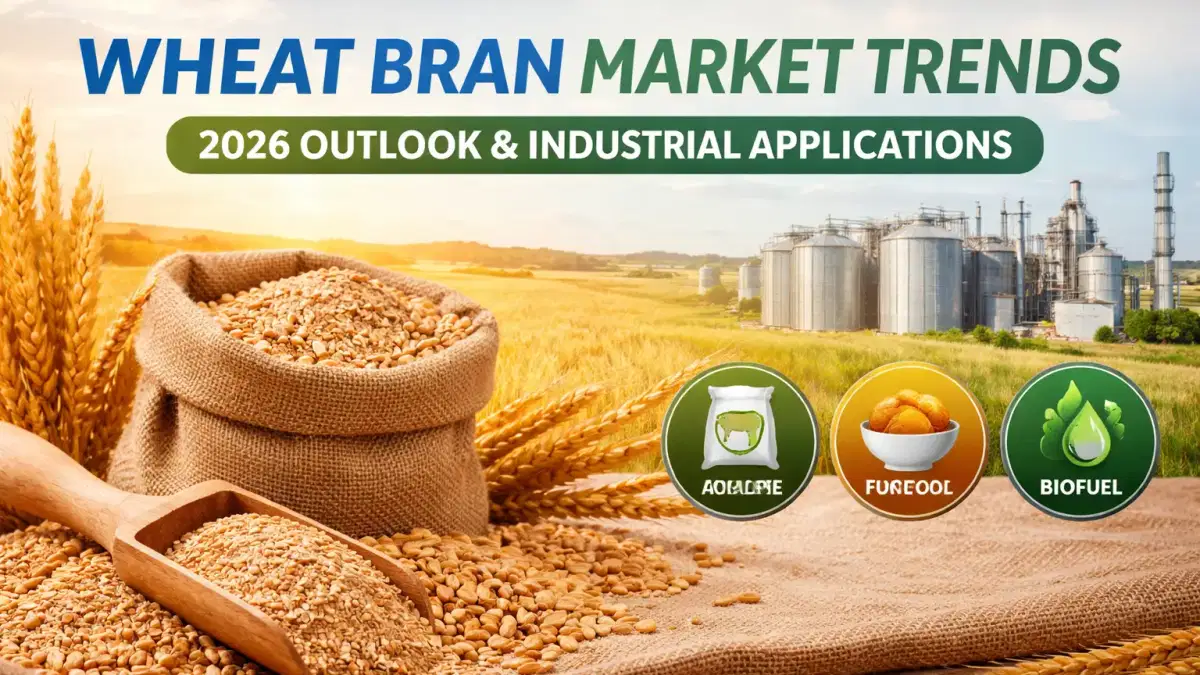
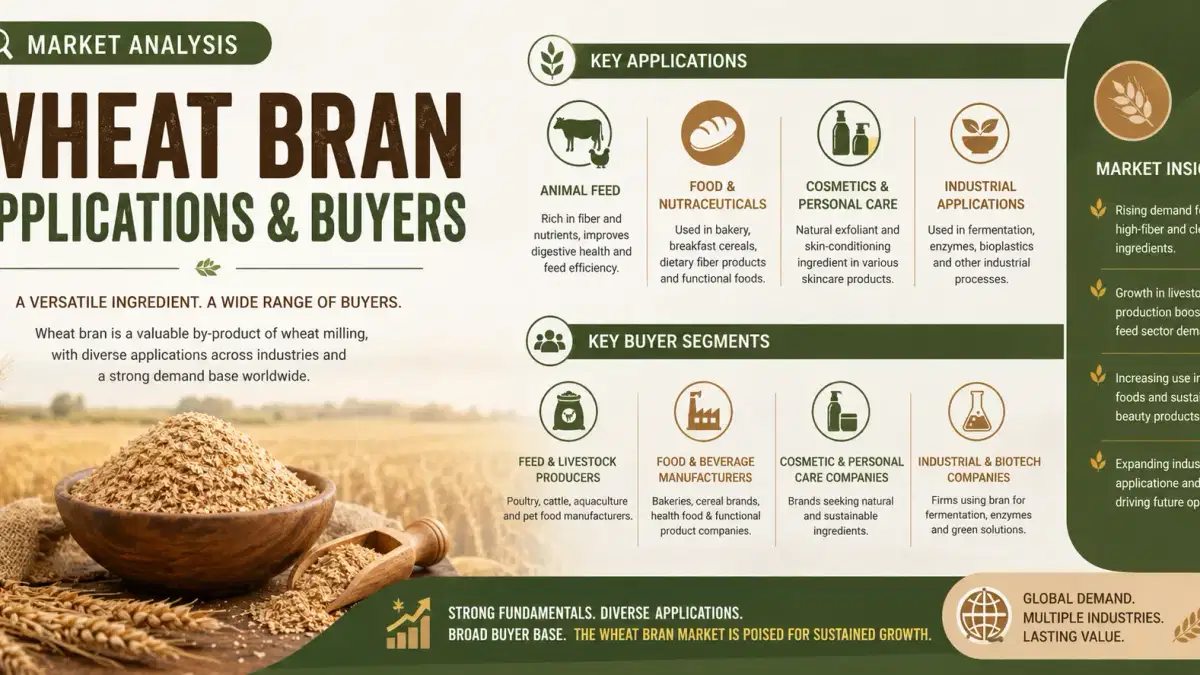
Wheat bran, as a platform agricultural product, continues to strengthen its position in global commodity flows due to its versatility across feed, food, and industrial applications. By 2026, the wheat bran market is shaped by expanding livestock industries, functional food innovation, and circular economy initiatives that emphasize by-product utilization. Global demand is closely tied to wheat milling output, which exceeds 110 million metric tons (MT) annually, making bran a structurally abundant input. The market is projected to grow at a CAGR of 4.8%, with pricing stabilizing in the range of USD 120–180/MT, depending on region and purity grade.
Industrial Feed Applications Driving Demand
The livestock feed sector remains the dominant consumer of wheat bran, accounting for more than half of total utilization. Poultry, cattle, and swine producers rely on bran for its fiber and energy balance, particularly in cost-sensitive feed formulations. In emerging economies, feed mills increasingly blend wheat bran with protein meals to optimize ration economics. Large-scale integrators in Asia and the Middle East are driving bulk procurement, reinforcing steady trade flows and long-term contracts.
Food Processing and Nutraceutical Buyers
Beyond feed, wheat bran is gaining traction among food manufacturers and nutraceutical companies. Bakeries and cereal producers incorporate bran for fiber enrichment, while health-focused brands utilize it in high-fiber supplements. Demand from functional food processors is growing steadily at over 5% annually, reflecting consumer preference for digestive health products. This segment is particularly strong in North America and Europe, where clean-label trends are reshaping ingredient sourcing strategies.
Regional Trade Flows and Price Dynamics
Wheat bran pricing remains highly sensitive to milling activity and regional wheat harvests. Export-oriented suppliers in the Black Sea region and North America dominate global trade, while Asia-Pacific remains the largest import market. Price fluctuations between USD 120–180/MT are influenced by freight costs and feed demand cycles. Trade volumes are increasingly shifting toward long-term supply agreements to reduce volatility exposure.
Sustainability and Supply Chain Integration
Sustainability considerations are reshaping wheat bran utilization, with buyers emphasizing waste minimization and circular feedstock recovery. Milling companies are optimizing extraction efficiency, while downstream users prioritize traceable sourcing. Digital supply chain tools are also improving transparency in bulk commodity trading, supporting more resilient procurement systems across feed and food industries.
Conclusion
As wheat bran evolves from a low-value by-product into a strategic platform product, its applications across feed, food, and health industries continue to expand. With steady demand growth, improving logistics integration, and rising functional food usage, the market outlook remains structurally positive through 2026. In navigating procurement complexity and global sourcing volatility, buyers are increasingly turning to integrated partners such as Tradeasia International, a global solution provider offering streamlined access to agricultural commodities and industrial feedstocks across diversified markets.
Sources