Explore our network of country and industry based websites to access localized information, product offerings, and business services across our group.
Log in to start sending quotation requests for any product.
Don't have an account? Sign Up Here
Home Top Applications of Poultry Meal in Animal Feed Formulation for 2026
Trade Insights | Applications and Buyers | 30 March 2026
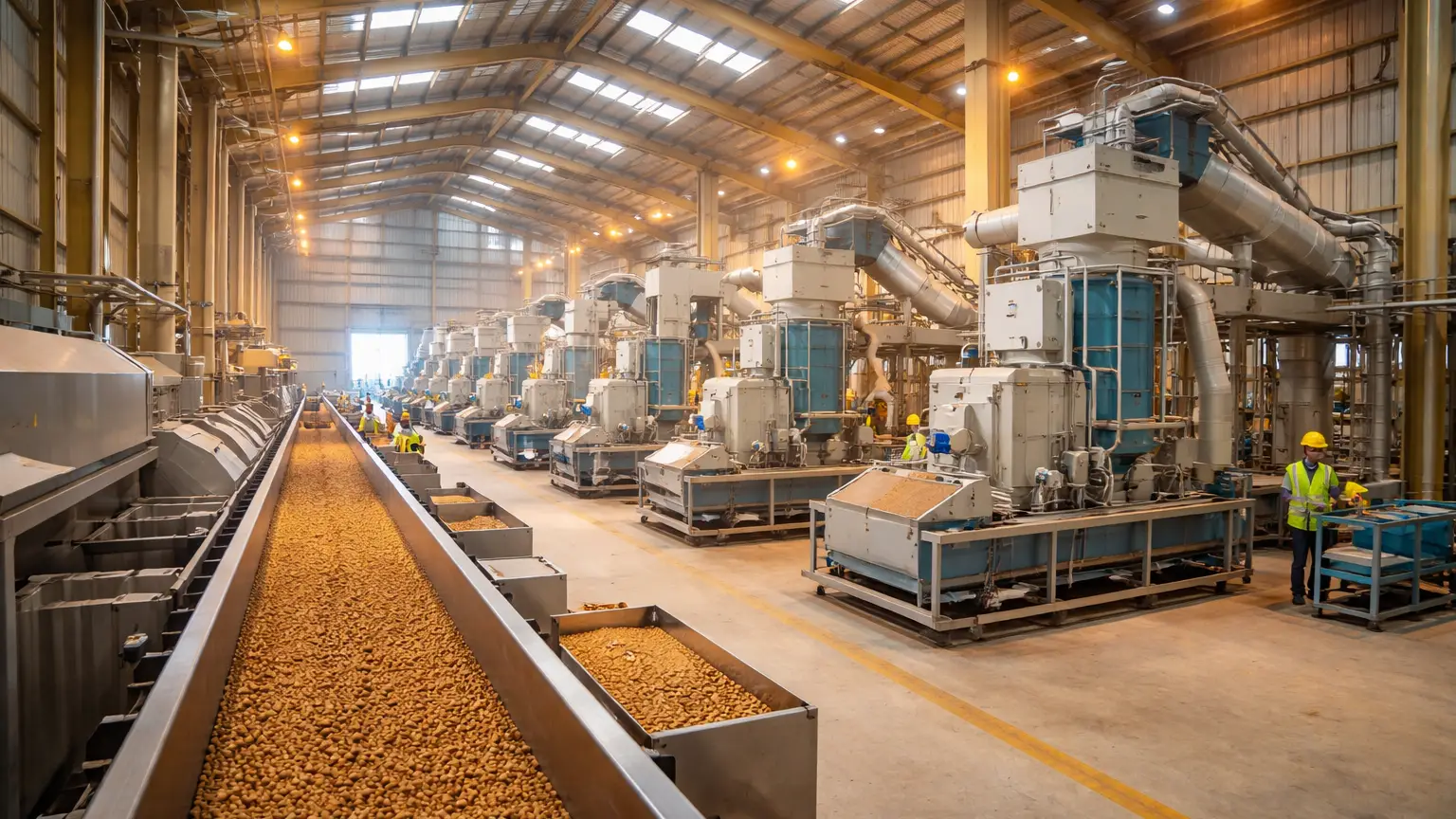
Poultry meal is a high-protein rendered ingredient used primarily in broiler, swine, aquaculture, and companion animal feed formulations across Asia Pacific. Key buyers include commercial feed mills, integrated poultry companies, aquaculture feed producers, and pet food manufacturers. Demand is driven by rising regional protein consumption, fishmeal price volatility, and the rapid expansion of Asia Pacific's livestock and aquaculture sectors.
Asia Pacific is the world's largest animal feed-producing and consuming region, accounting for over 36% of global compound feed output, with the regional market projected to grow from USD 190 billion in 2025 to USD 248 billion by 2030. Within this landscape, poultry meal has established itself as a strategic, cost-competitive protein ingredient that sits at the intersection of multiple growth sectors: broiler and layer production, swine feed, aquaculture, and premium pet food. As fishmeal supply tightens and soybean meal prices remain volatile, feed formulators across China, India, Vietnam, Indonesia, Thailand, and beyond are actively deepening their use of poultry meal across species and production stages. The primary risk concentration is substitution pressure from insect meal and plant-based proteins in sustainability-conscious segments; the primary commercial opportunity is aquaculture, where poultry meal is gaining ground as a proven, economical fishmeal replacement.
| Application | Sector | Demand Share (Est.) | Trend | Buyer Type |
|---|---|---|---|---|
| Broiler & Layer Feed | Commercial Poultry | ~35–40% | Growing ↑ | Integrated Poultry Companies, Feed Mills |
| Swine Feed | Pork Production | ~20–25% | Stable → | Feed Mills, Pork Integrators |
| Aquaculture Feed | Fish & Shrimp Farming | ~20–25% | Growing ↑ | Aquafeed Producers, Fish Farms |
| Companion Animal / Pet Food | Pet Nutrition | ~8–12% | Fast Growing ↑↑ | Pet Food Manufacturers |
| Starter & Nursery Diets (Young Animals) | Multi-Species | ~5–8% | Stable → | Specialty Feed Manufacturers |
Broiler and layer diets represent the largest single application for poultry meal in Asia Pacific. Feed accounts for approximately 70% of broiler production costs, and protein ingredients, especially those with digestible amino acid profiles, are the most critical cost lever. Poultry meal, with crude protein content typically in the 60–65% range and a well-balanced amino acid profile, serves as an efficient partial replacement for soybean meal in both starter and grower-finisher rations. Asia Pacific's commercial broiler production, particularly in China, India, Indonesia, Thailand, and Vietnam, exceeded 1.1 billion metric tons of total poultry production in 2022 and continues to grow. Poultry by-product meal is widely used by vertically integrated companies that operate their own slaughterhouses and rendering facilities, creating a built-in circular supply chain for this ingredient.
Swine feed is the second-largest application, particularly relevant in China, the world's largest pork producer, as well as Vietnam, the Philippines, and Indonesia. Poultry meal plays a role especially in nursery and starter pig diets, where high digestibility and amino acid density matter most for young animals transitioning from milk. Research confirms that poultry by-product meal performs comparably to soybean meal for swine growth when inclusion levels are properly managed. The African Swine Fever (ASF) outbreaks that disrupted pork supply chains across Southeast Asia in recent years also prompted temporary conversions from swine to poultry production, indirectly increasing demand for poultry-origin feed ingredients across the region.
Aquaculture is the fastest-growing application for poultry meal in Asia Pacific and represents the clearest commercial opportunity through 2026 and beyond. Asia Pacific is the world's largest aquaculture region, home to the majority of global shrimp, tilapia, catfish, and carp production. Fishmeal has historically been the dominant protein source in aquafeeds, but production costs have risen sharply due to overfishing, environmental constraints, and volatile supply from South America. Poultry by-product meal (PBM) has emerged as one of the most validated alternatives. Peer-reviewed trials demonstrate that up to 75% of fishmeal protein in freshwater species diets can be replaced with PBM without negative effects on growth performance. In shrimp and tilapia feeds, both of which are dominant in Southeast Asia, poultry meal inclusion is increasing as feed manufacturers seek to reduce input costs while maintaining FCR (Feed Conversion Ratio) performance. Indonesia alone reported aquaculture feed output of 1.7 MMT in 2022, reflecting the scale of this buying segment.
The pet food segment is the smallest in volume terms but the fastest-growing in value terms across Asia Pacific. Urbanization, rising disposable incomes, and the "pet humanization" trend in China, Japan, South Korea, Australia, and increasingly Southeast Asia are driving demand for premium, protein-dense pet food formulations. Poultry meal is a well-established ingredient in dry kibble formulations for both dogs and cats, valued for its palatability, protein density, and cost-efficiency relative to whole muscle meats. This segment is particularly relevant to specialty and premium pet food manufacturers who require consistent protein specifications. The pet segment of the animal feed market is forecast to expand at the fastest CAGR of any animal type through 2034, creating a structurally important growth channel for poultry meal suppliers with food-grade processing capabilities.
A smaller but nutritionally important application is in starter and nursery diets for young animals, including newly hatched chicks, post-weaned piglets, and juvenile fish. The high digestibility and concentrated amino acid profile of quality poultry meal makes it especially suited to early-life nutrition, where gut development and rapid protein deposition are critical. Specialty feed manufacturers across the region formulate these high-value, low-volume products with demanding quality specifications.
Beyond tilapia and catfish, shrimp aquaculture, especially Litopenaeus vannamei (Pacific white shrimp) production in Vietnam, Thailand, and Indonesia, represents a rising application. Research has confirmed that co-extruded soybean-poultry by-product meal blends can effectively substitute fishmeal in white shrimp diets. Given Southeast Asia's dominance in global shrimp production and export, even modest increases in poultry meal inclusion rates across this sector represent meaningful volume gains. This application is expected to become meaningful within a 2–4 year timeframe.
As Asia Pacific feed mills modernize by consolidating into higher-capacity operations with automated formulation systems, the industry is shifting from "cheapest feed" to "lowest cost per kilogram of meat produced." This creates demand for well-specified, consistent protein sources with verified digestible amino acid values. Poultry meal suppliers able to provide detailed nutritional matrices, standardized crude protein ranges, and consistent ash content will be better positioned for inclusion in precision-formulated rations. This trend is already visible among integrated players in China, India, and Thailand, and is expected to deepen across the 2025–2028 period.
In markets where feeding processed animal proteins (PAPs) to ruminants is permitted under national regulations, such as parts of Southeast Asia, poultry meal may find growing use in dairy and beef rations as a bypass protein source. This remains a niche application relative to the monogastric and aquaculture segments, but regulatory frameworks differ significantly across Asia Pacific, and localized demand may be more significant than regional averages suggest.
Commercial feed mills are the dominant buyers of poultry meal across Asia Pacific, accounting for the majority of total ingredient procurement. Asia Pacific hosts approximately 7,146 of the world's 28,156 registered feed mills, representing about 25% of global capacity, and 157 new mills entered operation in 2022 alone. These buyers purchase poultry meal in bulk, either on long-term supply contracts with established pricing formulas or via spot procurement when contractual volumes are insufficient or price advantages emerge. Price sensitivity is high, and inclusion decisions are driven by least-cost formulation software that compares poultry meal against soybean meal, fishmeal, and other animal protein sources on a cost-per-unit-of-digestible-protein basis. As consolidation continues across the region, with smaller mills exiting as capacity concentrates in larger operations, the importance of reliable, high-volume suppliers continues to grow.
Vertically integrated poultry companies, including regional giants such as CP Group (Thailand), New Hope Liuhe (China), Suguna Foods (India), Charoen Pokphand Indonesia, and others, often operate both their own feed mills and slaughterhouse/rendering facilities. These buyers have a dual relationship with poultry meal. They may produce it as a by-product of their own processing operations while also purchasing externally to supplement captive production. For poultry meal suppliers, these are anchor accounts that offer volume and relationship stability but also carry bargaining power. Their purchasing behavior tends toward contract-based, with quality and traceability specifications becoming increasingly stringent as export-oriented integrators face international market requirements.
Aquafeed producers are specialized buyers who operate at the intersection of high technical specifications and strong cost pressure. Key buyers include dedicated aquafeed companies in Vietnam (Vĩnh Hoàn, Skretting Vietnam), Indonesia (PT Charoen Pokphand Indonesia, PT Central Proteina Prima), Thailand (Thai Union, CP Aquaculture), and China's large aquaculture input companies. They evaluate poultry meal primarily on digestible protein content, ash levels, freshness/oxidation status, and amino acid profile, with particular attention to the methionine and lysine fractions relevant to fish and shrimp nutrition. Many aquafeed producers are transitioning away from imported fishmeal to domestically accessible animal protein alternatives, and poultry meal benefits from local availability in most major Asia Pacific production countries. Price sensitivity is medium-to-high, and spot purchasing is common alongside longer-term supply agreements.
Premium and mass-market pet food manufacturers represent a structurally growing buyer segment. In China, Japan, South Korea, and Australia, the pet food industry is expanding rapidly, with players such as Mars Petcare, Nestlé Purina, and a growing number of regional and domestic brands seeking consistent, food-safe poultry meal for dry kibble formulations. These buyers typically require higher processing standards, including lower microbial counts, tighter protein specifications, and sometimes food-grade certification, compared to livestock feed applications. Purchasing is generally contract-based with quality audits, and price sensitivity is moderate, with premium brands willing to pay for verified ingredient quality and traceability.
Chemical and agricultural commodity traders play an important intermediary role, particularly for small-to-medium feed mills and specialty producers who lack the volume to buy direct from rendering facilities or large exporters. Traders provide flexibility in lot size, payment terms, and logistics, making them a critical channel for the long tail of Asia Pacific's fragmented feed industry. These buyers are arbitrage-sensitive, purchasing opportunistically when regional price differentials offer margin. They are important volume aggregators for suppliers targeting smaller buyers.
The single most powerful demand driver for poultry meal across Asia Pacific is the structural increase in per-capita meat, egg, aquaculture, and pet protein consumption driven by rising incomes and urbanization. Asia Pacific accounted for the largest share of global animal feed revenues at 39.9% in 2025. Countries like China, India, Indonesia, Vietnam, and Malaysia are simultaneously growing their middle classes and intensifying livestock and aquaculture production to serve them. This creates compounding demand: more animals raised commercially, requiring more compound feed, requiring more high-protein ingredients per tonne of diet as precision nutrition replaces low-specification grain mixes.
Two downstream sectors are structurally outperforming the broader livestock feed market and represent the clearest forward growth vectors for poultry meal demand. Aquaculture feed in Asia Pacific is expanding as per-capita fish consumption increases and as large-scale commercial aquaculture operations replace artisanal fishing. The global egg market is projected to grow by 22% by 2035, with 90% of that growth coming from emerging markets, predominantly in Asia. The pet food sector's expansion is even faster, with the pet segment forecast to grow at the highest CAGR of any animal type through 2034. Both sectors increase total protein ingredient volumes required per tonne of finished feed, creating higher per-unit demand for quality protein sources including poultry meal.
The most credible substitution risk facing poultry meal is from insect meal, particularly black soldier fly (BSF) larvae meal, and from expanding plant protein fractions in sustainability-driven formulations. Insect meal producers in China, Vietnam, and Indonesia are scaling rapidly, offering a circular-economy protein source that appeals to ESG-focused buyers and antibiotic-free production programs. However, insect meal currently carries a meaningful cost premium over poultry meal in most Asia Pacific markets, and its supply chain remains less established. For the 2025–2028 period, the risk from insect meal is real but limited to premium and export-oriented segments. It is unlikely to displace poultry meal in mainstream commercial feed in volume terms within this window. Novel plant proteins (duckweed, algae, single-cell protein) represent a longer-horizon risk, with commercial scale still 5–10 years out for most applications.
National feed safety and quality regulations in China, India, Vietnam, and Indonesia are tightening, driving consolidation among feed mills and raising the bar for ingredient quality. Vietnam's full ban on antibiotic use in livestock feed effective January 2026 is significant: as producers eliminate AGPs (antibiotic growth promoters), gut health and digestibility become more important, increasing the value of highly digestible protein sources like poultry meal. Government-backed livestock expansion programs in India, Indonesia, and Vietnam are providing capital support for commercial farm and feed mill development, directly expanding the buyer base. China's dominance as the world's largest compound feed producer, at approximately 262 million metric tons annually, means that Chinese regulatory shifts have outsized implications for the entire regional ingredient supply chain.
Who drives demand today?
Commercial feed mills and integrated poultry companies are the backbone of current poultry meal demand in Asia Pacific. Together, these two buyer types account for the majority of volume purchased, driven primarily by inclusion in broiler and layer feed as a cost-effective protein complement to soybean meal. China and India, as the region's largest feed-producing countries, represent the highest concentration of active demand.
Where is growth coming from?
The strongest forward momentum sits in two sectors: aquaculture feed and pet food. Aquaculture demand is growing on the back of rising regional seafood consumption, tightening fishmeal supply, and increasingly robust validation that poultry by-product meal can replace 50–75% of fishmeal in freshwater species diets at equivalent or lower cost. Pet food is growing rapidly in absolute value terms, particularly in China, Japan, South Korea, and Australia, where premiumization and pet humanization are structural trends.
Where is risk concentrated?
The highest structural risk is in sustainability-sensitive, export-oriented, or premium-branded supply chains that are under pressure to demonstrate circular or plant-based ingredient sourcing. ESG-driven buyers, including multinational pet food brands and export-certified aquaculture operations, are already trialling insect meal and exploring plant-based protein blends. Any poultry meal supplier without traceability documentation, processing certifications, or quality consistency guarantees will face increasing commercial difficulty in these higher-value segments. This is not an imminent volume risk, but it is a pricing and positioning risk worth monitoring.
What does this mean for commercial strategy?
The clearest near-term priority is to build or deepen relationships with aquafeed producers across Vietnam, Indonesia, and Thailand. These buyers are actively diversifying away from fishmeal, have immediate demand, and are evaluating suppliers on both price and technical support. Positioning poultry meal with digestibility data and species-specific trial references will significantly differentiate a supplier in this segment.
For longer-term positioning, the pet food segment in China and South Korea warrants investment in food-grade processing certification and tighter quality specifications, as the value premium available in this channel justifies the cost. Mainstream commercial feed mills remain the volume foundation and should be served on competitive supply terms, but the margin and differentiation opportunity lies in aquaculture and pet food.
If you're looking to source poultry meal for your feed formulation operations across Asia Pacific, Tradeasia International offers reliable global supply backed by rigorous quality controls and end-to-end logistics capability. With over two decades of experience in chemical and ingredient distribution and a network spanning Asia Pacific, the Middle East, the Americas, and Europe, Tradeasia delivers poultry meal to aquafeed producers, commercial feed mills, integrated livestock companies, and pet food manufacturers across the region. Contact us today to discuss your sourcing requirements, product specifications, pricing, and lead times.
We're committed to your privacy. Tradeasia uses the information you provide to us to contact you about our relevant content, products, and services. For more information, check out our privacy policy.


 English
 Indonesian
 简体字
简体字
 العربية
 Español
 Français
 Português
 日本語
日本語
 한국어
한국어
 Tiếng Việt