
Introduction
Deoiled rice bran (DORB) is a critical byproduct of rice bran oil extraction and has emerged as a cost-efficient, protein-rich feed ingredient in global livestock and aquaculture industries. As of 2026, the market continues to expand steadily, supported by rising demand for sustainable feed alternatives and volatile prices of traditional protein meals. The global DORB ecosystem is estimated to exceed 10 million MT in annual availability, with a projected CAGR of 5.4% through 2030, reflecting its strengthening role as a feed-grade platform material in agri-commodity value chains. Average global trading prices remain in the range of USD 140–220/MT, depending on protein content and regional supply tightness.
Applications in Animal Nutrition & Feed Industry
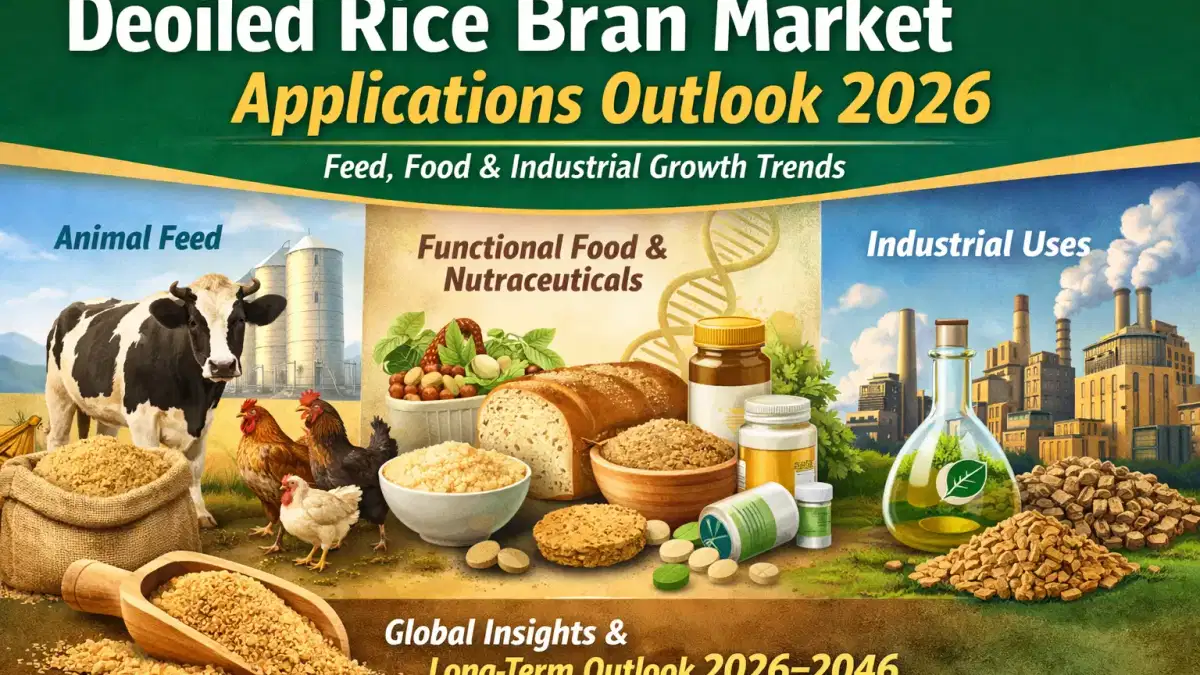
DORB is widely utilized in poultry, cattle, and aquaculture feed formulations due to its balanced energy-protein profile and high digestibility. In 2026, poultry feed accounts for nearly 45% of total consumption, followed by ruminant feed at 30% and aquafeed at 20%. Its increasing use as a partial substitute for soybean meal is driven by cost competitiveness and stable nutrient composition, making it a preferred inclusion in compound feed manufacturing across Asia-Pacific markets.
Demand Dynamics from Oil Extraction & Rice Milling Regions
The supply of DORB is structurally linked to rice-producing economies such as India, Thailand, Vietnam, and Pakistan, where large-scale rice milling generates substantial byproducts. India alone contributes over 4.5 million MT of deoiled rice bran annually, reinforcing its position as the dominant exporter. Growth in rice bran oil extraction capacity has directly boosted DORB availability, while domestic feed demand in Asia absorbs more than 70% of global output.
Key Buyers Landscape: Feed Manufacturers & Integrators
Primary buyers include integrated feed mills, poultry corporations, and aquaculture producers seeking cost-efficient protein sources. Large-scale feed manufacturers increasingly engage in long-term procurement contracts to hedge against protein meal volatility. In 2026, multinational integrators in Southeast Asia and the Middle East are emerging as high-growth buyers, particularly in aquafeed production, where DORB inclusion rates are optimized for cost-performance balance.
Pricing Trends, Trade Flows & Supply Chain Outlook
Price movements remain influenced by rice harvest cycles, oil extraction margins, and freight volatility. FOB Asia prices fluctuate between USD 140–220/MT, with premium grades reaching higher brackets during supply shortages. Export flows are increasingly concentrated in South Asia, while demand diversification into Africa and the Middle East is reshaping trade corridors. Logistics optimization and pelletized DORB formats are improving international acceptability and shelf stability.
Conclusion
As a versatile feed-grade platform material, deoiled rice bran continues to strengthen its position in global protein substitution strategies. Its cost efficiency, scalable availability, and nutritional profile ensure sustained relevance across feed industries. For global traders and industrial buyers seeking consistent supply, integrated sourcing and quality-assured procurement remain critical. In this context, Tradeasia International offers value-added sourcing solutions, bridging producers and end-users through reliable supply chain networks and customized commodity trading support, reinforcing its role in the evolving agro-feed ecosystem.
Sources