
Introduction
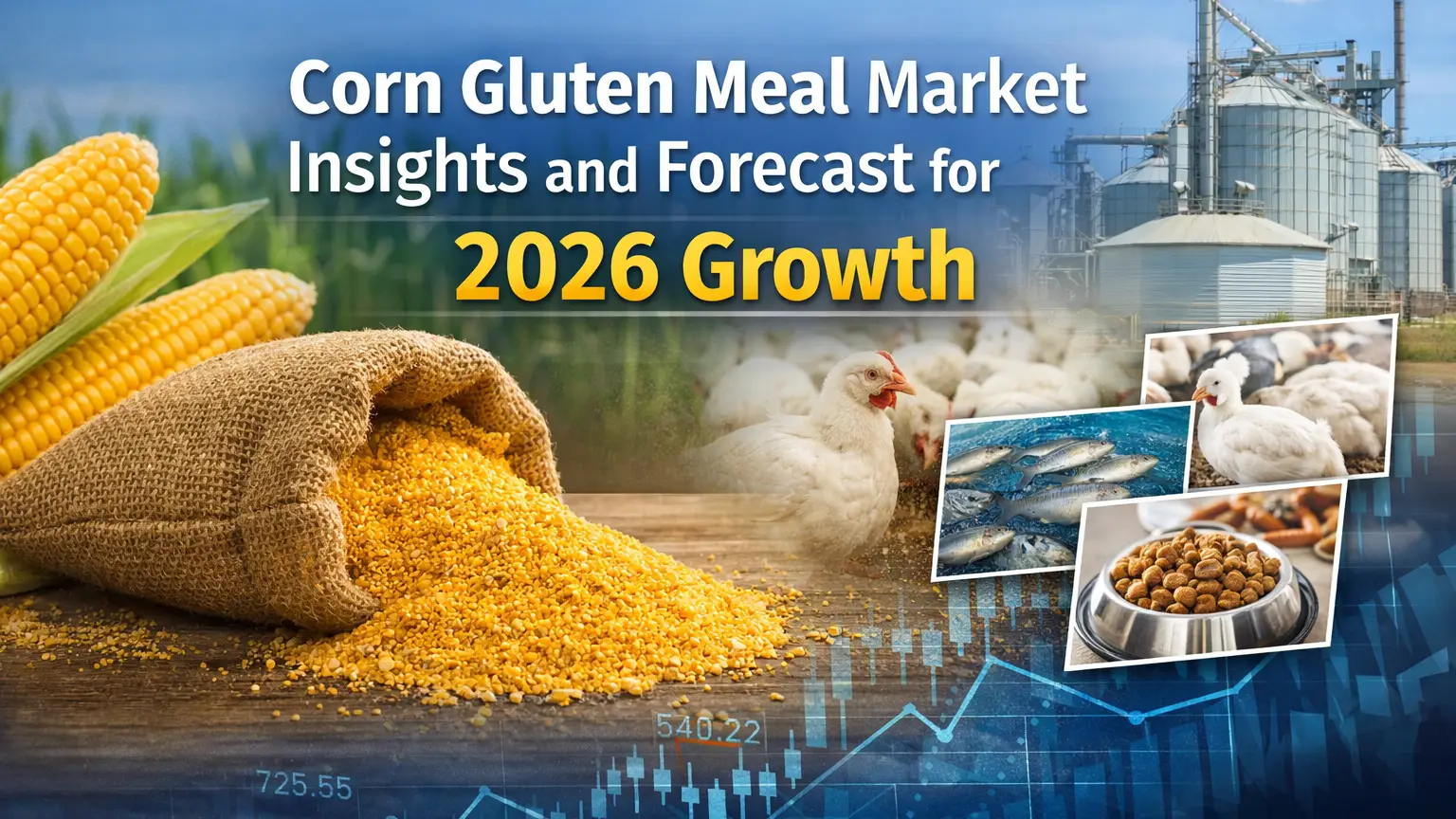
Corn gluten meal (CGM), a protein-rich co-product derived from wet corn milling, continues to reinforce its strategic relevance across global agribusiness supply chains in 2026. Recognized for its high protein concentration of 60–65%, it serves as a critical input in feed formulation, fertilizer enhancement, and selected industrial applications. The global market is expanding steadily at a CAGR of 4.8%, supported by intensifying demand for cost-efficient protein alternatives. Average global pricing remains positioned between USD 380–520/MT, influenced by corn feedstock volatility and regional supply imbalances. Annual production is estimated at over 7.2 million metric tons, concentrated in major corn-processing economies such as the United States, China, and Brazil.
Global Demand Drivers from Feed and Pet Food Industries
Feed manufacturing remains the dominant consumption channel for corn gluten meal, accounting for nearly 68% of total global demand in 2026. Poultry and aquaculture sectors are the primary end-users, leveraging its digestibility and amino acid profile to optimize feed conversion ratios. Pet food manufacturers, particularly in North America and Europe, are increasingly incorporating CGM as a cost-efficient protein enhancer. The segment is expanding at a notable 5.2% CAGR, driven by rising global meat consumption and protein-intensive diets, particularly across emerging Asian markets where aquaculture feed demand is accelerating.
Pricing Dynamics and Trade Flow Structure
Corn gluten meal pricing continues to be closely correlated with corn grain supply cycles and ethanol production output. In 2026, FOB export prices fluctuate within USD 390–510/MT, with higher premiums observed for export-grade protein-enriched variants. The United States remains the leading exporter, while Asia-Pacific dominates import demand due to expanding livestock and aquaculture industries. Trade flows are increasingly shaped by freight volatility and currency fluctuations, prompting buyers to adopt longer-term procurement contracts to stabilize input costs and ensure supply continuity.
Production Landscape and Supply Concentration
Global production is highly consolidated, with the top five producing countries controlling over 80% of output. The United States leads with approximately 2.8 million MT annually, followed closely by China at around 2.1 million MT, supported by large-scale wet milling and ethanol-integrated processing facilities. However, rising energy costs and logistical constraints continue to pressure smaller regional producers. Investments in process efficiency, coproduct optimization, and integrated corn refining systems are becoming critical for maintaining competitive positioning in the global CGM supply chain.
Application Diversification Across Agriculture and Industrial Uses
Beyond feed markets, corn gluten meal is gaining traction in sustainable agriculture, particularly as a natural herbicide and nitrogen-rich fertilizer in organic farming systems. Agricultural applications now represent nearly 20% of total demand, driven by turf management and horticulture sectors. Emerging industrial uses, including biodegradable material inputs and specialty protein extraction, remain niche but are gradually expanding. This diversification enhances market resilience and aligns with global sustainability-driven procurement strategies.
Conclusion
As a versatile platform-derived ingredient, corn gluten meal continues to strengthen its position within the global bio-based and feed ingredient economy. Its multifunctional applications across feed, agriculture, and industrial sectors ensure long-term demand stability despite cyclical pricing pressures. Market participants increasingly prioritize integrated sourcing strategies to manage volatility and ensure consistent quality supply. In this evolving landscape, Tradeasia International stands as a dependable global solution provider, enabling efficient procurement networks and reliable access to corn gluten meal across key production regions, supporting buyers in navigating a competitive and supply-sensitive market environment.
Sources