Introduction
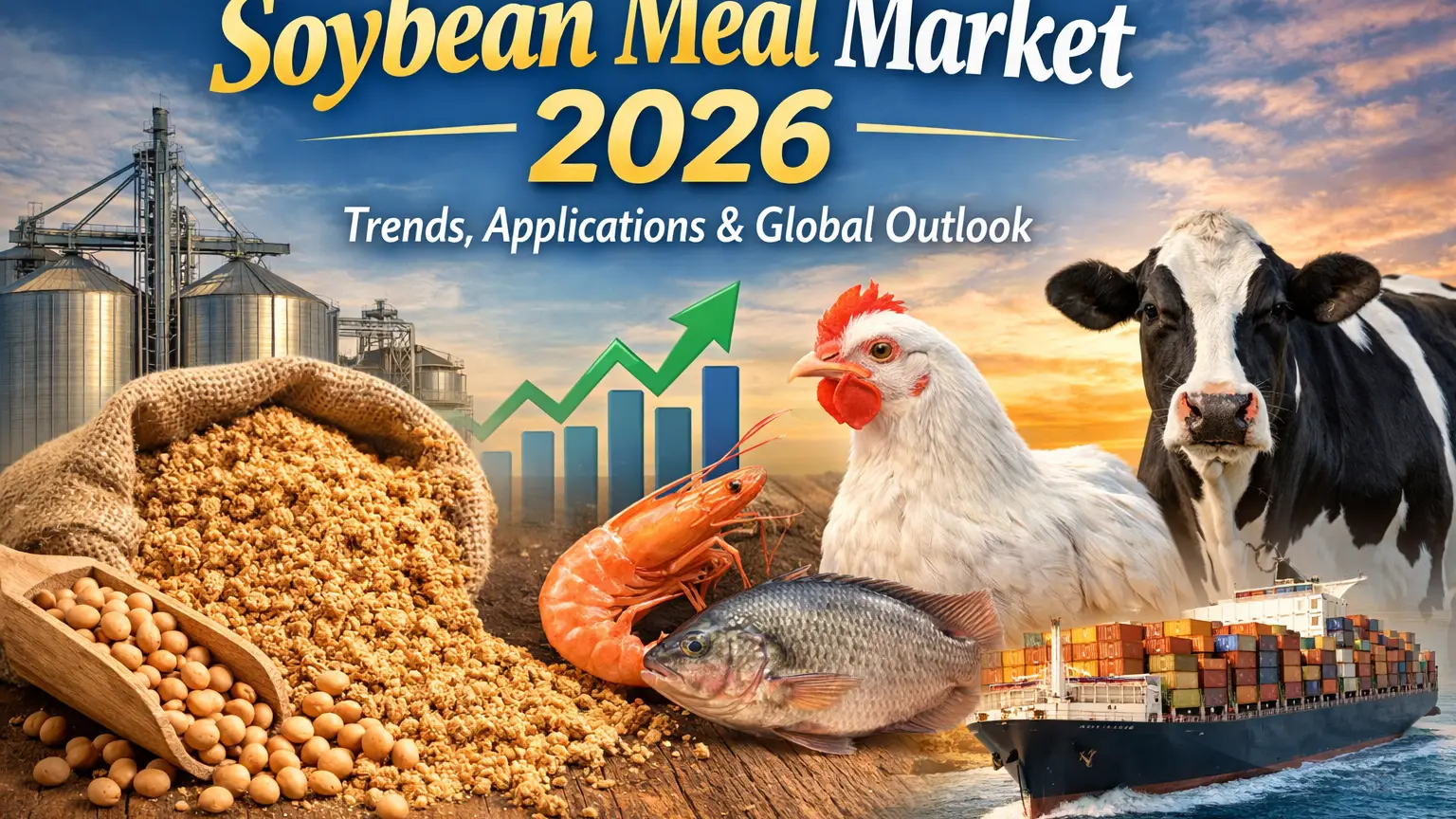
The soybean meal market in 2026 continues to solidify its role as a foundational platform protein ingredient within global agricultural and food systems. As a key byproduct of soybean oil extraction, soybean meal supports large-scale animal nutrition and selected industrial applications. Market dynamics are increasingly shaped by feed demand intensification, trade realignments, and sustainability pressures. Global consumption remains strongly linked to livestock expansion, with production volumes reaching approximately 250 million metric tons, reinforcing its strategic importance across supply chains. Against this backdrop, soybean meal maintains a stable yet competitive pricing corridor between USD 350–520/MT, reflecting feedstock volatility and freight costs.
Animal Nutrition Demand Expansion
The primary demand driver for soybean meal remains livestock feed, particularly poultry, swine, and aquaculture sectors. In 2026, the feed industry accounts for over 75% of total utilization. The market is expanding at a CAGR of 4.8%, driven by protein-rich diet adoption in emerging economies. Poultry integrators in Asia and Latin America are the largest buyers, prioritizing consistent amino acid profiles and cost efficiency in feed formulations.
Price Volatility and Supply Chain Pressures
Soybean meal pricing remains sensitive to soybean crop cycles, weather disruptions, and geopolitical trade flows. Freight constraints and export restrictions from major producers introduce short-term volatility. The price band of USD 350–520/MT reflects tightening margins for feed manufacturers. Buyers are increasingly adopting long-term contracts and hedging strategies to stabilize procurement costs amid fluctuating global supply conditions.
Regional Production and Global Trade Flow
Production remains concentrated in the Americas, with the United States, Brazil, and Argentina jointly contributing over 60% of global output. Brazil alone processes more than 85 million metric tons of soybean meal annually. Trade flows are heavily directed toward Asia, particularly China and Southeast Asia, where feed demand continues to outpace domestic oilseed crushing capacity, reinforcing import dependency.
Industrial Applications and Buyer Landscape
Beyond feed, soybean meal is gaining traction in aquaculture premixes, pet food formulations, and bio-based fermentation industries. Buyers include feed mill operators, integrated livestock producers, and food ingredient manufacturers seeking plant-based protein alternatives. The diversification of applications is gradually stabilizing demand cycles while expanding the buyer base beyond traditional agriculture.
Conclusion
As a critical platform protein ingredient, soybean meal remains deeply embedded in global food security and industrial nutrition systems. With sustained demand growth, evolving buyer sophistication, and shifting trade structures, the market is expected to maintain resilience despite cyclical volatility. Strategic sourcing and supply chain integration are becoming essential for cost efficiency and risk mitigation. In this evolving landscape, Tradeasia International continues to serve as a reliable global solution provider, offering seamless procurement support, consistent supply access, and optimized trade connectivity for industrial buyers navigating the soybean meal value chain.
Sources