Introduction
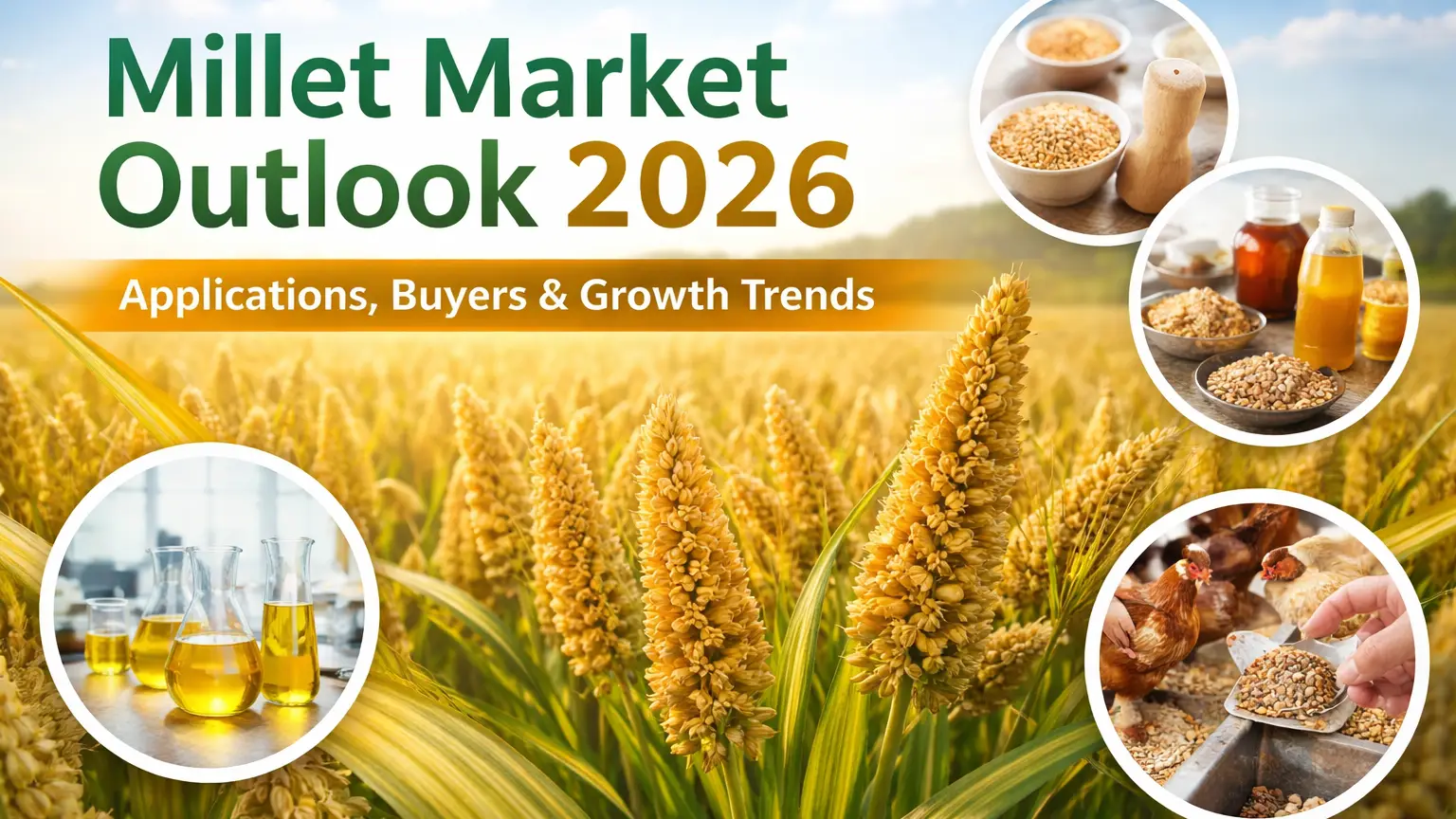
Millet, increasingly positioned as a platform grain for functional food systems, has evolved into a strategic commodity within the global agro-industrial value chain as of 2026. Its versatility across food processing, animal nutrition, and health-driven product innovation has expanded its role beyond traditional staple consumption into a high-value industrial input. With rising demand for gluten-free, low-glycemic, and climate-resilient crops, millet is now central to both B2B procurement strategies and sustainable sourcing frameworks across food manufacturers and feed processors.
Functional Food & Bakery Integration
The strongest momentum in the millet market is observed in functional food manufacturing, particularly bakery and ready-to-eat segments. Millet flour and derivatives are increasingly used in gluten-free bread, biscuits, and snack formulations. This segment alone is contributing significantly to global expansion, with millet market size reaching USD 13.40 billion in 2025 and projected to surpass USD 18.72 billion by 2032 at a CAGR of 4.89% (Food Industry Review). Industrial buyers in this segment include large-scale food processors, institutional catering suppliers, and packaged food brands seeking clean-label ingredients.
Animal Feed and Livestock Nutrition Demand
In the feed industry, millet is gaining traction as a cost-effective energy-rich grain alternative for poultry, cattle, and aquaculture feed formulations. Procurement is largely driven by compound feed manufacturers and integrated livestock companies that prioritize stable grain sourcing amid volatile corn and soybean prices. In 2025, millet traded between approximately USD 918–1,840/MT across major markets, reflecting regional demand and logistics variations (IMARC Group). Buyers in this category value millet’s digestibility and resilience in drought-prone supply regions, making it a strategic feedstock diversification option.
Health Food and Nutraceutical Expansion
A rapidly growing application area is the nutraceutical and health food sector, where millet is used in protein bars, infant nutrition, and dietary supplements. Rising health awareness and lifestyle-related disorders are driving premiumization, with demand concentrated in urban retail and e-commerce channels. Global consumption is estimated at over 30 million tonnes annually, reflecting strong baseline demand for millet-based health products (GlobeNewswire). Buyers include functional food brands, pharmaceutical-adjacent nutraceutical firms, and private-label health product manufacturers.
Institutional Procurement and Government-Led Programs
Government procurement agencies and institutional buyers play a stabilizing role in millet demand, especially in Asia and Africa. Millet is increasingly integrated into food security programs, school meal schemes, and public distribution systems. This institutional layer ensures consistent offtake volumes while supporting farmers through guaranteed procurement pricing mechanisms. It also strengthens long-term supply chain reliability for industrial processors sourcing bulk raw material.
Conclusion
As global food systems pivot toward sustainable agriculture and resilient supply chains, millet’s role as a platform agricultural input continues to strengthen. Its adaptability across food, feed, and health applications positions it as a multi-sector growth driver rather than a niche grain. For industrial buyers seeking stable sourcing, cost efficiency, and ESG-aligned ingredients, millet offers a compelling long-term value proposition.
In this evolving landscape, Tradeasia International stands as a reliable global sourcing and distribution partner, enabling seamless access to agro-commodities like millet across diverse industrial applications. Through integrated supply chain capabilities and international market expertise, it supports manufacturers in securing consistent quality, competitive pricing, and scalable procurement solutions.