
Introduction
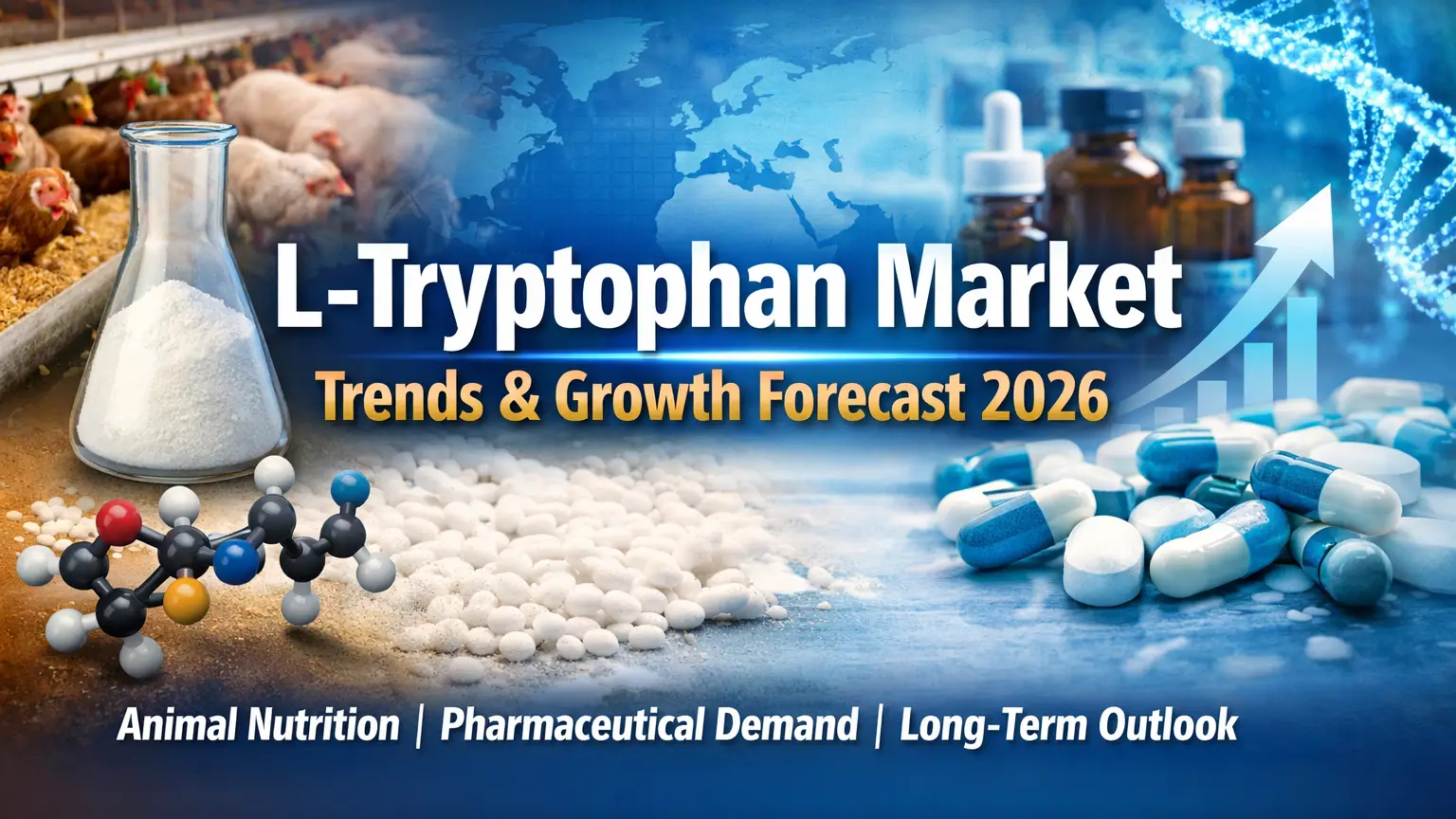
L-tryptophan, an essential amino acid widely recognized as a key biochemical precursor for serotonin and melatonin synthesis, continues to strengthen its position as a critical platform chemical in global industrial value chains. As of 2026, the L-tryptophan market is shaped by expanding demand across animal nutrition, human dietary supplements, and pharmaceutical formulations. The market has matured into a highly specialized segment within the amino acids industry, with global consumption supported by rising health awareness and efficiency-driven livestock production systems. The industry is currently valued with a steady growth trajectory, registering a CAGR of 6.8%, while average pricing remains in the range of USD 10,500–13,800/MT, reflecting tight supply-demand fundamentals.
Market Demand from Animal Nutrition & Feed Industry
The largest share of L-tryptophan consumption is driven by livestock feed applications, particularly in swine and poultry nutrition. Feed formulators increasingly rely on synthetic amino acid balancing to improve feed conversion ratios and reduce crude protein dependency. Global feed-grade demand accounts for nearly 55% of total consumption, supported by production volumes surpassing 45,000 MT annually. Major buyers include integrated feed manufacturers and agribusiness corporations across Asia-Pacific and Europe, where cost optimization remains a strategic priority.
Human Nutrition & Functional Food Applications
In human nutrition, L-tryptophan is widely utilized in dietary supplements targeting sleep regulation, mood enhancement, and cognitive health. Functional food manufacturers are incorporating it into fortified beverages and wellness formulations. This segment is expanding rapidly with consumer-driven demand, particularly in North America and East Asia, where preventive healthcare trends are accelerating adoption.
Pharmaceutical & Therapeutic Buyers Landscape
Pharmaceutical companies represent a high-value but smaller volume segment, utilizing L-tryptophan in antidepressant and neurological disorder therapies. Regulatory-grade purity requirements significantly elevate pricing in this segment, often exceeding USD 13,000/MT. Key buyers include contract manufacturing organizations (CMOs) and branded drug developers focusing on central nervous system therapeutics.
Production Dynamics and Global Supply Chain Economics
Production is highly concentrated among a limited number of biochemical manufacturers in China and the United States, creating supply-side sensitivity. Fermentation-based production dominates, with ongoing investments in strain optimization and yield efficiency. Supply chain volatility, energy costs, and fermentation feedstock pricing continue to influence global trade flows, while logistics disruptions have periodically tightened availability in import-dependent regions.
Conclusion
As L-tryptophan continues to evolve as a strategic amino acid platform chemical, its role across feed, food, and pharmaceutical industries is expected to deepen further into 2026 and beyond. Market participants are increasingly prioritizing supply security, quality consistency, and cost-efficient sourcing strategies to remain competitive in a tightening global environment. In this context, Tradeasia International stands as a reliable global chemical distributor, offering integrated sourcing solutions and consistent supply chain support for industrial buyers seeking stable access to high-quality L-tryptophan across key markets.
Sources