Introduction
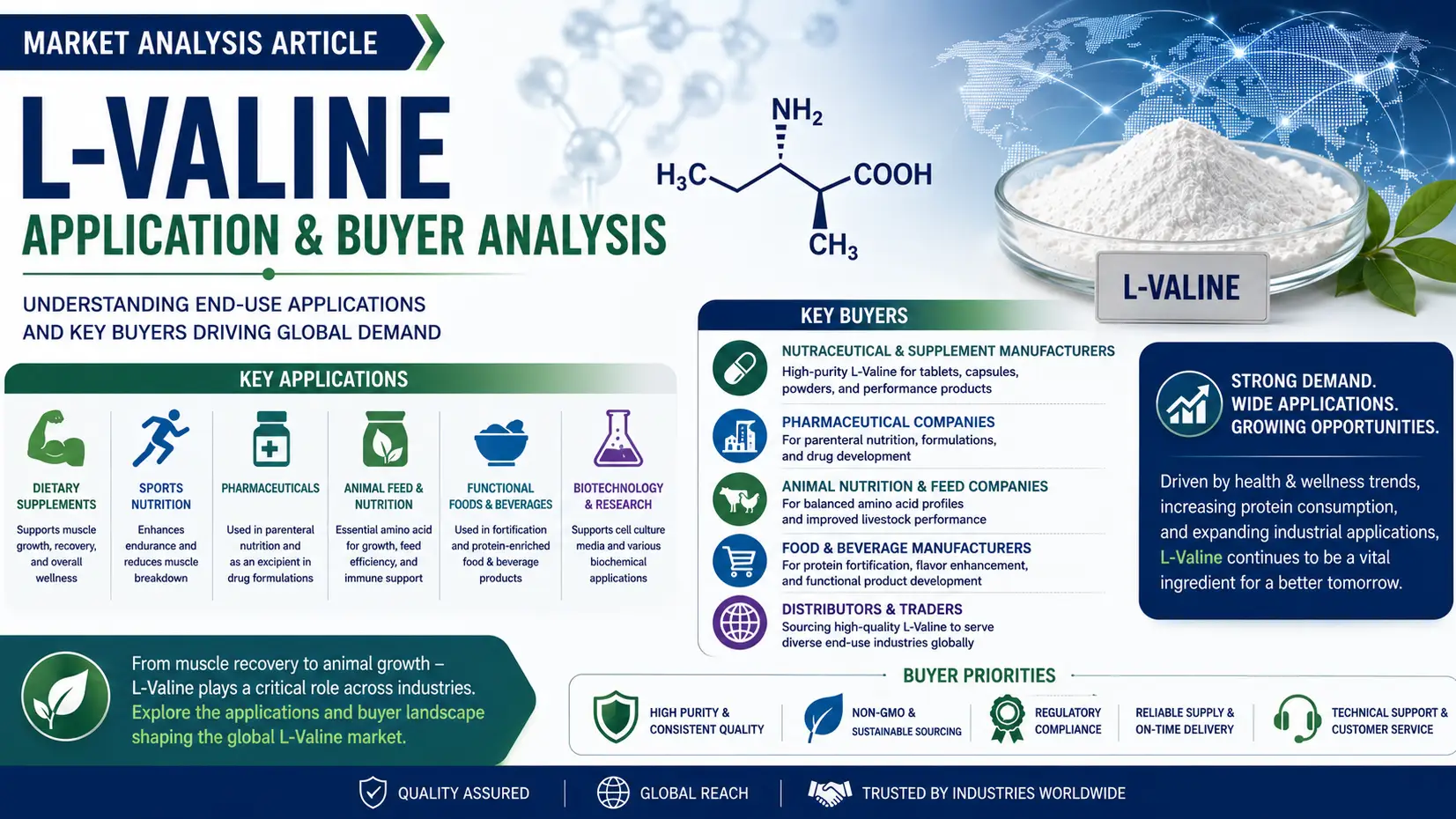
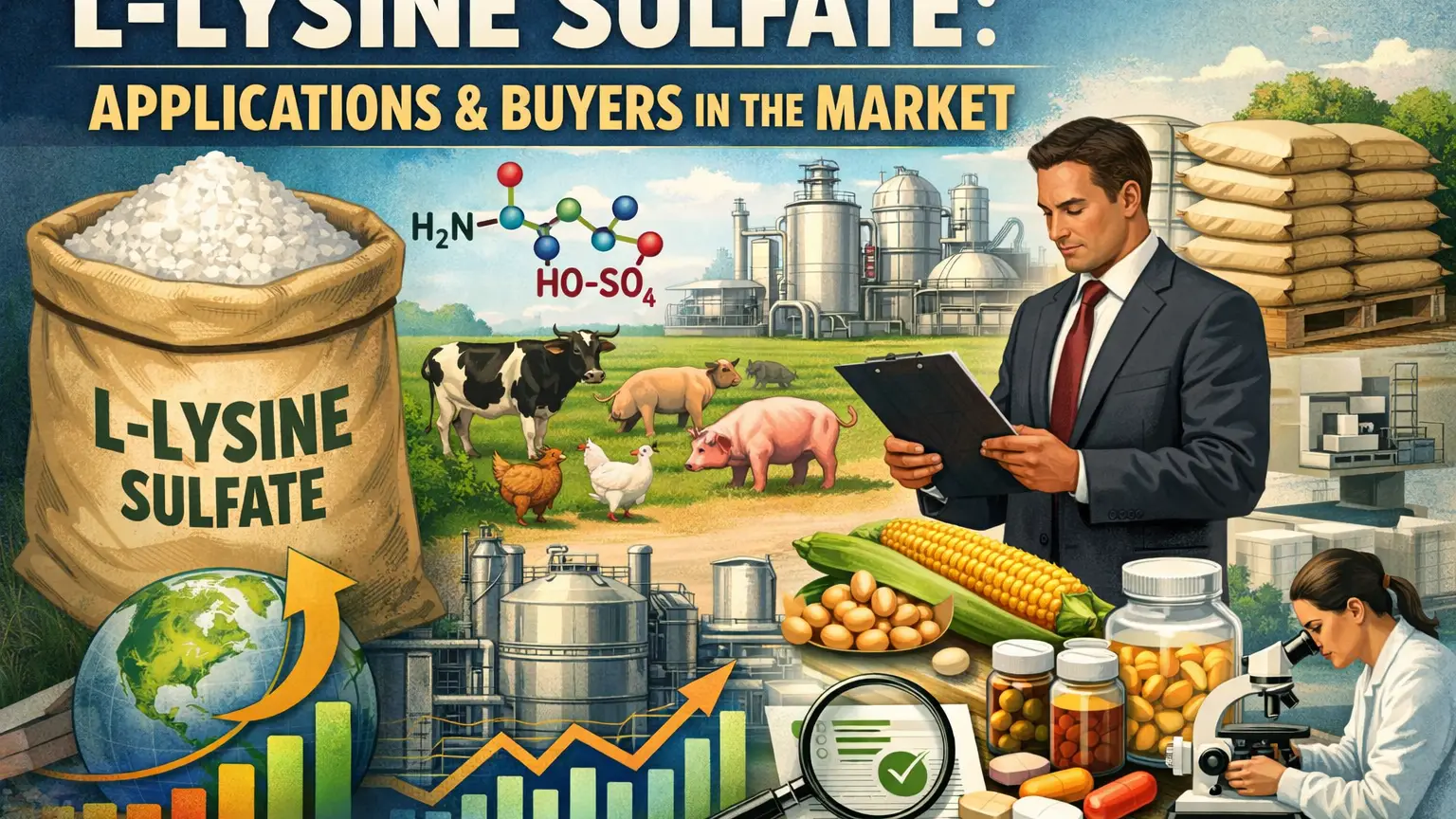
L-Lysine Sulfate has increasingly positioned itself as a platform amino acid chemical within the global feed and nutrition value chain, serving as a cost-efficient protein enhancer across livestock, aquaculture, and emerging nutritional systems. As of 2026, its relevance is shaped by tightening feed efficiency requirements, protein demand inflation, and shifting procurement strategies among industrial buyers. The market continues to expand steadily at a projected CAGR of ~3.6–5.2%, reflecting its mature yet structurally essential role in global animal nutrition ecosystems. (360 Research Reports)
Animal Feed Industrialization and Core Buyer Dominance
The most dominant demand center for L-Lysine Sulfate remains the animal feed sector, which accounts for roughly 70–72% of global consumption, led by poultry and swine integrators. Large-scale feed producers in Asia-Pacific and Latin America are the primary buyers, driven by feed conversion optimization and reduced dependence on soybean meal protein. Market pricing in 2026 remains broadly range-bound at USD 900–1,200/MT, depending on fermentation efficiency and regional supply conditions. Production is highly concentrated, with global lysine output exceeding 4.5 million MT annually, reinforcing strong supplier bargaining power and long-term contract procurement models. (360 Research Reports)
Aquaculture Expansion and High-Performance Feed Formulation
Aquaculture has emerged as a strategic growth vertical, particularly in Vietnam, Indonesia, and Brazil, where feed manufacturers increasingly integrate lysine sulfate to improve amino acid balance in shrimp and fish diets. This segment is expanding faster than traditional livestock, supported by a ~6% aquafeed CAGR trajectory and increasing substitution of fishmeal with synthetic amino acids. Buyers in this category are typically export-oriented seafood corporations that prioritize stable protein efficiency ratios and predictable input pricing. The willingness to pay premium for consistent quality has pushed specialty-grade lysine sulfate closer to the USD 1,100–1,250/MT range in high-regulation markets.
Fermentation Efficiency and Cost-Driven Supply Chain Optimization
On the supply side, industrial fermentation remains the backbone production route, primarily utilizing Corynebacterium glutamicum. Technological improvements have reduced production costs by 15–20% over the last decade, strengthening lysine sulfate’s competitiveness against lysine hydrochloride. Major producers in China and Southeast Asia now operate integrated fermentation complexes capable of multi-million-ton output capacity, ensuring supply stability for global feed manufacturers. Buyers increasingly evaluate suppliers not only on price but also on traceability, contract reliability, and feedstock sustainability metrics.
Regional Trade Expansion and Buyer Consolidation Trends
Asia-Pacific continues to dominate both consumption and production, accounting for nearly 40%+ of global lysine demand, while Europe and North America maintain stable but lower-growth import dependence. A notable structural shift is the consolidation of procurement among multinational feed integrators, which now control over 55% of global purchasing volume through centralized sourcing contracts. This has increased pricing transparency but also intensified competition among exporters, especially during corn and sugar feedstock volatility cycles.
Strategic Outlook and Market Positioning
Looking forward, L-Lysine Sulfate is expected to retain its role as a foundational platform ingredient in protein optimization systems, with demand growth anchored in global meat consumption and feed efficiency imperatives. While alternative protein technologies may gradually reshape feed formulation strategies, lysine sulfate’s cost-performance advantage ensures continued relevance across industrial-scale nutrition systems.
Conclusion
For global buyers navigating this evolving landscape, Tradeasia International offers integrated sourcing solutions across amino acids and feed additives, enabling procurement stability, competitive pricing access, and streamlined supply chain coordination across major production hubs.