Introduction
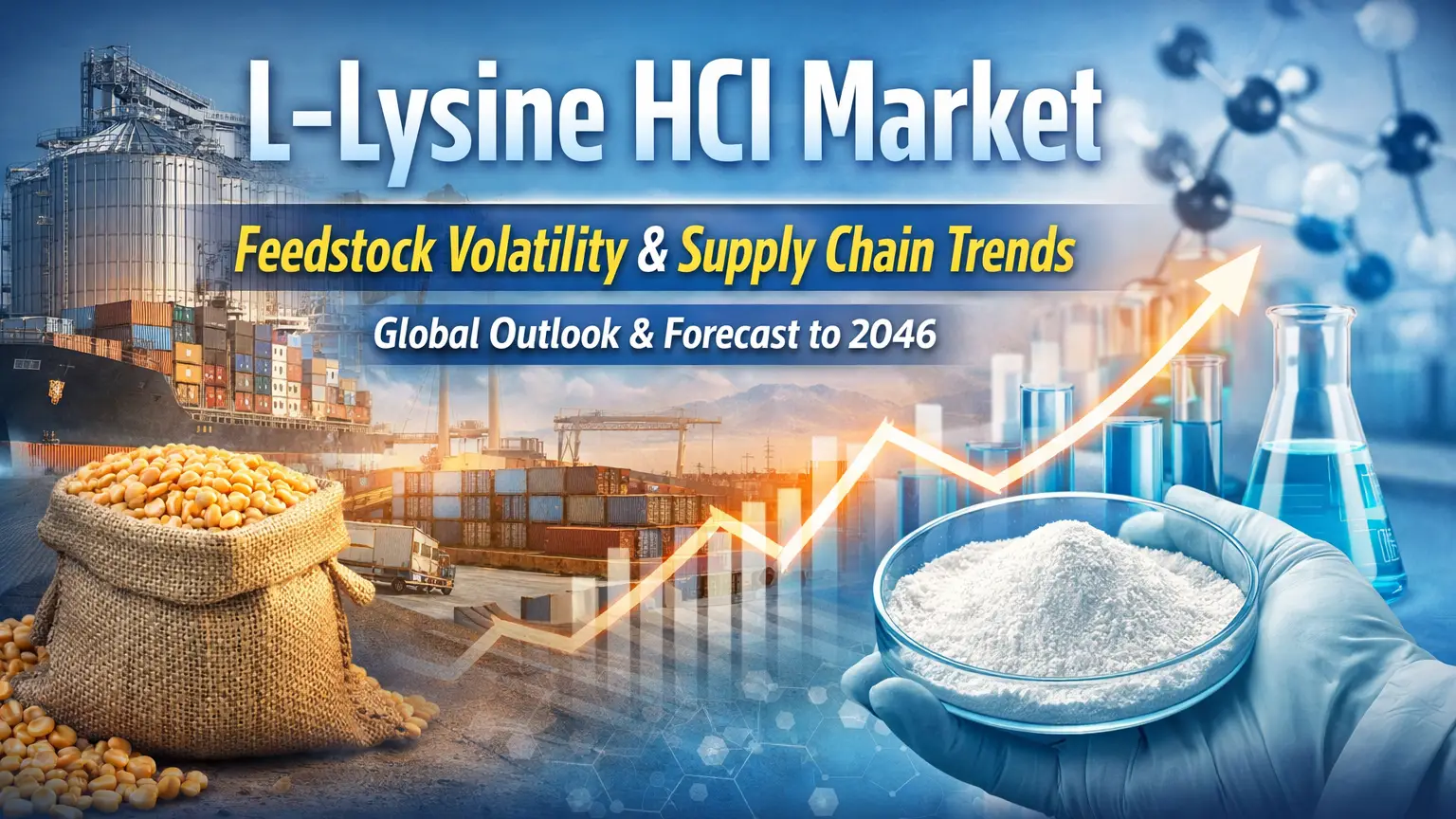
L-lysine HCl, a key amino acid and platform chemical in modern feed formulation, remains central to global livestock productivity in 2026. Rising demand for efficient protein conversion continues to reshape its supply chain, driven by bio-fermentation scale-up and regional trade realignment. The market is projected to expand at a CAGR of 5.8%, supported by robust poultry and swine consumption. Global production is estimated at over 3.2 million MT, with average pricing stabilizing between USD 1,350–1,750/MT across major trading hubs. As industrial agriculture intensifies, L-lysine HCl continues to anchor cost-efficient feed strategies worldwide.
Supply Chain Bio-Fermentation Capacity Expansion
L-lysine HCl supply is dominated by bio-fermentation clusters, with China contributing around 65% of global output. Corn glucose-based fermentation and enzyme efficiency gains have reduced production costs by 12% since 2023. New capacity additions exceeding 400,000 MT annually in Northern China have strengthened export competitiveness, while increasing reliance on large-scale integrated producers continues to reshape global sourcing strategies and supply security across import-dependent regions.
Trade Flows and Regional Demand Shifts
Global trade flows are increasingly driven by protein demand in Asia and Latin America. Vietnam and Brazil imports have grown at 9–11% CAGR, while EU demand remains stable under strict feed efficiency regulations. Export volumes surpassed 2.1 million MT in 2026, reflecting stronger interregional dependency and tighter alignment between Asian producers and global feed manufacturers seeking consistent amino acid supply for optimized livestock output.
Pricing Volatility and Cost Structure Pressures
L-lysine HCl pricing remains volatile, ranging from USD 1,350–1,750/MT, influenced by corn feedstock fluctuations and energy costs. Freight normalization reduced logistics premiums by 18%, yet raw material inputs still represent nearly 60% of total production cost. Producers are increasingly hedging grain procurement and optimizing fermentation efficiency to stabilize margins in a highly competitive and cost-sensitive global amino acid market.
Downstream Feed Industry Integration and Demand Drivers
Demand growth is anchored in poultry and swine feed, with lysine inclusion rates rising 3–5% annually. Aquaculture expansion in Southeast Asia adds over 120,000 MT of incremental demand each year. Feed manufacturers are securing long-term supply contracts to mitigate volatility, reinforcing vertical integration across the protein value chain and strengthening resilience against supply disruptions.
Conclusion
L-lysine HCl continues to function as a critical platform chemical in optimizing global feed efficiency and protein conversion systems. As supply chains mature, strategic sourcing and risk management are becoming essential. In this evolving landscape, Tradeasia International stands as a reliable global solution provider, offering integrated chemical distribution and supply chain support to ensure consistent availability and market stability for industrial buyers worldwide.
Sources
https://www.grandviewresearch.com/industry-analysis/lysine-market
https://www.marketsandmarkets.com/Market-Reports/lysine-market-101.html
https://www.fao.org/home/en/