
Share this product :
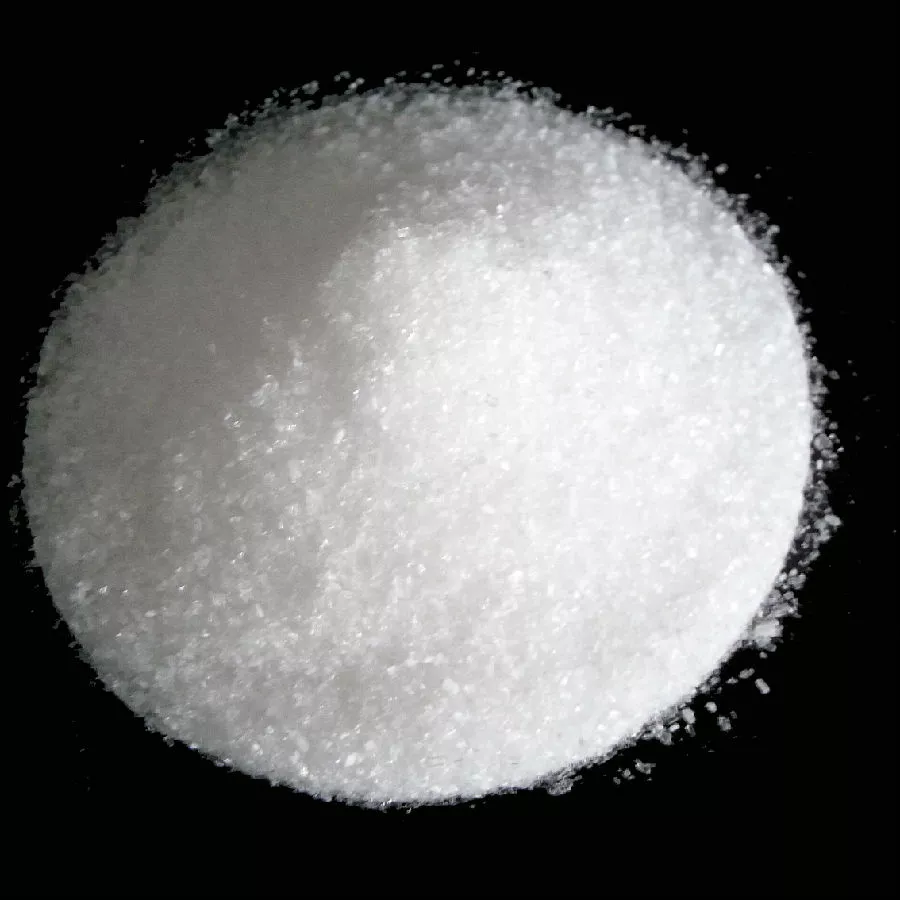
Magnesium Sulfate (Feed Grade)
- Origin
- : China
- CAS Number
- : 10034-99-8
- HS Code
- : 28332100
Basic Info
- Physical State
- : Solid
- Appearance / Color
- : White crystalline powder
- Odor
- : Odorless
- Taste
- : Bitter
- Moisture Content (%)
- : <0.5%
- pH
- : 5.0-8.0 (5% solution)
- Synonyms & Trade Names
- : Epsom salt; Magnesium sulphate; Bitter salt
- Total Plate Count (TPC)
- : Not applicable
- Yeast & Mould
- : Not applicable
- E. Coli
- : Not applicable
- Coliform Bacteria
- : Not applicable
- Salmonella
- : Not applicable
- Shelf Life
- : 24 months
- Packaging Size
- : 25 kg
- Packaging Type
- : PP woven bag
- Storage Conditions
- : Cool, dry place; protect from moisture
- Halal Certification
- : Available on request
- Kosher Certification
- : Available on request
- ISO / HACCP
- : Yes
- Food Grade / Regulatory Status
- : Food/Feed grade
- Bulk Density
- : ~0.85 g/cm³
- Active Ingredient Assay (%)
- : 99% min MgSO4
- Antioxidant Treatment
- : None or as specified
- Species of Origin Declaration
- : N/A (mineral)
- EU Feed Additive Authorization No.
- : E518
- Aflatoxin B1
- : Not applicable
- Heavy Metals — Feed (As, Pb, Hg, Cd)
- : Compliant
- Dioxins & PCBs (pg WHO-TEQ/g fat)
- : Not applicable
Categories
Share this product :
Brief overview
Magnesium sulfate, commercially known as Epsom Salt is white crystalline salt that commonly used to treat malignant hypothermia in swine and hypomagnesemia in dairy cattle. It is consumed with specific dosage to prevent and treat magnesium deficiency. Magnesium sulfate can be added to cattle feed to prevent lactation tetany or grass tetany that might lead to respiratory failure or death.
Manufacturing Process
Manufacturing process of a magnesium sulphate product is obtainable by carrying out these methods.
1. Providing a sulphuric acid product that has been obtained as a by-product during the sulphate process for manufacturing titanium dioxide;
2. Concentrating the sulphuric acid product to obtain a concentrated product that has a higher sulphuric acid concentration;
3. Combining a magnesium-based neutralising agent with the concentrated product and allowing the magnesium-based neutralising agent and the sulphuric acid to react, to generate magnesium sulphate in solution; and
4. Crystallising magnesium sulphate out of the solution, to obtain a crystalline magnesium sulphate product together with a remaining liquor.