
Share this product
Linseed Meal
- Origin
- Australia
- CAS Number
- 8001-26-1
- HS Code
- 120400
Basic Info
- Physical State
- Solid
- Appearance / Color
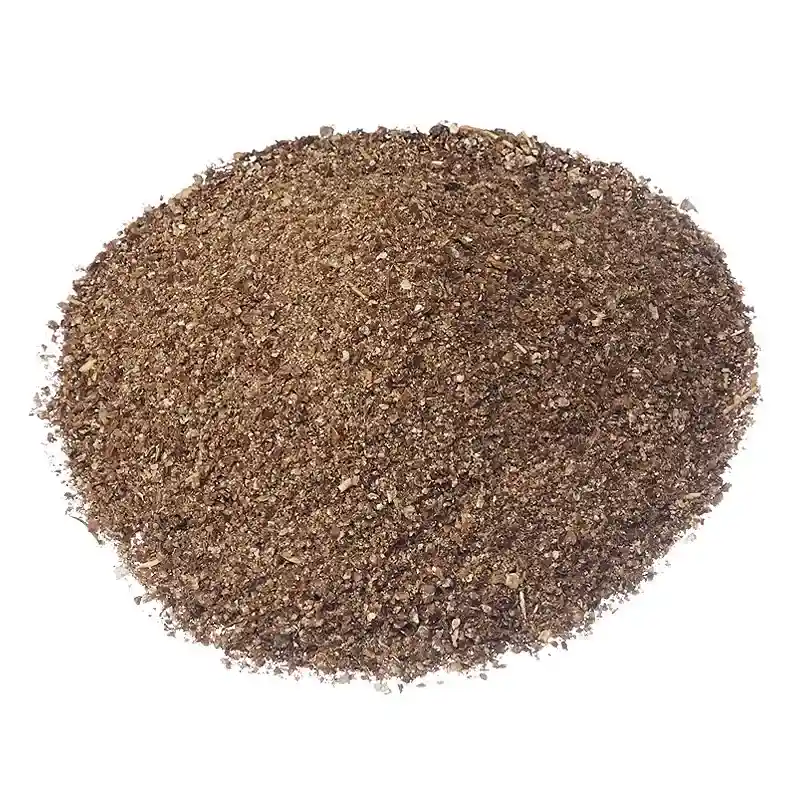
- Brown powder or pellets
- Odor
- Characteristic linseed
- Moisture Content (%)
- <12%
- Synonyms & Trade Names
- Flaxseed meal; Linseed expeller; Flaxseed cake
- Total Plate Count (TPC)
- <500,000 CFU/g
- Yeast & Mould
- <50,000 CFU/g
- E. Coli
- <100 CFU/g
- Coliform Bacteria
- <1,000 CFU/g
- Salmonella
- Negative/25g
- Shelf Life
- 6 months
- Packaging Size
- 50 kg / bulk
- Packaging Type
- PP woven bag / bulk
- Storage Conditions
- Cool, dry place; avoid moisture
- Halal Certification
- Available on request
- Kosher Certification
- Available on request
- ISO / HACCP
- Yes
- Food Grade / Regulatory Status
- Feed grade
- Crude Protein (%, min)
- 32-36%
- Crude Fat / Ether Extract (%, max)
- 1.5-9%
- Crude Fiber (%, max)
- 9% max
- Ash Content — Feed (%, max)
- 7.5% max
- Calcium Content, Ca (%)
- 0.4%
- Phosphorus Content, P (%)
- 0.8%
- Bulk Density
- ~0.50 g/cm³
- Lysine Content (%, min)
- 1.2%
- Antioxidant Treatment
- None or as specified
- Species of Origin Declaration
- Linum usitatissimum (Flax)
- Aflatoxin B1
- <5 ppb
- Heavy Metals — Feed (As, Pb, Hg, Cd)
- Compliant
- Dioxins & PCBs (pg WHO-TEQ/g fat)
- Compliant
Categories
Technical Document
Brief Overview
Linseed meal (or flaxseed meal) is a by-product of linseed oil production. Linseed meal is a rich source of protein and energy feed material for swine, horses and cattle. It is rich in oil and contains high polyunsaturated fatty acids (PUFA) which is good to improve the quality of beef, the fatty acid profile of meat, and milk obtained from livestock.
Manufacturing Process
Manufacturing process of Linseed meal initially started by roughly crushed the Linseed to remove the seed coat. The flax-seed meal is pressed in a roller mill with a pair of rollers until the main part of the oil is pressed out. The flaxseed cake is finely grounded and treated with an extract for the remaining fats and oils. The extract then separated from the fat and oil.