
Share this product
L-Tryptophan
- Origin
- China
- CAS Number
- 73-22-3
- HS Code
- 29224990
Basic Info
- Physical State
- Solid
- Appearance / Color
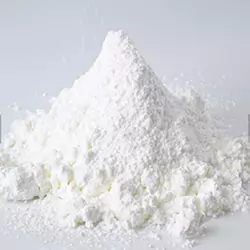
- White to off-white crystalline powder
- Odor
- Characteristic
- Taste
- Slightly bitter
- Moisture Content (%)
- <0.5%
- pH
- 5.5-7.0 (1% solution)
- Synonyms & Trade Names
- L-Tryptophan; Tryptophan; (S)-2-amino-3-(1H-indol-3-yl)propanoic acid
- Total Plate Count (TPC)
- <50,000 CFU/g
- Yeast & Mould
- <500 CFU/g
- E. Coli
- Negative/25g
- Coliform Bacteria
- <100 CFU/g
- Salmonella
- Negative/25g
- Shelf Life
- 24 months
- Packaging Size
- 25 kg
- Packaging Type
- PP woven bag / fiber drum
- Storage Conditions
- Cool, dry, dark place
- Halal Certification
- Available
- Kosher Certification
- Available
- ISO / HACCP
- Yes
- Food Grade / Regulatory Status
- Feed/Food grade
- Crude Protein (%, min)
- ~82%
- Total Volatile Basic Nitrogen (TVN/TVBN, mg/100g)
- Not applicable
- Bulk Density
- ~0.50 g/cm³
- Active Ingredient Assay (%)
- 98.5% min
- Antioxidant Treatment
- None
- Species of Origin Declaration
- N/A (fermentation)
- EU Feed Additive Authorization No.
- E1590
- Aflatoxin B1
- Not applicable
- Heavy Metals — Feed (As, Pb, Hg, Cd)
- Compliant
- Dioxins & PCBs (pg WHO-TEQ/g fat)
- Not applicable
Categories
Technical Document
Brief Overview:
L-Tryptophan is an essential amino acid which important for growth and stress reducer. It also helps developing animal organs and optimalizing immune system. L-Tryptophan is commonly sythesized in the plants and microorganisms.
Manufacturing Process
L-tryptophan is produced by incubating a microbe capable of producing L-tryptophan and capable of constitutive expression of maleate synthase·isocitrate lyase·isocitrate dehydrogenase kinase/phosphatase operon in a culture medium so as to generate and accumulate L-tryptophan in the culture medium and harvesting the L-tryptophan. In commercial industry, Tryptophan is produced by biological synthetic based on fermentation process of serine and indole using either wild-type or genetically modified from bacteria such as B. amyloliquefaciens, B. subtilis, C. glutamicum or E. coli.