
Share this product
Canola Meal
- Origin
- China
- CAS Number
- 121957-95-7
- HS Code
- 230641
Basic Info
- Physical State
- Solid
- Appearance / Color
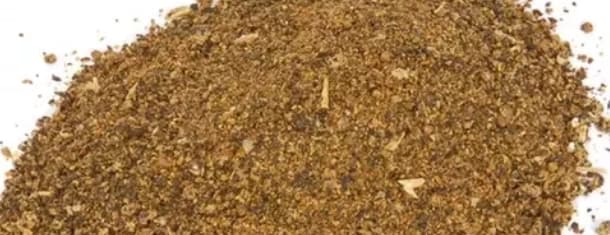
- Light grey-brown powder / pellets
- Odor
- Characteristic mustard
- Moisture Content (%)
- <12%
- Synonyms & Trade Names
- Rapeseed meal (00); Canola expeller; RSM
- Total Plate Count (TPC)
- <500,000 CFU/g
- Yeast & Mould
- <50,000 CFU/g
- E. Coli
- <100 CFU/g
- Coliform Bacteria
- <1,000 CFU/g
- Salmonella
- Negative/25g
- Shelf Life
- 6 months
- Packaging Size
- 50 kg / bulk
- Packaging Type
- PP woven bag / bulk
- Storage Conditions
- Cool, dry; pest-free
- Halal Certification
- Available on request
- Kosher Certification
- Available on request
- ISO / HACCP
- Yes
- Food Grade / Regulatory Status
- Feed grade
- Crude Protein (%, min)
- 36% min
- Crude Fat / Ether Extract (%, max)
- 2.5% max
- Crude Fiber (%, max)
- 12% max
- Ash Content — Feed (%, max)
- 7.0% max
- Calcium Content, Ca (%)
- 0.65%
- Phosphorus Content, P (%)
- 1.0%
- Bulk Density
- ~0.55 g/cm³
- Lysine Content (%, min)
- 2.1%
- Antioxidant Treatment
- None or as specified
- Species of Origin Declaration
- Brassica napus (Canola/Rapeseed)
- Aflatoxin B1
- <5 ppb
- Heavy Metals — Feed (As, Pb, Hg, Cd)
- Compliant
- Dioxins & PCBs (pg WHO-TEQ/g fat)
- Compliant
Categories
Technical Document
Brief Overview
Canola meal—also known as rapeseed meal, is by-product of extraction process of oil from canola (Brassica sp.). It is widely used to feed all class of livestock considering its generous amount of protein content. Rapeseed or canola oil massive production causes high supply of rapeseed meal, therefore it is developing into valuable ingredient for animal feed. Canola meal has high levels of methionine and cysteine, its amino acid profile is well suited for animal feeding. It is palatable to feed ruminants, swine, poultry, and aquaculture.
Manufacturing Process
Most of the manufacturing process of canola meal started with prepress solvent extraction, by separating the oil from the meal. The prepress solvent extraction generally includes seed cleaning, seed preconditioning and flaking, seed cooking, pressing the flake to mechanically remove a portion of the oil, solvent extraction of the press-cake to remove the remainder of the oil, desolventizing and toasting of the meal, drying and cooling of the meal.