
Introduction
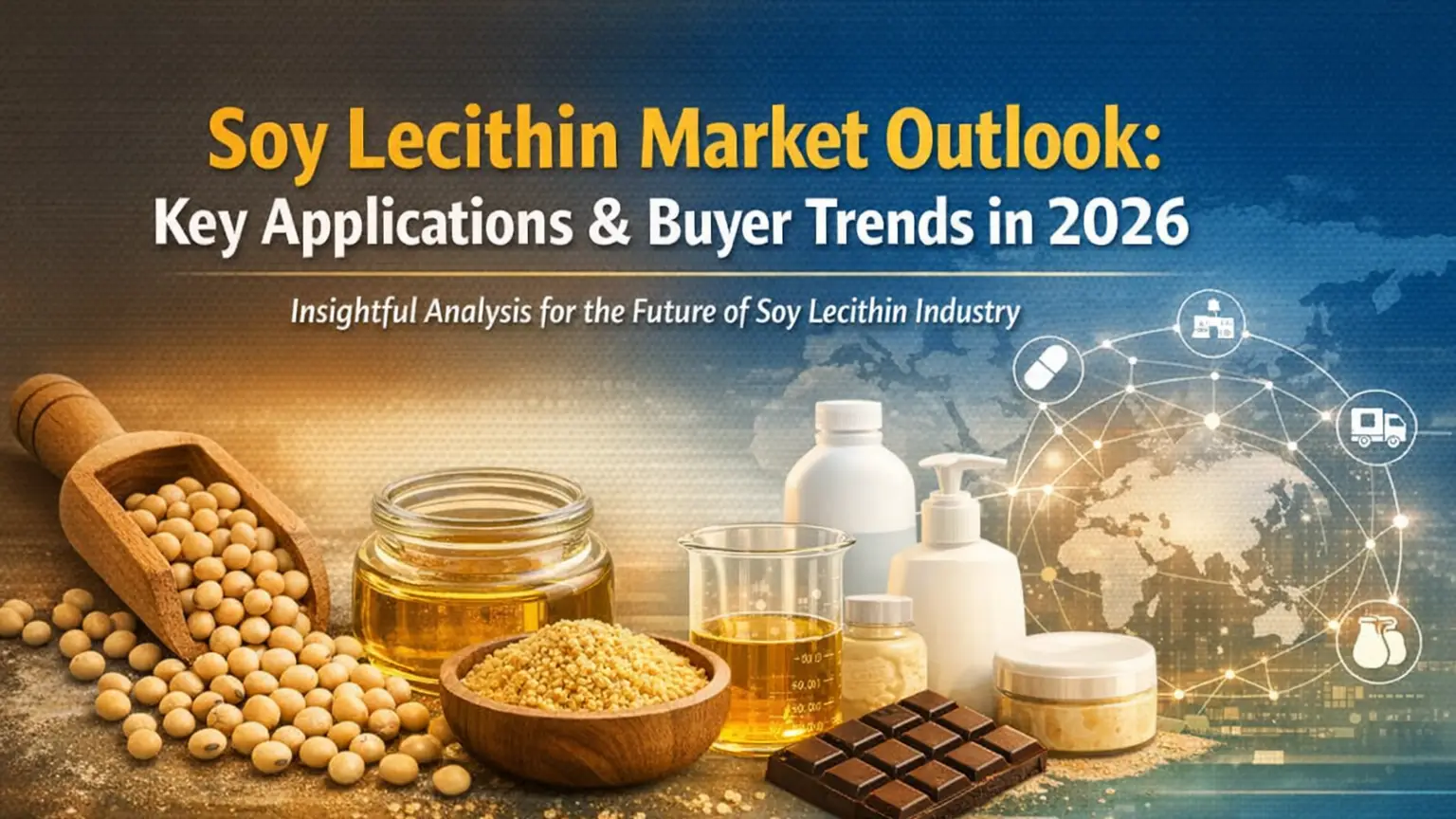
Soy lecithin has evolved into a critical platform chemical within the global agro-processing and specialty ingredients sector. Derived as a by-product of soybean oil refining, it bridges commodity agriculture with high-value applications across food, feed, and industrial formulations. As of 2026, the global soy lecithin market is expanding at a steady CAGR of 6.2%, supported by rising demand for emulsifiers and clean-label ingredients. Production volumes have reached approximately 1.45 million metric tons, while average prices range between USD 1,100–1,450/MT, depending on grade and origin. Its versatility continues to reshape buyer dynamics across multiple downstream industries.
Food Processing Dominance and Functional Demand
The food industry remains the largest consumer of soy lecithin, accounting for over 55% of total demand. Major buyers include confectionery, bakery, and processed food manufacturers that rely on lecithin for emulsification, texture enhancement, and shelf-life stability. The shift toward non-GMO and allergen-conscious formulations has driven premium-grade lecithin prices to around USD 1,400/MT. In emerging markets, demand is further propelled by the growth of packaged foods, positioning soy lecithin as an indispensable ingredient in large-scale food manufacturing.
Feed Industry Expansion and Cost Efficiency Drivers
Animal nutrition represents a rapidly growing segment, particularly in Asia-Pacific and Latin America. Feed producers utilize soy lecithin as an energy-rich additive that improves fat digestion and feed conversion ratios. With global livestock production intensifying, feed-grade lecithin consumption is increasing at a CAGR of 5.8%. Prices in this segment remain relatively lower, averaging USD 1,100–1,250/MT, making it attractive for cost-sensitive buyers. Poultry and aquaculture industries are especially prominent buyers, leveraging lecithin to enhance productivity and reduce feed wastage.
Pharmaceutical and Nutraceutical Uptake
In the pharmaceutical and nutraceutical sectors, soy lecithin is valued for its phospholipid content and role in drug delivery systems. Buyers include supplement manufacturers and pharmaceutical formulators seeking natural carriers and stabilizers. This segment, though smaller in volume, commands higher margins due to stringent quality requirements. Refined and fractionated lecithin products can reach prices above USD 1,500/MT, reflecting their specialized applications in capsules, functional foods, and cognitive health supplements.
Industrial and Technical Applications Growth
Industrial buyers are increasingly incorporating soy lecithin into paints, coatings, and release agents. Its biodegradability and non-toxic profile align with sustainability mandates across manufacturing sectors. Demand from technical industries is growing at approximately 5.5% CAGR, supported by regulatory pressure to replace synthetic additives. Europe and North America lead this shift, where eco-friendly formulations are becoming standard practice in industrial procurement.
Conclusion
As a platform chemical, soy lecithin continues to demonstrate exceptional adaptability across diverse applications, linking agricultural supply chains with high-value industrial outputs. Its balanced growth across food, feed, pharmaceutical, and industrial sectors underscores a resilient buyer ecosystem in 2026.
For companies navigating this evolving landscape, partnering with a reliable global supplier can streamline sourcing and ensure consistent quality. Tradeasia International positions itself as a strategic solution provider, offering integrated supply capabilities and market expertise to meet the diverse needs of soy lecithin buyers worldwide.