Prebiotic fiber is moving from a niche digestive-health ingredient into a broader procurement opportunity across supplements, functional foods and beverages.
The shift is being driven by several converging trends: growing consumer interest in gut health, demand for higher-fiber diets, functional-food innovation and manufacturers looking for ingredients that can deliver more than one nutritional or formulation benefit.
For ingredient buyers, this creates a new category of demand. Instead of purchasing fiber simply to increase the fiber number on a nutrition panel, manufacturers increasingly want supplement-grade fibers with documented functionality, predictable processing performance and a credible health-positioning story.
Inulin, fructooligosaccharides (FOS), galactooligosaccharides (GOS), resistant dextrin, polydextrose and other soluble fibers are therefore becoming strategically relevant ingredients for suppliers serving the functional nutrition market.
Why Prebiotic Fiber Demand Is Expanding
The broader functional-food market is continuing to expand, with current estimates placing global functional-food value at approximately $423 billion in 2026. Fortified foods represent a significant portion of the market, while dairy remains one of the largest application areas.
At the same time, the ingredient industry is responding to what suppliers describe as a growing “fiber gap.” Functional-ingredient companies are increasingly developing products around digestive health, fiber fortification and targeted nutrition.
This creates an attractive commercial environment for prebiotic fibers.
The opportunity is not limited to dedicated fiber supplements. Manufacturers can incorporate prebiotic ingredients into:
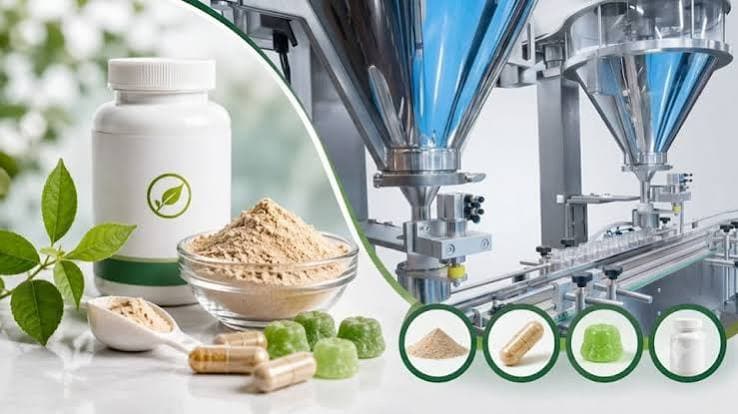
Capsules and powders
Gummies
Protein powders
Functional beverages
Yogurts and dairy products
Plant-based drinks
Nutrition bars
Cereals
Bakery products
Meal-replacement products
Sports-nutrition products
The result is a larger addressable market for supplement-grade fiber ingredients.
Prebiotic Fiber Is Not the Same as Generic Dietary Fiber
One of the most important procurement distinctions is between fiber content and prebiotic functionality.
Dietary fiber is a broad category of nondigestible carbohydrates and related substances. Prebiotics are more specifically associated with substrates that are selectively utilized by host microorganisms and provide a health benefit.
That distinction matters because a product can be high in fiber without necessarily being marketed as a prebiotic.
For buyers, supplier documentation should therefore distinguish:
Fiber quantity → Digestibility/resistance → Fermentation behavior → Microbiome interaction → Demonstrated physiological benefit
This is particularly important when brands want to make digestive-health or microbiome-related claims.
Inulin and FOS Remain Core Commercial Categories
Inulin and FOS are among the most established commercial prebiotic ingredients.
FDA documentation identifies inulin, FOS and GOS among the widely used nondigestible carbohydrates associated with prebiotic applications. FOS passes largely undigested to the colon, where it can be fermented by intestinal microorganisms.
Commercial FOS and inulin ingredients are already used across products including dairy, confectionery, spreads, baked goods, breakfast cereals and other foods.
This gives buyers an important advantage: these are not purely experimental ingredients.
They have established supply chains, formulation experience and application histories.
Ranking the Major Prebiotic Fiber Opportunities
1. Inulin — Strongest Established Platform
Inulin is one of the most commercially mature prebiotic fiber categories.
Its value extends beyond prebiotic positioning. Depending on grade and formulation, inulin can also contribute body, texture and solids, allowing it to participate in sugar- or fat-reduction strategies.
This multifunctionality makes inulin particularly attractive to food manufacturers.
From a procurement perspective, buyers should compare suppliers based on:
Degree of polymerization
Solubility
Taste
Texture
Fiber concentration
Source
Batch consistency
Application performance
The ability to perform multiple formulation functions increases its strategic value beyond simple fiber fortification.
2. FOS — High-Potential Supplement Ingredient
FOS has a strong association with prebiotic formulations and digestive-health products.
Its established commercial use and relatively straightforward incorporation into powders, supplements and functional foods make it an important category for supplement-grade sourcing.
FDA materials describe FOS as a nondigestible carbohydrate that reaches the colon and undergoes fermentation by intestinal microbiota.
However, formulators must consider dosage, sweetness, gastrointestinal tolerance and product format.
3. GOS — Premium Prebiotic Positioning
Galactooligosaccharides are another important prebiotic category.
GOS is particularly relevant where manufacturers want to build differentiated microbiome-focused products rather than simply increase total fiber.
Because GOS is included among nondigestible carbohydrates that FDA has identified in its dietary-fiber guidance framework, regulatory documentation remains an important part of supplier qualification.
4. Resistant Dextrin / Resistant Maltodextrin — Versatile Functional Fiber
Resistant dextrin and resistant maltodextrin are attractive because they can fit into a wider range of functional-food formulations.
FDA's guidance identifies resistant maltodextrin/dextrin among isolated or synthetic nondigestible carbohydrates for which the agency has stated an intent to exercise enforcement discretion regarding dietary-fiber declaration.
For manufacturers, the commercial appeal comes from combining fiber fortification with relatively flexible formulation characteristics.
5. Polydextrose — Multifunctional Formulation Opportunity
Polydextrose is another established soluble fiber used in food and nutrition applications.
Current market estimates place the global polydextrose market at approximately $255 million in 2026, with fiber fortification and sugar-bulk replacement identified as continuing demand drivers.
Its importance therefore extends beyond the “prebiotic” label.
It can serve as a functional formulation component while helping manufacturers develop higher-fiber, reduced-sugar products.
The Emerging Category: Soluble Corn Fiber
Soluble corn fiber is gaining attention as manufacturers seek fibers that can be incorporated into beverages, supplements and processed foods.
Current market research describes soluble corn fiber as an ingredient used across food and beverages, supplements, pharmaceuticals and animal nutrition, with functional beverages identified as an important growth area.
For procurement teams, soluble corn fiber is particularly interesting because it can occupy multiple roles:
Fiber fortification + formulation functionality + reduced-sugar architecture
However, buyers should carefully distinguish market-size estimates by methodology. Current published estimates vary dramatically depending on whether reports measure soluble corn fiber alone, prebiotic applications specifically or broader dietary-fiber categories.
The strategic signal is therefore stronger than any single market-value figure: soluble fiber is becoming an increasingly important formulation platform.
The Fiber-Maxxing Trend Is Expanding the Addressable Market
Consumer interest in increasing daily fiber intake is creating opportunities beyond traditional digestive-health supplements.
Industry discussions around “fibermaxxing” show manufacturers looking for ways to incorporate more fiber into everyday products without compromising taste or texture.
That changes the procurement opportunity.
The buyer is no longer necessarily:
“A supplement company buying a prebiotic.”
It can also be:
“A beverage, dairy, bakery or snack company looking for a functional fiber system.”
This dramatically expands the potential customer base for specialty fiber suppliers.
Why Supplement-Grade Specifications Matter
Not all fibers are interchangeable.
A supplement manufacturer typically requires much tighter specifications than a commodity food application.
Important parameters can include:
Fiber purity
Moisture
Ash
Particle size
Solubility
Bulk density
Microbiological limits
Heavy-metal specifications
Allergen status
Residual solvents where applicable
Stability
Country of origin
Traceability
Certification status
For premium supplement applications, buyers may also request:
Organic certification
Non-GMO documentation
Vegan suitability
Gluten-free documentation
Halal certification
Kosher certification
HACCP/GMP systems
Certificate of analysis for each batch
The supplier's documentation capability can therefore become almost as important as the fiber itself.
Digestive Tolerance Is a Major Commercial Constraint
Prebiotic fibers can create a formulation paradox.
The higher the fiber inclusion, the stronger the potential nutritional positioning—but excessive fermentation or poorly tolerated doses can create gastrointestinal discomfort for some consumers.
This means manufacturers cannot simply maximize prebiotic-fiber concentration.
The commercial objective is:
Maximum useful dose + acceptable tolerance + good sensory performance
This is especially important for powders, gummies and functional beverages where consumers may take the product daily.
Suppliers that provide application-specific dosage guidance and tolerance data can therefore create more value than commodity fiber suppliers.
Clean Label Is Strengthening the Opportunity
Prebiotic fibers also fit naturally into clean-label and minimally processed product strategies.
Ingredients such as chicory-root-derived inulin can provide both functional and consumer-facing benefits.
However, clean-label positioning should not be confused with a universal regulatory status.
A fiber's labeling, permitted claims and declaration requirements vary by jurisdiction.
FDA's current dietary-fiber framework demonstrates why regulatory qualification matters. The agency distinguishes naturally occurring fibers from isolated or synthetic nondigestible carbohydrates and has specific guidance regarding which added fibers may be declared as dietary fiber.
For global suppliers, this means regulatory documentation must be market-specific.
The Regulatory Layer Is Becoming a Procurement Differentiator
A supplier may offer a technically excellent fiber but still be difficult for a global supplement manufacturer to use if the regulatory documentation is incomplete.
Buyers increasingly need to know:
Can the ingredient be declared as dietary fiber?
What is its approved use level?
What claims can be supported?
What scientific evidence exists?
Is the ingredient GRAS where relevant?
Does the ingredient have appropriate food/supplement status in the target market?
Are certifications available?
Is the source traceable?
FDA explicitly notes that isolated or synthetic nondigestible carbohydrates require scientific evidence of beneficial physiological effects when manufacturers seek recognition under its dietary-fiber framework.
This means regulatory intelligence can directly affect purchasing decisions.

Prebiotic Fiber Is Becoming a Multifunctional Ingredient Category
The strongest commercial fibers increasingly solve more than one problem.
Function | Procurement value |
|---|---|
Fiber fortification | Supports nutrition positioning |
Prebiotic functionality | Enables digestive-health positioning |
Sugar reduction | Can contribute solids/body |
Fat replacement | Can improve texture |
Mouthfeel | Supports product architecture |
Satiety positioning | Supports functional nutrition concepts |
Soluble formulation | Enables beverages and powders |
Clean-label positioning | Supports simpler product concepts |
This multifunctionality explains why demand is moving beyond traditional supplement formats.
A fiber that only increases fiber content competes primarily on price.
A fiber that improves fiber content + texture + sweetness management + formulation stability + consumer positioning competes on value.
Functional Beverages Are a Major Growth Opportunity
Beverages are becoming particularly important for prebiotic fiber suppliers.
Consumers increasingly expect beverages to provide additional functionality beyond hydration, including digestive health, energy, immunity and nutritional support.
The challenge is technical.
A fiber used in beverages must maintain:
Solubility
Clarity or appropriate opacity
Taste neutrality
Low sedimentation
Stable viscosity
Shelf-life performance
Compatibility with acids and flavors
This makes beverage-grade prebiotic fiber a specialized procurement category rather than a simple commodity.
Current industry reporting also identifies functional beverages as an accelerating application for soluble corn fiber.
Dairy and Plant-Based Products Are Another Strategic Application
Dairy products already have strong consumer associations with digestive health, making them an attractive vehicle for functional ingredients.
Industry analysis of functional dairy identifies fiber among the ingredients shaping the category's growth alongside probiotics and other health-oriented ingredients.
Potential applications include:
Yogurt
Drinking yogurt
Protein shakes
Milk-based beverages
Plant-based dairy alternatives
Frozen desserts
For these applications, the fiber needs to work within the product's existing protein, fat, acid and stabilizer system.
This is another reason application support is becoming a supplier differentiator.
Procurement Is Moving From Price Per Kilogram to Cost Per Functional Dose
The cheapest fiber is not always the lowest-cost ingredient.
A buyer should calculate:
Cost per effective serving = Ingredient price × required dosage
Then add:
Flavor correction
Processing adjustments
Additional stabilizers
Packaging effects
Quality-control costs
Regulatory documentation
Waste/rejection risk
A premium fiber may therefore be more competitive if it requires less material or eliminates another formulation ingredient.
This is particularly important when comparing highly purified specialty fibers with lower-cost commodity fiber sources.
Supplier Consolidation Could Increase in Premium Prebiotic Fibers
The more specialized the fiber, the greater the importance of manufacturing scale, quality systems and technical expertise.
Large ingredient companies can offer:
Global production
Regulatory support
Application laboratories
Multiple grades
Consistent supply
Technical documentation
Customer-specific formulations
Smaller regional suppliers can compete through:
Flexibility
Smaller minimum order quantities
Custom blends
Local inventory
Faster technical support
The most attractive procurement strategy may therefore combine a large primary supplier with a qualified regional alternative.
What Buyers Should Ask Prebiotic Fiber Suppliers
A procurement checklist should include:
Exact fiber type — inulin, FOS, GOS, resistant dextrin, polydextrose, soluble corn fiber or another category.
Fiber content — actual dietary-fiber percentage.
Prebiotic evidence — studies supporting the intended functionality.
Recommended dosage — including application-specific guidance.
Digestive tolerance — available human or application data.
Solubility — especially for beverage applications.
Taste profile — sweetness, bitterness and off-notes.
Processing stability — heat, acid, shear and storage.
Regulatory status — target-market documentation.
Certifications — organic, non-GMO, halal, kosher, vegan and others where required.
Supply capacity — annual production and backup capacity.
Geographic sourcing — raw-material and manufacturing locations.
Batch consistency — specification and historical performance.
Application support — formulation assistance and technical trials.
Cost-in-use — price per finished serving rather than price per kilogram.
Ranking the Procurement Opportunity
Rank | Ingredient category | Demand potential | Key advantage | Main procurement issue |
1 | Inulin | Very High | Mature prebiotic + multifunctional fiber | Taste/tolerance at higher use levels |
2 | FOS | Very High | Established prebiotic positioning | Dosage and tolerance |
3 | GOS | High | Strong differentiated prebiotic positioning | Regulatory/application requirements |
4 | Resistant dextrin | High | Versatile soluble fiber | Performance varies by grade |
5 | Soluble corn fiber | High | Beverage + supplement versatility | Supplier qualification and market definition |
6 | Polydextrose | Moderate-High | Fiber + formulation functionality | Lower pure-prebiotic positioning |
7 | Specialty emerging fibers | Emerging | Differentiation and innovation | Limited commercial evidence |
The ranking favors ingredients that combine commercial maturity, functional versatility and strong formulation compatibility.
The Strategic Shift for Ingredient Suppliers
The next stage of prebiotic-fiber competition will not be based exclusively on fiber concentration.
Suppliers will increasingly compete on complete ingredient solutions.
That means offering:
Fiber + evidence + formulation support + regulatory documentation + reliable supply
This is especially important as food companies move from isolated digestive-health products toward everyday functional nutrition.
A manufacturer developing a prebiotic protein shake, high-fiber snack or fortified yogurt needs more than a certificate showing 90% fiber.
It needs to know whether the ingredient will dissolve, taste acceptable, survive processing, remain stable throughout shelf life and support the intended product positioning.
The Bigger Procurement Intelligence Signal
Prebiotic fiber fortification represents a broader transformation in functional-ingredient procurement.
The market is moving from single-purpose nutrition ingredients toward multifunctional components that can simultaneously address health positioning, formulation requirements and consumer expectations.
The growing interest in fiber-rich products, functional beverages and digestive-health nutrition is expanding the customer base for supplement-grade fibers.
For suppliers, this creates an opportunity to move up the value chain.
For buyers, it creates a need to evaluate fibers based on functionality per dollar, regulatory readiness and supply resilience, not simply fiber percentage.
The Intelligence Takeaway
Prebiotic fiber fortification is creating a new procurement growth area that sits between supplements, functional foods and specialized food ingredients.
Inulin and FOS remain the strongest established platforms, while GOS, resistant dextrin, soluble corn fiber and polydextrose broaden the available formulation toolkit. FDA guidance also demonstrates why buyers must evaluate the regulatory status of individual fiber types rather than treating all nondigestible carbohydrates as equivalent.
The strongest commercial opportunity is emerging around supplement-grade fibers that combine documented prebiotic functionality, high purity, good sensory performance, processing stability and reliable supply.
For procurement teams, the key question is therefore no longer:
“Which fiber gives us the highest fiber number?”
It is:
“Which fiber delivers the best combination of nutritional functionality, formulation performance, regulatory support and cost-in-use?”
Citrus Fiber CAS: 9000-69-5