
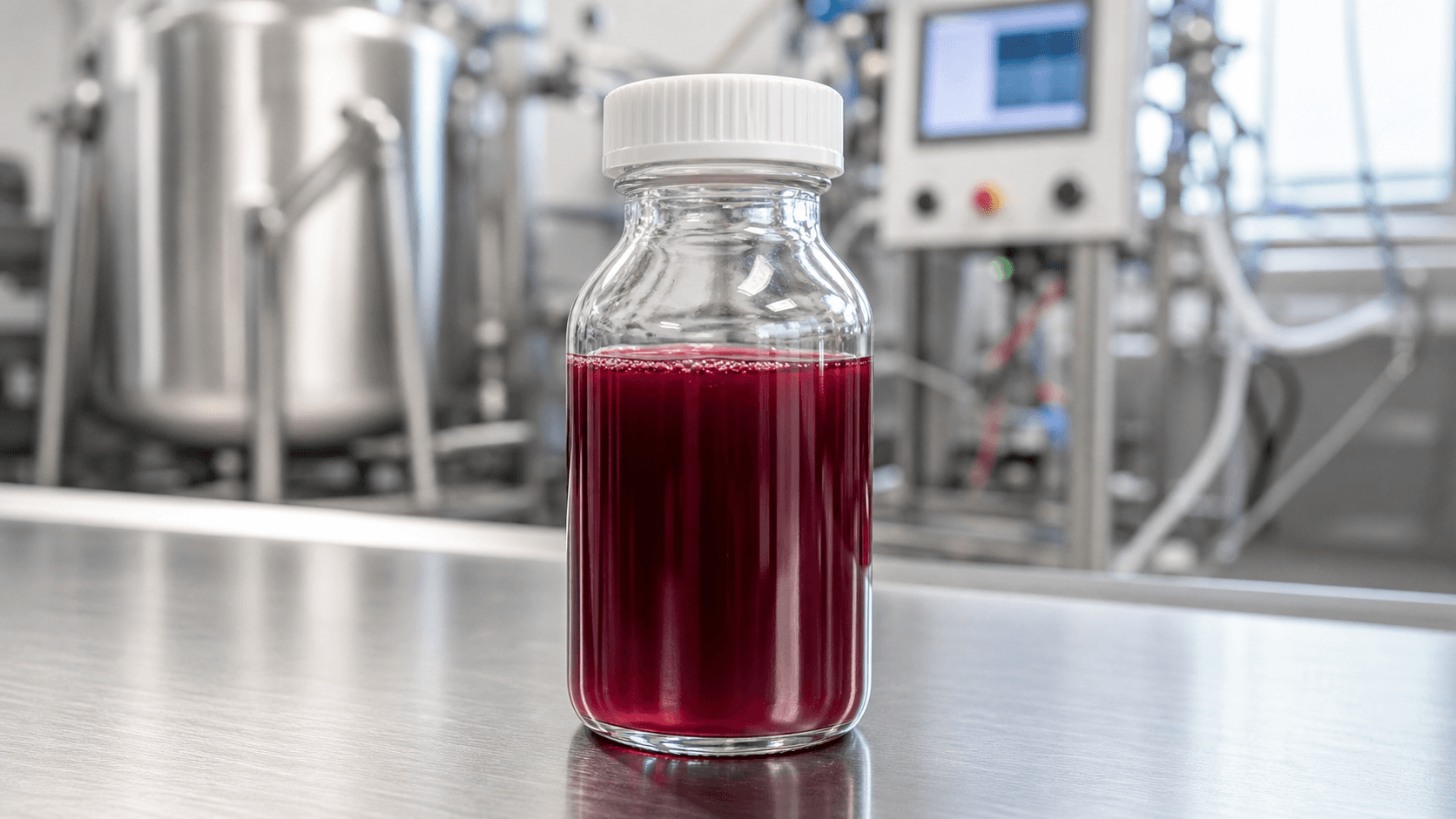
Fermentation is moving beyond traditional food and industrial ingredients into a new area of commercial interest: natural colorants. As food and beverage manufacturers look for alternatives to some conventional synthetic colors, biotech producers are beginning to apply controlled biological processes to create color ingredients with greater consistency and scalable production potential.
Fermentation-derived colorants could become an important new supply category for chemical traders, procurement managers and ingredient buyers. The opportunity sits at the intersection of biotechnology, food additives and specialty ingredients, creating new questions around sourcing, specifications, production economics and long-term supplier reliability.
Why Fermentation Is Entering the Natural Colorant Market
Traditional natural colorants often depend on agricultural crops, botanical extracts, insects or other biological raw materials. Their supply can therefore depend on harvest conditions, geography, climate, seasonal availability and variations in raw material quality.
Fermentation offers a different production model. Instead of relying entirely on harvested sources, manufacturers can use microorganisms or biological systems under controlled conditions to produce targeted color compounds.
This approach can give producers greater control over several commercial variables:
Production consistency: Controlled fermentation can reduce some of the variability associated with agricultural raw materials.
Scalability: Bioprocessing facilities can potentially increase output as demand develops.
Resource efficiency: Fermentation can reduce dependence on specific land-based sources for certain color compounds.
Product customization: Biotechnology can support the development of specific compounds with targeted functional characteristics.
For buyers, the key shift is not simply that another type of natural color exists. The larger development is the emergence of biotechnology-driven supply alongside established natural extraction channels.
What Makes Fermentation-Derived Colorants Different
Natural colorants already form a broad ingredient category that includes pigments and compounds obtained from plants, fruits, vegetables, microorganisms and other natural sources. Fermentation adds another production route to this landscape.
A fermentation-derived ingredient may still compete on the same practical criteria as any other colorant. Buyers need to assess color strength, stability, application performance, regulatory acceptance, dosage requirements and compatibility with the final formulation.
The production technology, however, can change the supply equation. A producer may have more control over manufacturing conditions than a supplier that depends heavily on agricultural harvests.
That distinction matters when procurement teams build long-term sourcing strategies. A natural label does not automatically guarantee supply stability, while a fermentation route does not automatically guarantee commercial competitiveness.
The strongest suppliers will need to demonstrate both technical performance and dependable economics.
The Supply Category Biotech Producers Are Creating
The entry of biotech companies into natural colorants could gradually broaden the supplier landscape. Established ingredient manufacturers may face competition from companies with expertise in fermentation, metabolic engineering, microbial production and industrial bioprocessing.
This creates opportunities for chemical traders and distributors that can connect emerging producers with established buyers. Procurement teams may also gain access to a wider range of sourcing options as commercial production expands.
The category could develop through several stages:
Technology development: Producers focus on proving that a fermentation route can generate a commercially useful colorant.
Pilot production: Manufacturers test process economics, quality consistency and application performance.
Commercial scaling: Production capacity increases and suppliers begin serving larger customers.
Market integration: Buyers compare fermentation-derived ingredients directly with conventional natural color sources.
The transition from laboratory success to reliable commercial supply will determine how quickly the category develops.

Procurement Factors That Will Shape Adoption
For buyers, fermentation-derived colorants should be evaluated as specialty ingredients rather than simply as replacements for existing synthetic colors. The commercial decision depends on how well the ingredient performs across the entire formulation and supply chain.
Specification control will remain a major consideration. Buyers should compare color intensity, shade consistency, purity, carrier systems, recommended dosage and storage requirements across suppliers.
Application stability can also determine purchasing decisions. A colorant may perform differently depending on pH, temperature, light exposure, processing conditions and the surrounding formulation.
Supply reliability matters just as much. Procurement teams need to understand manufacturing capacity, minimum order quantities, lead times, production locations and the supplier's ability to support larger volumes.
Cost-in-use provides a more useful comparison than price per kilogram alone. A higher-priced colorant could remain commercially attractive if it delivers stronger coloration at a lower dosage or provides better stability during processing and storage.
Where Demand Could Develop First
Food and beverage manufacturers represent a particularly important potential market because color plays both a functional and consumer-facing role. Product developers increasingly need ingredients that fit formulation requirements while supporting natural positioning.
Fermentation-derived colorants could attract interest in applications where manufacturers need greater consistency than some traditional natural sources can provide.
Potential areas include:
Beverages: Colorants can support visual differentiation in soft drinks, functional beverages and other liquid formulations.
Confectionery: Consistent shades can help manufacturers manage appearance across large production runs.
Dairy and plant-based products: Color can influence consumer expectations for flavored and formulated products.
Bakery products: Manufacturers may evaluate natural color systems that withstand relevant processing conditions.
Prepared foods: Stable colorants can support appearance in products exposed to heat, storage and varying formulation conditions.
The strongest demand will likely emerge where performance, consistency and natural ingredient positioning justify the economics of a newer production route.
What Traders Should Watch in Supplier Development
The arrival of biotech producers changes the sourcing map. Chemical traders should monitor not only established color manufacturers but also companies building fermentation capacity and partnerships with ingredient distributors.
Several signals can indicate that a producer is moving from technology development toward commercial relevance:
Increasing fermentation capacity suggests that the company is preparing for larger orders.
Partnerships with food ingredient manufacturers can indicate progress toward market adoption.
Expanded product specifications can show that the supplier is adapting to commercial formulation requirements.
Geographic expansion can signal an effort to establish broader distribution and customer support.
For traders, early engagement may create opportunities to build relationships before the category becomes crowded. However, buyers should still evaluate technical documentation, commercial capacity and logistics before committing significant volumes.
Regulatory and Documentation Requirements
Natural colorants must satisfy the regulatory requirements applicable to their intended market and use. Fermentation as a production method does not remove the need for appropriate specifications, documentation and regulatory compliance.
Procurement teams should therefore request complete technical information covering product identity, composition, intended applications, storage conditions, shelf life and relevant quality parameters.
Documentation becomes especially important when buyers source from newer biotechnology companies. A supplier with strong technical capabilities still needs the commercial systems required to serve food ingredient customers consistently.
Importers and exporters should also consider the destination market early in the sourcing process. Regulatory requirements can differ by jurisdiction, making market-specific documentation an important part of supplier selection.
How Fermentation Could Change Natural Colorant Economics
The economics of fermentation-derived colorants will depend heavily on production efficiency and scale. Fermentation facilities require capital, specialized equipment and process control, but larger production volumes can potentially improve unit economics.
Raw material selection also matters. Producers need commercially viable feedstocks and efficient processes that can deliver consistent output without excessive downstream processing costs.
For buyers, the critical question will be whether fermentation can achieve a competitive cost-to-performance ratio. If producers can combine consistent quality with scalable manufacturing, fermentation could become more than a niche alternative.
The market could also benefit from reduced exposure to some agricultural supply disruptions. That does not eliminate supply-chain risk, but it could change where and how that risk appears.
Competitive Pressure on Traditional Natural Color Suppliers
Fermentation-derived production is unlikely to replace every established natural colorant. Different color compounds have different production economics, formulation requirements and sourcing structures.
Instead, biotechnology may create additional competition within selected segments. Traditional suppliers may respond by improving extraction efficiency, expanding processing capabilities, developing new blends or strengthening traceability.
This competition could benefit buyers. More production routes give procurement teams additional options when balancing price, availability, performance and sustainability objectives.
For traders, the expanding supplier base also creates room for differentiated sourcing services. Companies that understand technical specifications and can match buyers with suitable producers may have an advantage as the category develops.
Sustainability Claims Need a Full Supply Chain View
Fermentation can support a more controlled production model, but buyers should evaluate sustainability across the entire manufacturing process rather than relying only on the production method.
Energy consumption, feedstock sourcing, water use, downstream purification, packaging and transportation all influence the overall environmental profile of an ingredient.
This makes supplier transparency increasingly valuable. Procurement teams should look beyond broad sustainability positioning and examine how the product is actually manufactured, processed and delivered.
The most commercially useful suppliers will be those that combine technical performance with clear information about production practices and supply-chain requirements.
Market Outlook for Fermentation-Derived Colorants
The next stage of the market will depend on whether biotech producers can move from promising production technology to dependable commercial supply. Capacity, regulatory progress, formulation performance and customer adoption will remain key indicators.
If producers successfully scale manufacturing, fermentation-derived colorants could become a recognized category within the broader natural colorant market rather than remaining a specialist biotechnology application.
For chemical traders and procurement teams, the opportunity lies in monitoring this transition early. Supplier diversification can become valuable when new production technologies start reaching commercial scale, particularly when buyers need alternatives to supply chains dependent on seasonal or geographically concentrated raw materials.
What Procurement Teams Should Do Now
Procurement teams do not need to replace existing natural color suppliers to prepare for this market. A more practical approach involves adding fermentation-derived producers to the supplier evaluation pipeline and comparing them against established alternatives.
Key actions include:
Map emerging suppliers: Identify biotechnology companies and ingredient manufacturers developing fermentation-based colorants.
Request technical samples: Evaluate shade, stability and formulation performance under real production conditions.
Compare cost-in-use: Assess dosage and final formulation economics rather than relying only on quoted unit prices.
Review supply capacity: Understand production scale, lead times, minimum order quantities and expansion plans.
Build alternative sources: Avoid dependence on a single production route when natural color demand continues to grow.
The emergence of fermentation-derived colorants gives buyers another sourcing route at a time when consistency, traceability and supply resilience are becoming increasingly important. Traders that understand both the biotechnology and commercial requirements can position themselves to serve this developing ingredient category more effectively.
Ready to source Pectin from verified global suppliers? Explore competitive offers on our platform today.
Pectin (E440) CAS: 9000-69-5